
close
Choose Your Site
Global
Social Media

Views: 0 Author: Site Editor Publish Time: 2026-08-25 Origin: Site


Selecting the right foil finish transcends mere aesthetics. It stands as a critical procurement decision. This choice dictates unit economics, production line speeds, and overall brand equity. When you mismatch a foil type and your substrate, severe problems arise. You face registration errors, foil flaking, and massive budget overruns on tooling. These production mistakes easily derail product launches. They also erode your profit margins. We built this guide to help you avoid those costly manufacturing traps. You will discover an evidence-backed framework for evaluating modern finishing technologies. We will show you how to match them perfectly to specific substrates. You will learn to handle heavy rigid boxes or lightweight folding cartons safely. Armed with these technical insights, you can navigate the complex intersection of design intent and manufacturing reality. You can confidently choose the best luxury packaging foil for your active production line.
Consumers evaluate products in milliseconds. Eye-tracking studies consistently prove metallic surfaces capture attention significantly faster than flat ink. This visual disruption directly impacts perceived value. When shoppers see a premium packaging finish, they unconsciously anticipate a higher quality product inside. This immediate tactile and visual cue justifies higher retail price points. Brands cannot rely on marketing fluff to move inventory. They need physical shelf impact to win the point of sale.
Security forms another vital pillar of this business case. Counterfeiters constantly target high-end cosmetics, premium spirits, and luxury electronics. Standard CMYK printing offers zero protection against modern forgery. Specific foil applications act as immediate, verifiable anti-counterfeiting measures. Complex holographic transfers remain nearly impossible to duplicate cheaply. Micro-embossed patterns require highly specialized tooling. By integrating these elements, you protect your revenue streams. You also defend your brand integrity from unauthorized replicas.
Evaluating the return on investment requires looking far beyond the initial per-roll material cost. You must analyze the broader production equation. Setup times dictate your agility on the factory floor. Custom die costs impact your upfront capital allocation. Scrap rates ultimately determine your true yield per shift. A cheaper foil roll might require slower machine speeds to adhere properly. It might also cause higher defect rates during the folding process. The real ROI reveals itself when you maximize machine uptime and deliver flawless units.
This traditional method uses intense heat, heavy pressure, and a custom metal die to press foil into the substrate. Manufacturers typically machine these dies from magnesium, copper, or brass. Copper and brass dies hold heat exceptionally well. They provide incredible precision for long production runs. The combination of heat and mechanical pressure physically alters the paper fibers.
Hot stamping remains the best fit for high-volume luxury runs. Heavy rigid boxes greatly benefit from this process. It works perfectly for scenarios requiring a deeply tactile, debossed feel. Consumers intuitively associate this physical impression with premium craftsmanship.
However, the process carries strict limitations. High initial tooling costs make short runs highly unprofitable. The dies take time to manufacture and install. Setup times run longer because operators must precisely calibrate the heat and pressure across the entire cylinder or platen.
Cold foil operates entirely differently. It uses a seamless inline printing process. The press applies a UV-curable adhesive to the substrate in the exact shape of the desired design. The foil web then presses against this adhesive. UV lamps immediately cure the bond. The press pulls away the carrier film, leaving the metallic layer behind. Operators can then overprint inks directly on top of this foil.
This method excels in high-speed label production. Folding cartons also benefit immensely. It provides the best fit where flat, gradient-friendly metallic effects are needed. You can achieve thousands of metallic hues by printing CMYK over a standard silver base.
Its primary limitation lies in physical presence. Cold foiling completely lacks the tactile impression of hot stamping. It functions strictly as a visual finish. It sits flat on the surface and offers no debossing.
Digital foil bonds directly to digitally printed electro-ink, toner, or polymer. It entirely eliminates the need for physical metal dies. A heated roller simply fuses the metallic layer to the printed polymer areas. The remaining foil pulls away cleanly.
This technology provides the perfect fit for ultra-short runs and rapid prototypes. It dominates the variable data packaging sector. Personalized luxury gifting relies heavily on digital sleeking to customize individual names or sequential numbers.
The limitations emerge quickly at scale. Digital methods carry a prohibitive cost-per-unit during mass production. Individual cycle times remain significantly slower than traditional flexographic or offset presses. You trade speed and scale for ultimate flexibility.
| Technology | Tooling Required | Tactile Effect | Ideal Production Volume | Speed |
|---|---|---|---|---|
| Hot Stamping | Metal Die (Brass/Copper) | High (Debossed) | High Volume | Moderate |
| Cold Foiling | Printing Plate (Adhesive) | None (Flat) | High Volume | Very Fast |
| Digital Foil | None | Slight Raised Polymer | Short Runs / Variable | Slow |
Color choice heavily influences consumer psychology. Standard gold hot stamping foil serves as the traditional standard for heritage luxury. It communicates wealth, history, and premium status. You must choose your specific tone carefully. Bright, glossy gold creates high contrast. It commands attention from across a retail aisle. Conversely, matte or satin gold provides an understated, contemporary luxury feel. Satin finishes reduce glare and invite closer inspection. They align well with modern organic skincare lines or boutique winery labels.
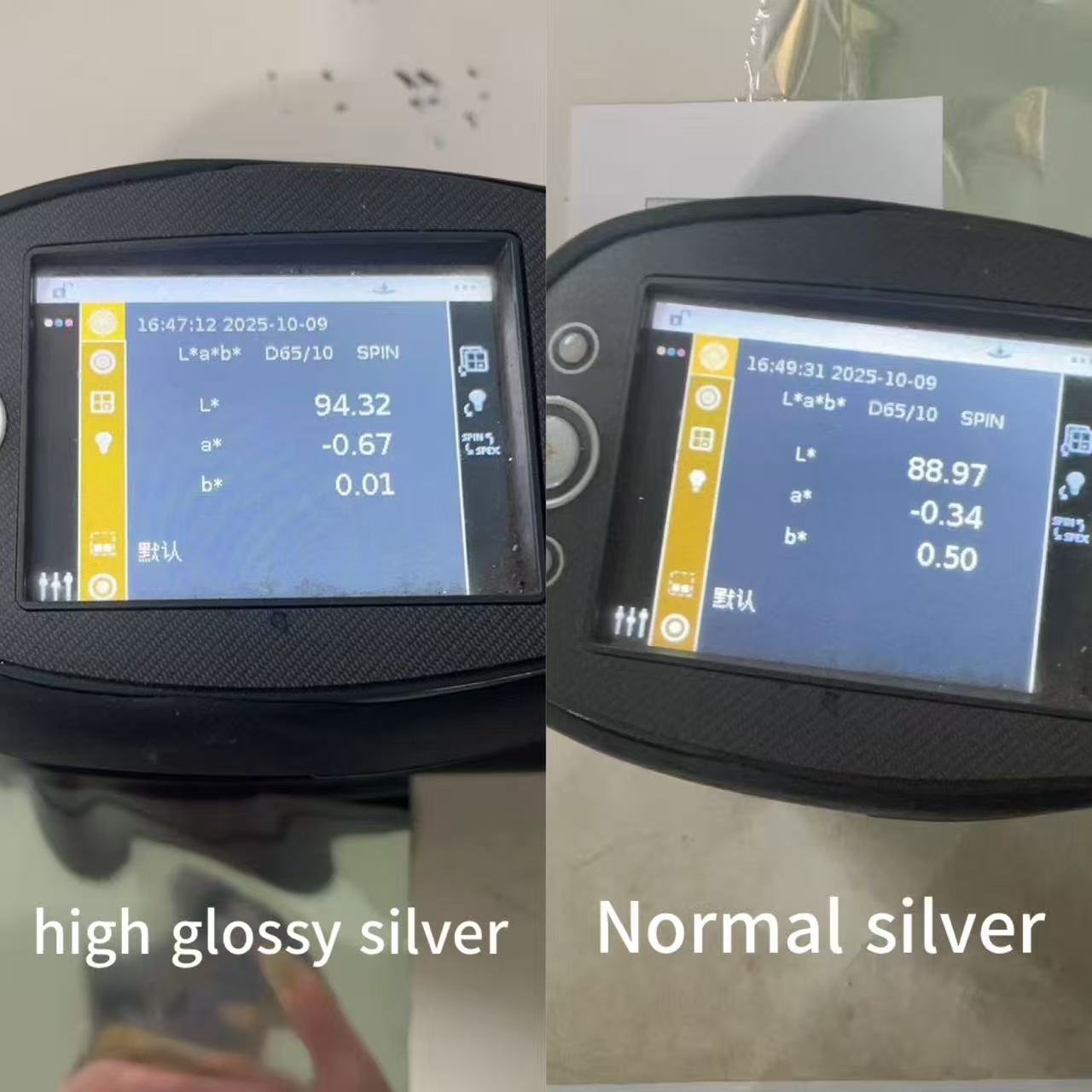
Brands leverage silver stamping foil for entirely different psychological outcomes. Silver outlines its dominant application in modern, tech-forward, or clinical aesthetics. Dermocosmetics often utilize silver to project scientific efficacy and cleanliness. Consumer electronics packaging relies on silver to mimic premium hardware materials like aluminum and titanium. Silver offers superior reflective neutrality. It complements cool-toned color palettes better than warm gold.
Sometimes standard colors fall short of specific brand requirements. Holographic and custom formulations bridge this gap. You can justify the investment in a custom foil roll when you need proprietary brand colors. You might also require specific security micro-embossing integrated directly into the film. Keep in mind, custom casting requires significant minimum order quantities (MOQs). Manufacturers must halt standard production to mix custom lacquers and cast specific runs. Reserve custom rolls for high-volume, brand-critical applications where off-the-shelf options simply fail to match your Pantone standards.
Matching your foil to your specific paper substrate determines the success of your production run. You must understand the basic physics of adhesion. Different papers require different release layers on the foil web. Uncoated, deeply textured papers demand high-tack adhesives. They also require deeper physical pressure to force the foil into the microscopic valleys of the paper fibers. Coated papers or soft-touch laminates present a completely different challenge. Their smooth, non-porous surfaces require specialized release coats. If you use the wrong formulation, the foil will bleed beyond the design edges. It might also fail to adhere entirely.
The structural demands of your packaging also dictate your material choice. Rigid box wrapping demands exceptional flexibility. The paper must wrap tightly around sharp 90-degree corners. The foil layer must withstand this severe tension without cracking or flaking. Flexible labels endure different stresses. They must bend smoothly around curved glass bottles without wrinkling. A foil engineered for flat folding cartons will likely crack if forced around a sharp rigid box edge.
To avoid massive production failures, buyers must demand rigorous quality control testing from their suppliers. Do not rely on visual inspection alone. Implement these three standard evaluation tests:
Environmental compliance now drives major procurement decisions. Unfortunately, confusion surrounds the ecological impact of metallic packaging. We must clarify the recyclability myth. Standard hot and cold stamping processes do not laminate plastic onto your packaging. They transfer only a microscopic layer of pure aluminum and colored lacquer. The PET carrier film never bonds to the final product. The press removes it entirely. Therefore, foiled paper remains fully recyclable. It easily breaks down in standard repulping facilities. Modern recycling screens easily filter out the microscopic metallic flakes.
While the final product shines ecologically, the factory floor faces a different reality. The spent PET carrier film generates significant operational waste. Thousands of meters of clear plastic film pile up after each production run. Leading suppliers actively combat this issue. They implement closed-loop recycling programs. They collect the spent PET carrier rolls directly from the printing facilities. They shred and process this waste to manufacture new carrier films or industrial plastics. This closed-loop approach drastically reduces the overall carbon footprint of the finishing process.
Selecting a reliable supplier requires a methodical approach. Do not choose partners based on price alone. Use this shortlisting logic to vet your foil supply chain:
The "best" finishing technology does not exist in a vacuum. It represents a carefully calculated intersection. You must balance your initial design intent against the physical properties of your substrate. You must weigh these factors against your overall production volume. Hot stamping delivers unmatched tactile luxury. Cold application provides incredible speed and inline efficiency. Digital sleeking unlocks brilliant personalization for short runs.
Your next step requires active collaboration. Initiate a deeply technical consultation with your packaging converter. Arrive at this meeting armed with specific details about your chosen paper stock and anticipated run sizes. Discuss your security needs and sustainability goals upfront.
Take immediate action today. Contact your supplier and request physical sample kits. Demand to see hot, cold, and digital applications demonstrated directly on your brand's exact target paper stock. Physical evidence always beats theoretical assumptions.
A: No, provided the die pressure is calibrated correctly and the board thickness is appropriate. Over-pressing can cause substrate fracturing. This is exactly why premium copper or brass dies are heavily preferred for precision work. They distribute heat evenly without requiring destructive mechanical force.
A: Realistic timelines usually span 4 to 8 weeks. This depends entirely on the complexity of the color match or the origination of custom holographic patterns. Keep in mind that standard gold and silver options remain readily available off-the-shelf for immediate deployment.
A: Yes, you can achieve this through fluted combination dies. These specialized tools simultaneously foil and emboss the paper fibers. This method requires a higher initial tooling investment. However, it drastically reduces machine passes and eliminates subsequent registration errors.


