
close
Choose Your Site
Global
Social Media

Views: 0 Author: Site Editor Publish Time: 2026-08-20 Origin: Site


Approving a perfect sample roll is deceptively easy. You load it into the production machine, dial in the required heat, and watch pristine impressions roll out smoothly. However, securing identical performance across consecutive bulk runs remains the actual challenge. Inconsistent foil performance severely impacts daily operations on the factory floor. It quickly leads to unplanned machine downtime. You might face frustratingly high scrap rates and eventually deal with rejected packaging lots.
To prevent these costly manufacturing issues, procurement teams desperately need a better strategy. Relying on a single good sample simply carries too much risk. We provide a verifiable, technical, and operational framework below. It helps you evaluate potential manufacturing partners comprehensively. You will learn how to stress-test their production capacity before signing contracts. Furthermore, we outline practical methods to lock in a highly reliable partner for long-term, high-volume production runs.
Many procurement managers fall victim to the golden sample fallacy. Initial sample rolls often over-represent a manufacturer's average production quality. Sales teams typically hand-pick these short sample rolls. Technicians meticulously run them under perfectly controlled laboratory conditions. The tension remains flawless. The coating thickness stays incredibly uniform. But this isolated perfection rarely translates directly into massive commercial runs. Bulk production introduces variables like machine fatigue, fluctuating ambient factory humidity, and inconsistent raw material batches.
The cost of manufacturing failure scales rapidly during mid-volume and high-volume runs. Poor adhesion ruins entire production shifts. Unpredictable flaking creates messy substrates and forces quality control teams to quarantine finished goods. Color shifting between the start and end of a massive roll dilutes brand identity. These defects inflate labor costs because operators must stop machines constantly. They waste expensive substrate materials trying to correct inconsistent foil release.
Defining procurement success requires a profound shift in mindset. You must move away from simply finding the lowest cost per roll. Instead, focus entirely on securing maximized operational uptime and reliable yield rates. A slightly cheaper roll loses all financial advantage if it causes frequent machine jams. True value comes from seamless continuous running. Predictability always outshines minor upfront price savings. You must build a supply chain focused strictly on consistent production yields.
A rigorous evaluation begins long before you test the actual material. Conducting a comprehensive foil supplier audit establishes the foundation for a stable partnership. Start by thoroughly examining their Quality Management Systems (QMS). Simply seeing an ISO 9001 badge on a website means very little. You should formally request documentation outlining their internal batch-testing procedures. Ask how they document coating weight variances. Review their historical data for defect tracking. Robust internal controls prevent bad batches from ever leaving their facility.
Raw material traceability acts as your insurance policy against global shortages. You must assess how they source critical components. Find out where they buy their PET carrier films. Ask about the origins of their pigment resins. Do they rely entirely on a single chemical provider? If they lack secondary raw material suppliers, a minor disruption will immediately bottleneck your deliveries. Diversified sourcing ensures they survive upstream supply shocks.
Regulatory and environmental compliance demands strict attention. Ensure their foils meet specific industry mandates relevant to your target markets. Many packaging applications require strict REACH or RoHS compliance. If you print food packaging, you must verify indirect food contact standards. Request certified testing reports from independent third-party laboratories. Never accept verbal assurances regarding chemical safety compliance.
Finally, evaluate their production capacity versus their current utilization rates. A massive factory means nothing if their machines currently run at maximum capacity. Determine their actual machine count. Confirm their maximum available web widths. Ask about their typical utilization percentages. They must maintain enough idle capacity to scale up rapidly alongside your projected business growth. A congested factory floor guarantees delayed shipments.
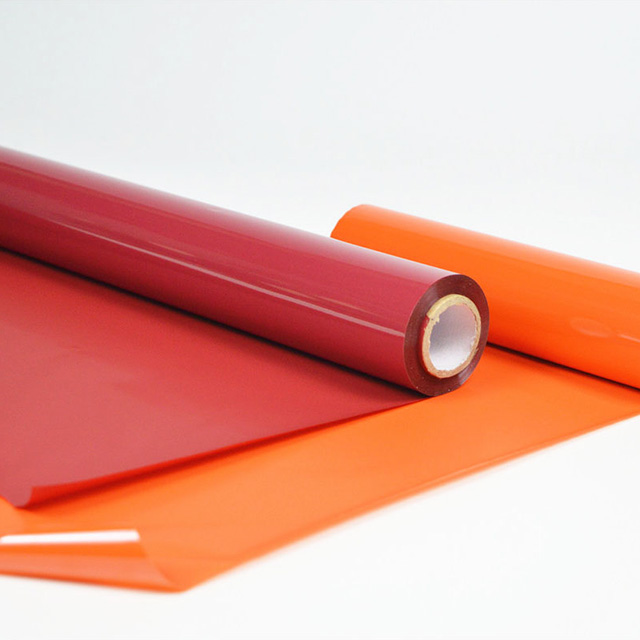
Technical performance metrics separate average products from exceptional ones. Consistent pigment foil quality relies heavily on the stamping temperature window. You must test the operational range rigorously. A wider temperature window indicates a highly forgiving product. It drastically reduces machine setup time. Operators spend less time tweaking heat dials. Conversely, a narrow window causes constant headaches. If the heater drops by just a few degrees, the impression fails.
Edge definition and release characteristics dictate visual sharpness. You must evaluate how cleanly the material releases on challenging designs. Test it on fine typography. Then test it on large solid block areas. Consistency within the chemical release coating layer proves critical for high-speed automated runs. Poor release coatings cause bridging on small letters. Overly loose coatings cause flaking inside the machine before the impression even occurs.
Substrate versatility prevents you from needing dozens of different product grades. You should test adhesion across varying surface tensions. Measure the dyne levels carefully. Apply impressions to uncoated porous paper. Test it on glossy UV-coated boards. Try it on complex laminated films. A versatile formulation grips securely across multiple finishes. This significantly simplifies your internal inventory management.
Color fastness and opacity protect brand integrity. Establishing strict Delta E tolerances prevents embarrassing packaging mismatches. A brand color must look identical in January and November. You must enforce strict shade variation limits between seasonal deliveries. High opacity ensures underlying substrate colors never bleed through the stamped image. This remains especially important when stamping light colors onto dark packaging boards.
Quality Evaluation Metrics Chart
| Evaluation Metric | Ideal Standard Target | Common Failure Indicator |
|---|---|---|
| Temperature Window | Broad range (e.g., 100°C - 140°C) | Requires constant operator heat adjustments |
| Release Force | Balanced for both fine lines and solids | Bridging on text or premature machine flaking |
| Adhesion Versatility | Passes standard tape test on 38+ dynes | Peels off easily from UV-coated surfaces |
| Color Variance | Delta E < 2.0 | Visible shade differences between Q1 and Q4 |
Logistical reliability often matters just as much as technical perfection. Processing smooth repeat foil orders demands absolute lead time transparency. You must deconstruct their vaguely stated delivery windows. Distinguish clearly between actual manufacturing time and standard logistics delays. Customs clearance frequently adds unpredictable weeks to international shipments. Demand a detailed breakdown of their production timeline from purchase order receipt to factory dispatch.
Minimum Order Quantities require careful negotiation. Clarify exact MOQs for standard catalog colors versus unique custom formulations. High MOQs tie up your working capital needlessly. Low MOQs might incur hidden setup surcharges. You must align their scaling requirements directly with your internal inventory turnover rates. Ensure they can handle seasonal volume spikes without forcing you into massive upfront commitments.
Buffer stock and warehousing agreements mitigate global supply chain shocks. You should aggressively negotiate vendor-managed inventory programs. If that proves impossible, secure guaranteed buffer stock agreements. The factory should hold one month of your average volume in their local warehouse.
To properly stress-test their logistical readiness, ask these crucial questions:
Dispute resolution protocols prevent long arguments over defective materials. Establish very clear terms for handling problematic master rolls. Demand written replacement timelines. Require formal root-cause analysis reporting within seven business days of a defect claim. A trustworthy partner investigates failures transparently rather than blaming your machine operators.
Modern packaging requires immense flexibility. A reliable partner must execute short-run customization flawlessly. Assess their willingness to accommodate specialized visual finishes. Brands frequently demand unique matte or gloss levels to stand out. Furthermore, low-volume digital foil requirements continue growing rapidly across the industry. A rigid manufacturer refusing short runs will ultimately stifle your creative packaging options.
Custom color matching reveals the true strength of their laboratory team. Review their turnaround times for producing precise formulations. Developing a highly specific custom pigment foil to match exact Pantone targets takes skill. Ask how quickly they can deliver physical wet proofs. Fast lab work keeps your fast-paced marketing campaigns on schedule. Slow color matching delays product launches.
Technical support capabilities matter immensely during complicated transitions. Determine if the pigment foil supplier provides reliable on-call engineers. You will inevitably face troubleshooting challenges when transitioning to entirely new substrates. Do they offer detailed machine-setting guidelines? Will they analyze your problematic substrate samples in their own lab? A true partner actively helps you optimize machine tension and heat settings. They never simply ship the box and disappear.
Moving from a massive list of candidates to a trusted partner requires a structured approach. You must eliminate guesswork entirely. Implement a phased risk-mitigation strategy to protect your production lines.
This disciplined phasing prevents catastrophic factory shutdowns. It builds operational confidence gradually. You base your final procurement decisions on hard data rather than optimistic sales pitches.
Qualifying a new manufacturing partner serves as a critical, phased risk-mitigation process. True partnership always extends beyond basic pricing structures. It is ultimately defined by complete supply chain transparency and unwavering technical consistency across dozens of production batches.
Your procurement teams should immediately draft a highly standardized specification sheet. Document your exact dyne levels, temperature requirements, and acceptable color variances. Next, initiate formal pilot runs with two or three shortlisted manufacturers. Compare their logistical responsiveness just as heavily as their product performance. Finally, secure binding service level agreements before awarding them your annual production volume.
A: A Delta E of less than 2.0 is typically expected for strict brand compliance. This ensures the human eye cannot detect shade differences. However, general industrial standards may allow a variance up to 3.0. The acceptable limit heavily depends on the underlying substrate color and the specific packaging application.
A: You should execute a strict three-step process. First, perform a standard tape test to evaluate basic adhesion. Second, conduct heat-resistance testing to ensure it survives secondary overprinting processes. Third, run high-speed machine trials using full master rolls to verify release consistency and edge definition under actual production stress.
A: Lead times fluctuate due to several upstream variables. Raw material shortages involving PET carrier films or specific chemical resins cause sudden manufacturing delays. Additionally, seasonal shipping congestions impact transit times. Fluctuations also occur if your supplier lacks a dedicated buffer inventory agreement to absorb sudden demand spikes.
A: While manufacturers can match most solid colors, certain physical limitations exist. Inherent opacity limits and the underlying substrate colors heavily influence the final visual result. Achieving an exact Pantone match on a dark board requires specific formulation adjustments. This complexity always requires physical laboratory proofs before bulk production begins.


