
close
Choose Your Site
Global
Social Media

Views: 0 Author: Site Editor Publish Time: 2026-09-15 Origin: Site


Investing in an MGI iFOIL or JETvarnish 3D system sets a remarkably high baseline for print embellishment. However, the final output quality is strictly bottlenecked by the consumable you load into the machine. If you choose the wrong material, even the most advanced digital press will struggle to produce flawless results.
Unlike traditional hot stamping processes, MGI systems rely heavily on precise UV-cured polymer adhesion. Standard hot stamping foils simply will not bond correctly to these wet or curing varnishes. Using them inevitably leads to severe flaking, poor edge definition, and massive amounts of wasted substrates.
This guide outlines the technical requirements, rigorous evaluation criteria, and crucial implementation realities for selecting the right MGI digital stamping foil. By understanding these dynamics, you can ensure highly reliable and high-yield production runs. Read on to master the chemistry and operational tactics needed to optimize your embellishment workflow.
Print service providers often attempt to use legacy hot or cold foils on MGI machines. They do this to cut material expenses. The results usually disappoint. You will likely experience severe delamination. Machine downtime increases rapidly. Operators end up rejecting entire print jobs. You must understand the fundamental difference in application chemistry.
MGI systems rely on precision inkjet printheads. These printheads lay down a clear UV varnish. They jet this polymer directly onto the substrate. The machine then applies the foil to this wet or semi-curing polymer. Heated rollers activate the final bond. Traditional hot stamping uses physical metal dies. Those dies stamp dry adhesive into the paper via brute force and high heat.
The adhesion mechanics differ completely. A digital foil relies on specialized adhesive sizing. This sizing must chemically cross-link with the specific MGI UV varnish. Think of it as a lock and key mechanism. If the surface energy mismatches, the application fails. We measure this energy in dyne levels. Incorrect dyne levels cause the foil to bridge across small gaps. It can also tear away unevenly. The polymer needs a receptive chemical layer to grab onto. Without it, the metallic layer simply falls off after curing.
Choosing a digital embossing foil requires matching the material to the job profile. Different jobs demand varying visual effects and technical capabilities. We categorize these foils based on their optical properties and processing requirements.
This category forms the baseline for MGI systems. Options include standard gold, silver, and copper finishes. You evaluate these primarily on brilliance and opacity. High-quality metallic digital foil completely blocks the underlying paper color. It works best for high-contrast embellishments. We recommend these for designs lacking secondary overprints.
Brands often request holographic patterns for premium packaging. You must evaluate these based on shim line visibility. Shim lines occur during the foil manufacturing process. Poorly manufactured rolls show obvious repeating seams. Pattern alignment also matters during continuous feed operations. Operators must maintain tighter tension control. Loose tension distorts the holographic effect.
Some workflows require a specialized approach. You might need to print CMYK inks directly over the foiled areas. Standard metallics repel ink. Over-printable foils solve this problem. Engineers formulate them with a highly receptive top-coat. This allows secondary passes through Konica Minolta or MGI inline systems. The ink adheres permanently without scratching off.
These materials serve a different purpose entirely. Printers use them for high-end security features. They also protect premium packaging from scuffing. When evaluating laminates, focus heavily on optical clarity. You must also check their UV resistance. The laminate should not yellow over time when exposed to sunlight.
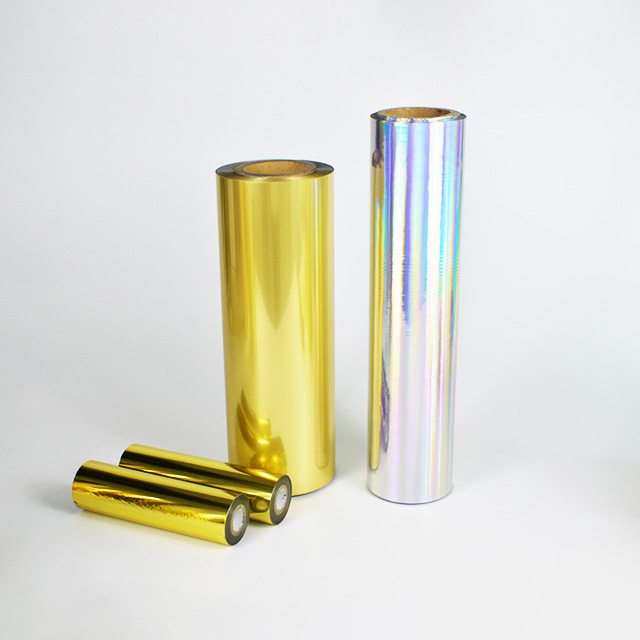
Print speeds continue to increase across the industry. Your materials must keep up with these mechanical demands. Evaluating foils requires looking past their visual appearance. You must analyze their mechanical performance under stress.
Release speed dictates your maximum throughput. How cleanly does the material pull away from the carrier film? MGI machines operate at extreme speeds. Some models push up to 2,336 B2 sheets per hour. Poor release characteristics cause a defect called stringing. The foil stretches instead of snapping cleanly. This creates rough edges around fine typography.
Modern presses handle complex VDP jobs effortlessly. The foil must match this agility. Can it handle rapid transitions? One sheet might feature a high-build 3D logo. The very next sheet might contain flat 2D micro-text. The foil must adapt without requiring manual roller pressure adjustments.
The PET carrier film plays a crucial role. Manufacturers typically use 12 to 16-micron thicknesses. Thinner films yield superior fine-line detail. The heat penetrates thinner plastic much faster. However, thinner films snap easily under improper tension. You must balance detail resolution against web durability.
Many high-end labels utilize foil-on-foil applications. This requires testing the material's over-stampability. The foil must accept a second layer of UV varnish. It must then accept another foil layer directly on top. The base layer cannot delaminate during the second pass.
Digital Embellishment Benchmark Matrix
| Evaluation Criteria | Ideal Target Outcome | Failure Symptoms |
|---|---|---|
| Release Speed Rating | Clean separation at 2,336 sheets/hour | Stringing, ragged typography edges |
| VDP Flexibility | Handles 3D to 2D shifts smoothly | Smudging, incomplete foil coverage |
| Carrier Film Strength | Maintains tension without snapping | Frequent web breaks, machine jamming |
| Chemical Cross-linking | Instant bond with UV polymer | Flaking, failed cross-hatch tape test |
Theoretical compatibility means nothing if the material fails on the production floor. Real-world implementation uncovers numerous hidden variables. You must prepare your production environment accordingly.
We must acknowledge a core reality from voice-of-customer feedback. These materials possess high environmental sensitivity. Excessive shop floor humidity alters how the UV varnish spreads. The polymer absorbs microscopic moisture. This moisture turns into steam under the heated rollers. The escaping steam causes tiny pinholes in the foiled areas. You must climate-control your press room.
Switching brands is never a simple plug-and-play process. A new brand requires recalibrating the iFOIL module. Operators must adjust the unwind and rewind tension settings. Different release liners possess different friction coefficients. Train your operators to spot tension wrinkles immediately. Catching these early prevents massive web breaks.
Every setup generates some level of waste. Highly compatible materials reduce this inevitable loss. A chemically optimized adhesive layer requires fewer make-ready sheets. Operators can dial in the heated roller temperature much faster. This efficiency preserves your underlying substrate stock.
These materials do not last forever. They carry a strict, non-negotiable shelf life. Most manufacturers guarantee performance for 12 to 24 months. Hoarding cheap rolls seems financially smart initially. However, the adhesive sizing degrades over time in storage. Expired rolls lead directly to catastrophic production failures.
Selecting a new supplier requires a methodical approach. You cannot base this decision on price alone. Implement a strict vetting and testing framework. This prevents introducing unstable materials into your daily workflow.
Start by asking critical questions. Do they offer MGI-specific certifications? Ask for proven case studies involving JETvarnish systems. Generic testimonials do not count. Second, verify their converting capabilities. Do they provide master roll slitting to exact MGI specifications? You need precise 320mm or 520mm widths. Poor slitting creates ragged roll edges. Ragged edges generate web dust, which ruins the UV varnish layer.
Never commit to pallet-scale orders without running controlled tests. Follow this standardized protocol.
Selecting the correct material represents a highly technical decision. It goes far beyond a simple procurement task. You must align the material's release chemistry precisely with the MGI UV varnish. You must also factor in your maximum operating speeds. Ignoring these technical realities guarantees poor yields and frustrated operators.
Instruct your production managers to act defensively. Request 100-meter sample rolls from shortlisted suppliers. Use these specific samples to stress-test your most difficult files. Push the limits on fine lines and 3D builds. Validate the cross-linking chemistry on your specific substrates. Only commit to large-scale orders after passing every internal benchmark.
A: No. Standard cold foils utilize a totally different adhesive chemistry. Manufacturers design them specifically for offset or flexographic wet adhesives. They cannot react properly to the intense heated UV-curing process generated by the MGI iFOIL system. Using them causes immediate delamination and severe machine jamming.
A: Flaking on high-build areas stems from three common issues. First, your heated roller temperature might be insufficient to activate the adhesive. Second, incorrect unwind tension can pull the foil away before the bond sets. Finally, a chemical mismatch between the adhesive layer and the UV varnish formula prevents proper cross-linking.
A: You must specify standard industry expectations to ensure machine compatibility. Operators typically require 1-inch or 3-inch cores depending on the specific module. Roll lengths vary significantly based on the machine's weight capacity. Most shops order lengths ranging between 1,000 meters to 3,000 meters for uninterrupted production runs.


