
close
Choose Your Site
Global
Social Media

Views: 0 Author: Site Editor Publish Time: 2026-08-17 Origin: Site


For label converters, increasing web speed directly correlates with daily profitability. Pushing throughput limits, however, often exposes severe weaknesses in consumable performance. Generic foils routinely fail at speeds exceeding 100 meters per minute. These sudden failures cause poor edge definition, severe flaking, or catastrophic web breaks. Such defects quickly erase any margin you gained by running your presses faster initially. You need a highly engineered cold foil for label printing to prevent these operational headaches. Selecting the optimal material requires evaluating specific chemical and mechanical properties carefully. You must look closely at release layers, adhesive compatibility, and tensile strength. Doing so ensures reliable metallic transfer without sacrificing aesthetic quality. In this article, you will learn how to identify foils built expressly for speed. We will explore the critical properties required for rapid application on flexo lines. You will also discover how to evaluate suppliers and test materials effectively.
Hidden costs constantly lurk behind incompatible metallic foils. Running slow foils on fast presses creates increased waste and demands continuous operator intervention. Poor material synergy reduces Overall Equipment Effectiveness (OEE) drastically. You lose valuable production time adjusting tension levels or cleaning contaminated nip rollers. These constant interruptions frustrate operators and destroy scheduling efficiency.
To accurately measure the true operational toll of speed limitations, you must track several key metrics:
A successful high-speed run looks entirely different on the press floor. It requires sustained printing speeds of 120 to 150 meters per minute consistently. You should observe zero pinholing and exceptionally clean fine-line text throughout the entire run. Furthermore, the applied metallic layer must pass a standard tape-test adhesion check flawlessly. Operators should not have to baby the press to achieve this reliable result.
Many operators fall into the notorious "speed versus quality" fallacy. They assume they must slow down equipment significantly to achieve premium metallic finishes. This assumption is completely false. Advanced high speed cold foil technology allows modern converters to maintain maximum throughput. You can achieve brilliant, crisp metallic effects without sacrificing your daily production schedule. Press builders design modern equipment to run fast. Your consumables should never act as the limiting factor.
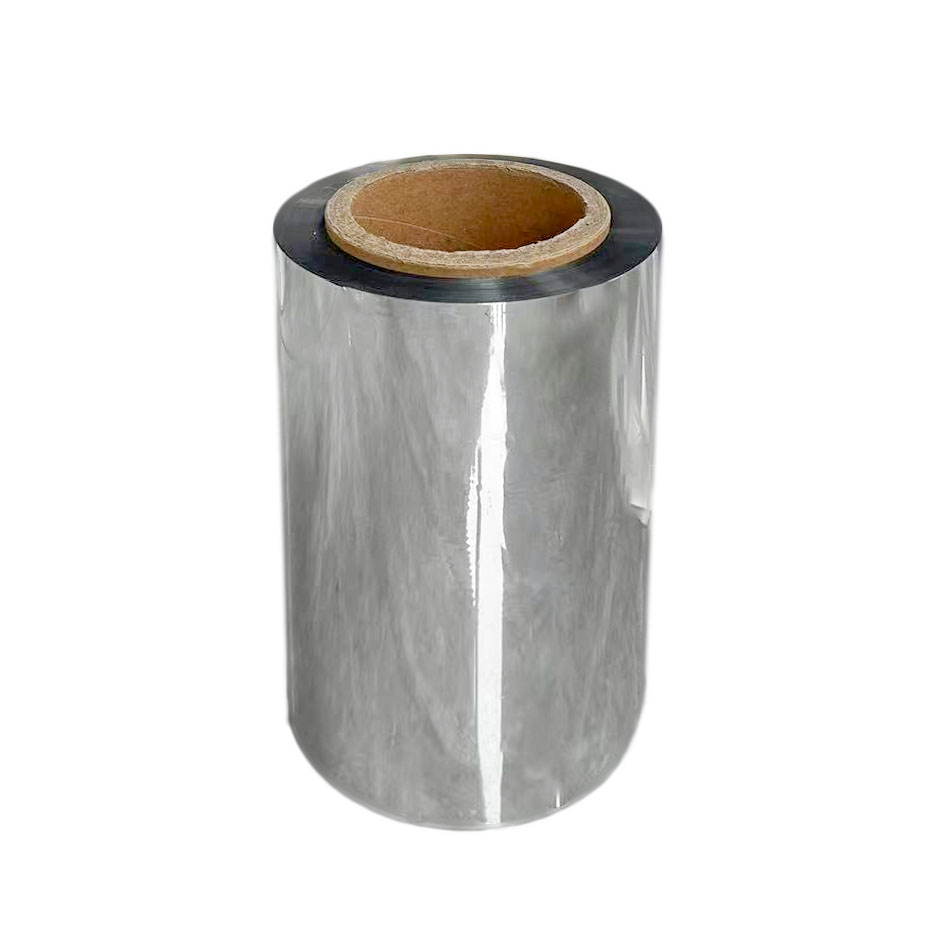
The release coat plays a highly vital role in the transfer process. It sits precisely between the carrier film and the delicate metalized layer. Think of it as a meticulously engineered wax or resin barrier. This specific layer controls how quickly the metallization transfers to your printed substrate. We evaluate a cold foil release by measuring its shear response under rapid tension.
If the release coat holds too tightly, you get poor transfer and noticeable pinholes. The foil simply refuses to leave the carrier web fast enough. If it releases too loosely, you risk premature flaking before the nip. Loose release coats also contaminate the web and dirty your press rollers. An ultra-fast release dynamic ensures clean shearing exactly at the nip point. This precision creates remarkably sharp edges on complex label designs.
Chemical affinity matters deeply when discussing rapid application. The foil's bottom tie coat must bond instantly with wet UV adhesives. Implementation reality hits hard at elevated production speeds. The UV adhesive literally has milliseconds to form a bond. The foil must tack instantly before passing directly under the intense UV curing lamp.
If the tie coat repels the adhesive even slightly, the entire transfer fails. Formulators optimize this layer to grab the adhesive aggressively. This chemical synergy ensures the metallic layer anchors permanently before the web exits the curing station. Operators cannot compensate for poor chemical affinity by simply adding more adhesive. Excess adhesive causes spreading and ruins fine typography. The chemistry must do the heavy lifting.
The carrier film handles immense mechanical stress during printing. Most converters rely on specialized PET carriers for necessary strength. Evaluating caliper and tensile strength helps mitigate severe production risks. Thinner carrier films yield much more footage per individual roll. This specific efficiency means fewer roll changeovers for busy operators.
However, thinner films carry inherent mechanical risks. If tensile strength is compromised, web snapping becomes a costly liability at elevated speeds. A snapped web requires re-threading the entire foiling station manually. You must balance the desire for longer rolls against robust mechanical stability.
Carrier Film Caliper Reference Chart
| Caliper (Thickness) | Tensile Strength | Roll Footage | Best Use Case |
|---|---|---|---|
| 12 Micron | Moderate | Very High | Standard speeds, highly controlled tension systems. |
| 15-16 Micron | High | Optimal | High-speed flexo, excellent balance of strength and length. |
| 23 Micron | Very High | Lower | Aggressive tension profiles, older legacy press equipment. |
Substrate choices dictate how materials behave on the press. A flexo label foil reacts differently depending on the surface porosity. Film substrates provide incredible hold-out. They prevent the liquid adhesive from sinking into the matrix. This characteristic yields a brilliant, mirror-like finish when the metallic layer transfers. Conversely, uncoated papers act like sponges. They pull the liquid adhesive away from the surface rapidly. If the adhesive sinks too deeply, the metallic layer has nothing to grab. You experience severe patching and dull finishes. Converters solve this by laying down a flexo primer first. The primer seals the porous paper surface effectively. It creates an artificial non-porous layer for the adhesive to sit on.
Overprintability represents another crucial operational factor. Converters must evaluate the foil’s top-coat chemistry for immediate ink reception. High surface energy matters immensely. If the topcoat repels your inks, you encounter major printing defects. Inks will bead up or smear across the metallic surface. Some operators mistakenly slow the press down to allow better ink drying. This action completely defeats the purpose of running high-speed equipment. Selecting a topcoat engineered specifically for flexo inks eliminates this bottleneck entirely. Inks trap beautifully and cure properly at maximum press speeds.
Certain industry verticals demand strict compliance standards constantly. Pharmaceutical packaging and direct food-contact labels require specialty applications. You may need specific low-migration properties to meet rigorous regulatory safety guidelines. Always verify these secondary properties before committing to a new structural formulation.
Choosing a dependable label converter foil requires a highly structured approach. Do not benchmark suppliers solely on surface-level financial metrics. Look far beyond the basic price per square inch. You should evaluate suppliers based on strict lot-to-lot consistency and robust technical support. Inconsistent rolls destroy high-speed efficiency immediately. A cheaper roll costs more if it causes hourly web breaks.
Implement a strict pilot testing protocol to validate performance claims:
Apply clear shortlisting logic after testing concludes. Rule out options demanding custom, expensive adhesives just to function. Eliminate materials requiring excessive lamp power to achieve standard production speeds. Your chosen material should integrate seamlessly into your existing operational parameters.
Field implementation often reveals unexpected mechanical challenges. UV degradation creates a notoriously common blindspot for press operators. Converters frequently blame the metallic material for poor transfer results. Often, the hidden root cause is actually degrading UV bulbs. Weak bulbs fail to penetrate the adhesive layer adequately at elevated speeds. Regular lamp maintenance prevents this frustrating misdiagnosis.
Tension control presents another harsh daily reality. Rapid applications demand precise nip roller pressure and strict rewind tension. Misaligned web tension causes physical scuffing immediately. It can also induce microscopic micro-cracking within the delicate metallic structure. You must calibrate tension zones carefully when escalating press speeds.
Adhesive viscosity fluctuates significantly during extended fast runs. Operating temperature and mechanical shear forces on the press alter the adhesive state constantly. These physical changes impact how smoothly the adhesive lays down on the substrate. Operators must monitor and adjust adhesive volume to match the viscosity shifts occurring during fast runs.
Common High-Speed Defect Resolution Matrix
| Observed Defect | Probable Root Cause | Immediate Operator Action |
|---|---|---|
| Edge Bleed / Smudging | Adhesive viscosity too low or applied too heavily. | Reduce anilox volume; check adhesive temperature. |
| Severe Pinholing | Release coat holding too tight or weak UV cure. | Increase UV lamp power; test a faster release formula. |
| Web Snapping at Nip | Excessive rewind tension or thin carrier film. | Dial back rewind tension; inspect carrier film caliper. |
| Flaking After Cure | Poor adhesive affinity or under-curing at speed. | Clean UV reflectors; verify adhesive/tie-coat compatibility. |
Achieving successful rapid transfer remains a complex engineering equation. You must carefully balance release chemistry, adhesive curing rates, and mechanical web tension. Do not evaluate materials in an isolated vacuum. We strongly recommend assessing them strictly as part of a connected triad. The chosen film, the liquid adhesive, and the curing equipment must work harmoniously together.
When one element fails, the entire process breaks down. Your next steps are highly straightforward. Request sample rolls explicitly tailored for rapid flexo applications. Then, schedule a controlled speed-escalation test using your most demanding substrate. By relying on empirical testing, you guarantee long-term operational success.
A: While press capabilities vary, optimized high-speed cold foils paired with LED-UV curing can reliably run between 120 and 150 meters per minute (400–500 fpm) without losing fine detail.
A: Hot stamping relies on heat and pressure/dwell time, which physically limits web speed. Cold foil relies solely on adhesive tack and UV curing, allowing it to scale seamlessly with standard printing speeds, provided the release coat is formulated for rapid shearing.
A: Flaking at high speeds usually indicates an imbalance between the adhesive cure rate and the foil's release tension. At higher speeds, the adhesive may not be curing deeply enough before the carrier web is stripped away, or the nip roller pressure is insufficient for the reduced dwell time.
A: It shouldn't, provided you select a foil with a high-surface-energy topcoat designed for inline flexo overprinting. If the topcoat repels ink, converters are forced to slow down the web to allow better ink laydown, defeating the purpose of high-speed foil.


