
close
Choose Your Site
Global
Social Media

Views: 0 Author: Site Editor Publish Time: 2026-08-22 Origin: Site


Production delays and rejected print runs quietly cripple print profit margins. You often see these catastrophic financial losses when foil bridging, flaking, or pinholing ruins an otherwise perfect press run. These frustrating defects frequently occur when printers ignore how aesthetic design specifications directly dictate technical requirements on the press. Fine typography demands vastly different mechanical behaviors compared to heavy, solid coverage areas. You must match the physical foil layer to the specific geometric geometry of your artwork.
Choosing the correct hot stamping foil release grade is the single most critical variable for operational success. It perfectly balances crisp edge definition against complete, uninterrupted substrate coverage. In this guide, we will explore exactly how these thermal release mechanisms work. You will learn how to match specific wax-resin grades to fine text and large solid blocks. Finally, we will provide actionable testing protocols to validate your choices on the press floor.
Commercial stakes are remarkably high at the initial decision stage of any print campaign. Relying on a generic, "one-size-fits-all" foil inevitably leads to elevated spoilage rates. It also forces press operators into excessive make-ready times. Operators often waste hours tweaking pressure and heat to fix fundamentally incompatible materials. When the wrong foil hits the die, yield drops immediately.
We typically see two primary failure modes on the commercial press:
You can avoid these costly extremes by optimizing the foil release layer early in the planning phase. Proper foil release properties directly correlate to higher press speeds. When the foil separates predictably, operators can push the machine faster without sacrificing quality. This proactive optimization ultimately lowers your per-unit cost and protects your production timeline.
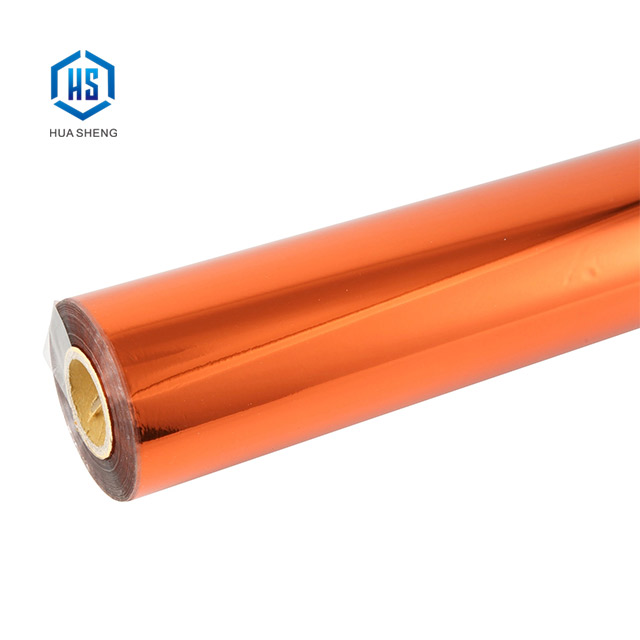
Let us briefly map the anatomy of hot stamping foil to understand how it functions. We will focus purely on the release coat. This microscopic, heat-sensitive layer is a highly engineered blend of synthetic waxes and specialized resins. It bonds the polyester carrier film to the colored or metallic decorative layer. When the heated die strikes the carrier, this microscopic layer undergoes a rapid phase change. It melts instantly and releases the decorative layer onto your substrate while the waste carrier pulls away. Manufacturers chemically engineer this wax layer into a precise spectrum of release grades.
You face a strict technical trade-off here. Sharper edge definition inversely correlates with the ease of broad area transfer. A foil formulated to shear perfectly for hairline text will fight aggressively against covering a massive solid block. Understanding this chemical trade-off helps you stop fighting the machine and start selecting the right materials.
Fine detail foil requires precise success criteria to pass rigorous quality control. You need absolute sharp edge acuity. You cannot tolerate any fill-ins on serif fonts, especially when typography drops to 6pt type. Tight kerning in modern typography creates tiny negative spaces. The job also demands clean separation on intricate halftone dots, thin geometric strokes, and delicate illustrative lines.
We strongly recommend tight release grades for these demanding applications. A properly formulated fine detail foil shears exactly where the heated die strikes. It refuses to spread beyond the intended image area, keeping negative spaces completely clean.
You must meet specific operational requirements to use tight grades effectively. Tight release foils generally require higher operating temperatures to melt the resistant wax layer. They also demand higher pressure to initiate the transfer onto the paper. Press operators often use harder tooling, such as epoxy or glass bead make-ready boards. This rigid setup concentrates the mechanical force directly onto the fine line art, forcing a crisp transfer.
However, a notable risk exists when using these formulations. Using a tight release on smooth, uncoated stock can sometimes lead to incomplete transfer. If your press pressure is inconsistent, or if the paper surface has microscopic dips, the tight foil will not bridge those gaps. It stays on the carrier web, leaving your text broken or faded.
Solid area designs rely on entirely different success criteria. Buyers expect 100% opacity and a flawlessly uniform gloss level across the entire stamped block. They will instantly reject any job showing micro-flaking or substrate show-through. Large solid areas trap air and moisture between the die and the paper. When the foil melts, it must do so evenly to allow these trapped gases to escape without forming pinholes.
We recommend easy release grades for heavy coverage. An effective solid area stamping foil melts rapidly and floods the designated area smoothly. It acts almost like a liquid for a fraction of a second, filling in the texture of the paper completely.
These grades carry specific operational requirements that differ wildly from fine typography. Easy release foils transfer at lower temperatures and run well at faster press speeds. You will need softer make-ready materials, like pressboard or rubberized composites. A softer backing allows the heated die to press the foil deeply into the microscopic valleys of the substrate texture. This conforming action prevents pinholing and guarantees a mirror-like finish.
You must watch out for a major operational risk here. Using an easy release foil on designs containing small knockouts or thin reverse type will cause immediate problems. Because the foil flows too freely under heat, it easily bleeds and fills in those delicate negative spaces.
| Foil Feature Requirement | Tight Release (Fine Text) | Easy Release (Solid Area) |
|---|---|---|
| Optimal Target Application | Hairlines, fine serif fonts, intricate halftones | Large background blocks, heavy coverage |
| Press Temperature Range | Generally higher (requires more heat to activate) | Generally lower (activates quickly) |
| Ideal Make-Ready Material | Hard (epoxy, glass bead, phenolic resin) | Soft (pressboard, cork, rubberized blanket) |
| Primary Failure Risk | Pinholing or broken lines on broad areas | Bridging or fill-ins on small text gaps |
Many commercial packaging jobs feature both fine text and solid blocks on the exact same stamping die. This creates a challenging scenario for proper hot stamping foil selection. You need a realistic decision framework to navigate these complex, mixed designs effectively on the press.
This is the safest and highest-quality route for premium packaging. You run the solid areas with an easy release foil on pass one. You then change the die and run the fine details with a tight release foil on pass two. This guarantees optimal quality for both elements. The main operational challenge here is registration. Stamping the same sheet twice requires exceptional press alignment to ensure the fine text registers perfectly. Furthermore, you must carefully weigh the time and cost trade-off. A two-pass run doubles your press time, increases paper waste, and requires purchasing two separate brass dies.
You can utilize a medium-tight release foil for single-pass mixed jobs. This approach relies heavily on skilled press operators to manipulate mechanical variables. Operators might adjust the CNC brass die profile. They can relieve the solid areas slightly, meaning they etch the large blocks a fraction of a millimeter deeper. This balances the stamping pressure naturally. They can also zone the temperature on the honeycomb chase. Putting more heat behind the solid sections and less heat behind the fine text helps a medium foil perform both tasks simultaneously.
Substrate compatibility often overrides design geometry altogether. Porous and uncoated papers "grab" foil differently than UV-coated or laminated stocks. This shifts your baseline requirement completely. For example, uncoated stock typically requires an easier release across the board. The foil needs extra flow to reach down into the raw paper fibers to ensure full coverage. Soft-touch laminates and aqueous coatings create unique surface tensions. Soft-touch often behaves like an uncoated sheet, requiring extra heat and an easy release to bite into the soft surface. Conversely, highly coated glossy stocks possess high surface tension. They usually require tighter foils to prevent the metallic layer from smudging or skating across the slick surface.
Theoretical selection must always face systematic pre-production testing. Do not trust digital specifications blindly. You must validate how the foil actually interacts with your specific substrate, die, and press environment. We highly recommend establishing a standard testing protocol for every new commercial job.
Follow these steps to validate your setup:
Apply logical shortlisting when buying your materials. Advise buyers to request sample rolls of tight, medium, and easy grades from their supplier. Run these specific samples before committing to a master roll purchase for high-volume jobs. This simple step prevents massive material waste down the line and protects your profit margins.
Matching the hot stamping foil release grade to the specific artwork is a non-negotiable step in commercial print planning. You simply cannot cheat the physics of fine lines versus solid blocks. Implementing a strategic approach to foil selection ensures higher yields and pristine aesthetics.
A: Partially, but it is risky. Speed alters dwell time, which is how long heat applies to the foil. Speeding up can make an easy-release foil act "tighter," while slowing down can help a tight-release foil transfer better. However, relying on speed to fix the wrong grade reduces production stability.
A: Flaking with an easy release often points to incompatible sizing or coating on the substrate itself. It can also indicate inadequate press temperature. Frequently, insufficient press pressure fails to overcome the paper's natural texture, preventing the wax layer from bonding securely.
A: With a tight release fine detail foil and a brass CNC die, fonts can safely go down to 4pt or 6pt depending on the typeface. Without a tight release formulation, stamping anything below 8pt runs a severe risk of bridging and filling in.


