
close
Choose Your Site
Global
Social Media

Views: 0 Author: Site Editor Publish Time: 2026-09-08 Origin: Site


Mismatching thermal specifications in plastic decoration doesn't just cause aesthetic flaws. It leads to high reject rates, substrate warping, and severe production bottlenecks on your factory floor. Manufacturers often struggle to find the sweet spot where the foil adheres perfectly without damaging the underlying part. Finding the optimal foil setup requires balancing the foil's release temperature with the specific polymer's melting point. You must also account for the substrate's surface energy to ensure permanent, reliable adhesion. If you get this wrong, you risk ruining entire production runs. This guide breaks down how to evaluate foil temperature thresholds accurately. We will show you how to apply the industry-standard T-P-T (Temperature, Pressure, Time) framework to your daily operations. You will finally learn how to select the exact formulation required for your unique manufacturing line.
Every polymer behaves differently under thermal stress. When you apply a heated die to a plastic substrate, you are fundamentally altering its surface chemistry. Understanding the exact thermal boundaries of your materials is the foundation of successful manufacturing.
Plastics have a specific glass transition temperature. This is the exact point where a rigid polymer becomes pliable and rubbery. Exceeding this threshold during the stamping process causes immediate physical distortion. The substrate may warp, bow, or lose its dimensional stability entirely. Clear plastics suffer from a unique issue known as thermal blushing or hazing. When subjected to excessive heat, microscopic stress fractures form beneath the surface. This turns crystal-clear acrylics into cloudy, unusable parts. Extreme temperature mismatches lead to localized melting, destroying the structural integrity of the molded piece.
Conversely, applying insufficient heat creates equally severe problems. A stamping foil contains a specialized adhesive layer, often called the sizing. This layer requires a specific thermal trigger to melt and bond with the plastic surface. If your tooling temperature falls below this activation point, the sizing remains dormant. The foil will physically transfer onto the part but fail to anchor itself. This leads to immediate flaking and poor edge definition. Operators will notice jagged text or incomplete graphics. Ultimately, these parts will fail standard cross-hatch adhesion tests on the quality control line.
Foil selection is essentially a risk-management decision. Your ultimate goal is achieving a wide operating window. Factory environments are rarely perfectly controlled. Ambient temperatures shift drastically between summer and winter months. These ambient shifts affect how quickly your tooling loses heat between stamping cycles. A wide plastic foil temperature tolerance acts as a buffer. It absorbs these environmental fluctuations and minimizes scrap rates. Choosing a highly sensitive foil with a narrow activation window guarantees high reject rates the moment factory conditions change.
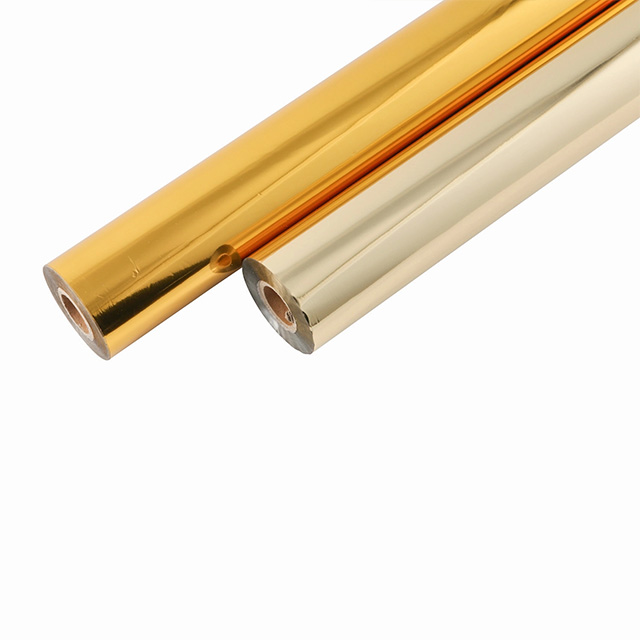
Stamping is a mechanical and thermal process. You cannot evaluate a foil's heat resistance in a vacuum. Industry professionals rely on the T-P-T protocol to troubleshoot and optimize their production lines. This framework proves temperature, pressure, and time are inextricably linked.
Heat resistance must always be evaluated alongside machine pressure and dwell time. If you increase the speed of your production line, you decrease the dwell time. To compensate for this lost time, you must increase either the temperature or the pressure to achieve the same bond. However, pushing pressure too high can crack brittle plastics. Pushing temperature too high can melt the substrate. You must find the perfect equilibrium between these three variables to ensure a clean, durable transfer.
A common mistake involves trusting the digital readout on the stamping press. The machine displays the temperature of the internal heating block. It does not show the actual heat reaching the foil-adhesive interface. Thermal energy dissipates as it travels through the metal die. It dissipates further as it pushes through the foil's carrier film. The true interface temperature is often 10°C to 20°C lower than the block temperature. You must account for this thermal drop off when configuring your machine settings.
Several physical components dictate how efficiently heat moves from the machine to the adhesive layer. You must align your tooling choices with your foil specifications.
Different polymers demand completely different adhesive chemistries and thermal approaches. You cannot use a universal foil across all plastic substrates. Categorizing your materials helps narrow down the correct product formulation.
Common Polymer Thermal Guidelines
| Polymer Category | Substrate Examples | Typical Tooling Temp (°C) | Key Considerations |
|---|---|---|---|
| High-Temperature Resilient | PP, Hard PET, Nylon | 130°C – 150°C | Tolerates high pressure; focus on high-gloss retention. |
| Heat-Sensitive / Soft | Soft ABS, PVC | 110°C – 120°C | Requires light pressure to avoid surface debossing. |
| Crystal Clear Plastics | Acrylic, Polystyrene | 100°C – 115°C | Highly prone to thermal crazing; silicone dies recommended. |
| Low Surface Energy (LSE) | Untreated PE, HDPE | 120°C – 140°C | Adhesion depends on chemical primers, not excessive heat. |
Materials like Polypropylene (PP) and hard PET can withstand significant thermal abuse. Standard operating windows for these plastics range from 130°C to 150°C when using metal dies. Because the substrate will not easily warp, your primary focus shifts to production speed and aesthetic quality. You should source foils that offer high-speed thermal release mechanisms. These formulations ensure the metallic or pigmented layers retain their high gloss finish even when subjected to intense, rapid heat cycles.
Working with softer or clearer materials requires absolute precision. A standard foil will easily ruin these sensitive parts.
When selecting a soft ABS foil, low-temperature activation is mandatory. Soft ABS yields easily under pressure and heat. You must use formulations designed to release between 110°C and 120°C. If you exceed this range, the heated die will sink into the plastic, creating permanent indentations and surface marring. The adhesive must flash-melt instantly to allow for extremely light machine pressure.
Crystal clear plastics, such as Acrylic and Polystyrene (PS), present different challenges. They are highly susceptible to "crazing." This phenomenon occurs when heat induces microscopic cracks that turn the clear plastic cloudy. You prevent this by utilizing highly sensitive, quick-release foil formulations paired with silicone dies. The silicone provides a softer impact, while the specialized foil prevents the need for extended dwell times.
Low Surface Energy (LSE) plastics, like untreated Polyethylene (PE), are notoriously difficult to decorate. Operators often make the critical mistake of increasing the heat to force the foil to stick. This thermal brute force approach fails entirely. It warps the plastic while providing zero adhesion improvements. LSE plastics lack the microscopic surface tension required for standard adhesives to grip. You must use foils manufactured with specific primer-matched adhesives designed specifically for LSE substrates.
As you scale your production volume, your mechanical setup will likely change. Upgrading machinery alters the physical mechanics of the stamping process. Your foil must adapt to these new realities without sacrificing the longevity of the finished product.
The type of press you operate dictates your thermal constraints. Vertical flatbed presses utilize an area-contact method. The die presses down flat against the part, allowing for longer dwell times (often measured in full seconds). This longer exposure means you can use foils with standard heat resistance.
Continuous rotary stamping operates entirely differently. It uses a line-contact method where a heated cylinder rolls over the substrate. Dwell times are reduced to mere milliseconds. Continuous rotary stamping requires foils with significantly lower heat resistance. The adhesive must activate and release almost instantly. If the foil requires too much thermal energy, the rotary press will move past the part before the sizing melts, resulting in a patchy transfer.
Lowering your stamping temperature to achieve faster speeds carries inherent risks. You must ensure that dropping the heat does not compromise the final product's integrity. Excellent heat transfer durability means the applied foil can survive real-world abuse. If the adhesive does not reach its full cross-linking temperature, the foil will easily scratch off. You must verify that the low-temp foil you select still offers high resistance to physical abrasion, harsh cleaning chemicals, and prolonged UV exposure.
Sometimes, the thermal constraints of a substrate are simply too severe. If a plastic part is exceptionally thin or highly prone to melting, traditional hot stamping might not be viable. In these specific edge cases, UV-cured cold foil serves as an excellent alternative. Cold foiling applies an adhesive via a printing plate, applies the foil, and cures it instantly with UV light. It removes the heated die entirely from the equation. This provides a highly effective pivot for extremely sensitive manufacturing needs.
Never rely solely on a manufacturer's technical data sheet to make your final purchasing decision. Theoretical numbers rarely align perfectly with the realities of an active factory floor. Rigorous physical testing is the only way to mitigate risk.
A successful trial begins with accurate sampling. Asking a vendor for "generic plastic foil" guarantees failure. Plastics are heavily modified with colorants, plasticizers, and mold-release agents. These chemical additives drastically alter the thermal properties and surface energy of the base polymer. You must provide your foil vendor with exact physical samples of your specific molded parts. Let their laboratory match the adhesive sizing to your exact proprietary resin blend.
Once you receive the custom-matched foil rolls, you must conduct a methodical step-test on your actual production equipment.
Finding a foil that works perfectly on Tuesday does not guarantee it will work perfectly next month. You must evaluate the manufacturer's ability to provide batch-to-batch consistency. Inconsistent adhesive formulations will force your operators to recalibrate the plastic stamping foil heat resistance settings constantly. Ensure your vendor operates under strict ISO certifications. Request updated Technical Data Sheets (TDS) with every major shipment to verify that the core chemical properties have not drifted.
Selecting the optimal thermal parameters for your decoration process is a precise engineering discipline. You must balance the physical integrity of your polymer substrates against your machine speeds and adhesive chemistry. Remember that the T-P-T protocol governs every successful transfer. You cannot isolate temperature without adjusting pressure and dwell time. Furthermore, matching the specific formulation to the surface energy of your parts prevents costly adhesion failures down the line. Stop guessing your machine parameters. Request a targeted technical consultation and demand customized sample packs based on your exact resin codes and machinery setup to secure your production yields.
A: The recommended temperature assumes standard dwell times and die materials. If you are experiencing melting, you likely have hidden variables at play. Excessive dwell time exposes the plastic to heat for too long. Using a silicone die instead of metal forces you to run higher block temperatures, which can radiate excessive ambient heat. Always calibrate parameters based on your specific tooling.
A: Soft ABS generally requires a low-temperature activation range, typically between 110°C and 120°C. Because the material is pliable, you must pair this low heat with exceptionally light machine pressure. Using standard temperatures or high pressure will easily deboss the plastic, leaving permanent, unsightly indentations on the finished product.
A: No, this is a dangerous manufacturing myth. High heat will only cause severe thermal distortion and warping. LSE plastics, like untreated Polyethylene, reject adhesives due to a lack of surface tension. They require chemical compatibility through specialized adhesive sizing, not thermal brute force.
A: Machine speed and dwell time share an inverse relationship. As production speeds increase, the heated die spends less time in contact with the substrate. To compensate for this reduced thermal exposure, you must use foils engineered with faster, lower heat release thresholds to ensure the adhesive melts instantly.


