
close
Choose Your Site
Global
Social Media

Views: 0 Author: Site Editor Publish Time: 2026-08-18 Origin: Site


Modern packaging production leaves absolutely no room for costly errors. Inline overprinting on cold foil demands precise chemical compatibility between the foil surface, the applied adhesive, and your chosen inks. Even a minor mismatch during this process can completely derail a busy production shift. Unpredictable adhesion failures lead directly to massive rejected print runs. They waste highly expensive substrates while ultimately compromising crucial brand integrity. Print managers simply cannot afford to guess when managing material compatibility.
We provide a highly transparent, evidence-based methodology to evaluate these complex systems thoroughly. You will learn exactly how to test overprintability before you commit to commercial-scale production operations. This detailed guide ensures your quality control framework stands up to the most demanding real-world press conditions imaginable.
Standard foils contain a release coating designed to repel liquids. They cannot accept subsequent ink layers. Overprintable foils rely on a highly specialized top coat instead. This engineered lacquer layer readily accepts wet printing inks. It acts as a chemical bridge. The top coat anchors the metallic layer below while gripping the ink above. Manufacturers formulate this layer meticulously. We must understand this specific chemical boundary to control the printing process effectively.
Ink reticulation easily ruins complex print jobs. It occurs when surface tension is mismatched between the substrate and the ink. You need a specific dyne level to prevent this failure. Typically, the foil must measure above 38 to 40 dynes/cm. Proper wetting happens only when the ink's surface energy is lower than the foil's surface energy. If the foil dyne level drops, the ink will bead up instantly. Operators use dyne pens to verify this energy level prior to printing. It remains a non-negotiable metric for quality control.
Inline printing behaves very differently than offline processing. Inline wet-on-wet applications force inks onto an uncured or partially cured foil surface. The curing times are measured in mere milliseconds. Conversely, offline printing happens wet-on-dry. It allows the foil adhesive ample time to set. The foil fully anchors to the paperboard before inks hit the surface. This fundamental difference drastically impacts the final chemical bond. Testing offline samples does not guarantee inline success.
You must establish strict baseline criteria for your materials. A high-quality offset cold stamping foil must exhibit consistent release properties. The top coat must remain perfectly even across the entire web. High metallic brightness is also essential for visual impact. You should evaluate these physical properties carefully before moving to chemical testing. Check for oxidation spots or uneven roll tension. These mechanical defects often masquerade as chemical adhesion failures later on the press.
Different ink formulations behave uniquely on metallic surfaces. Oxidative drying inks dry through air exposure and absorption. UV-curable inks cure instantly via intense ultraviolet light. Low-migration inks have incredibly strict formulation limits for food packaging. Their varying chemistries mean foil ink adhesion performance fluctuates wildly. A foil optimized for standard UV ink might reject a low-migration LED-UV ink entirely. You must test the exact ink series planned for production.
The offset blanket or flexo plate applies the cold foil adhesive. This component dictates the foundation of your print. The adhesive must lay down with perfect smoothness. A bumpy or ribbed adhesive layer creates a textured foil surface. This microscopic texture directly affects subsequent ink coverage. Heavy adhesive weights cause edge bleeding. Light adhesive weights leave microscopic voids. Both extremes destroy the integrity of the overprinted image.
Equipment degradation acts as a hidden enemy in print shops. UV lamp degradation causes massive curing issues. Insufficient LED-UV wattage creates dangerous pseudo-adhesion failures. In these scenarios, the ink seems perfectly dry to the touch. However, it has not bonded chemically to the foil top coat. The bond breaks down hours or days later. You must monitor lamp operating hours diligently. Use radiometers to measure actual millijoule output at the substrate surface.
The base substrate interacts with the overall foil-and-ink sandwich constantly. Base paper porosity matters immensely. Surface treatments on paperboard alter how the adhesive penetrates. A highly absorbent uncoated board drains the adhesive quickly. This starves the foil of its necessary bonding agent. A heavily coated board might cause adhesive spread. You must test your overprinting system on the exact paper stock scheduled for the final job.
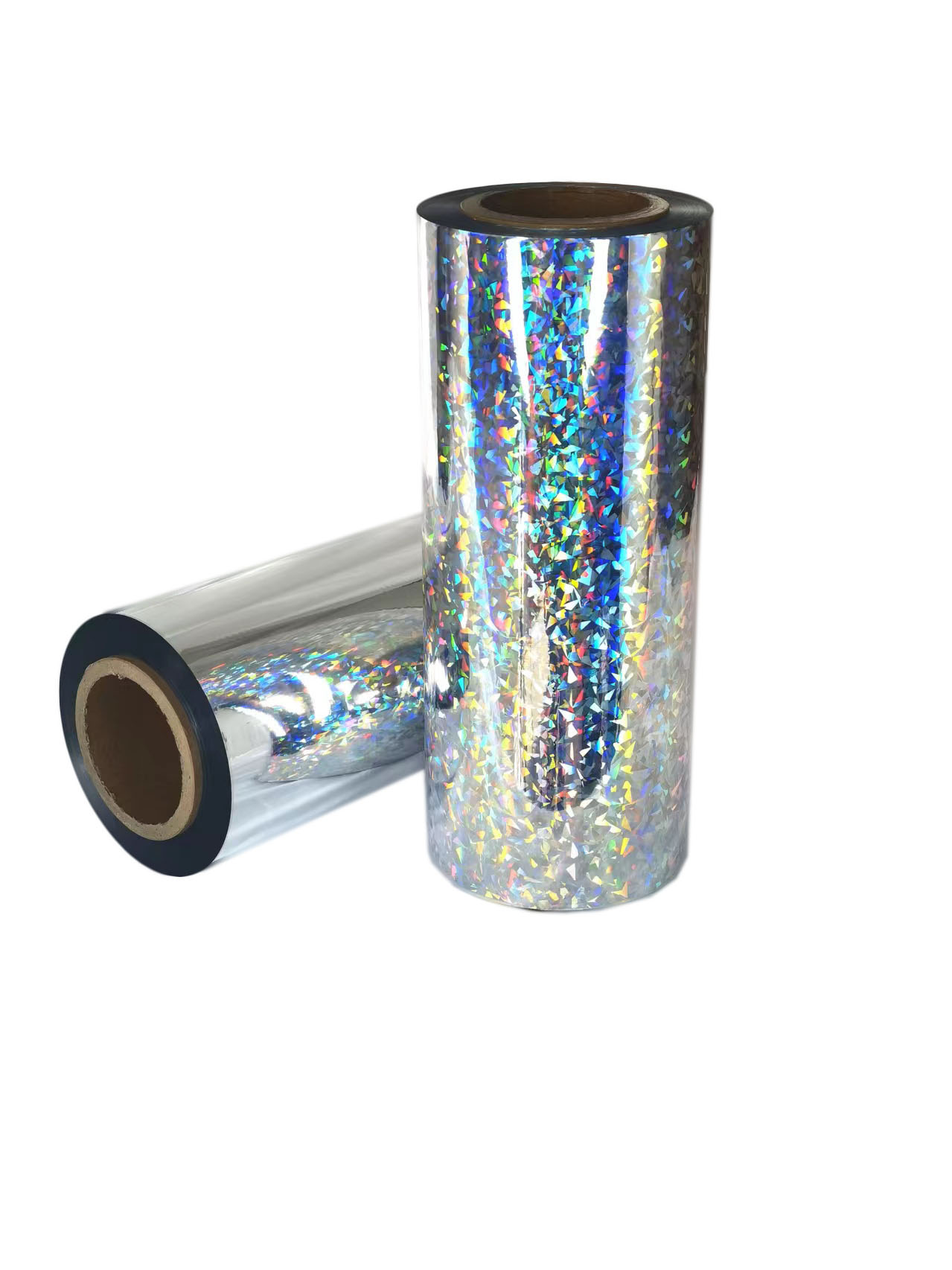
Never rely solely on static lab environments for final approval. A hand-roller test cannot replicate a high-speed press. You must run tests under actual production speeds. Mirror your exact real-world curing conditions. Set the UV lamp wattage to standard operating levels. Keep the press room temperature and humidity constant. This meticulous preparation ensures your test data actually translates to commercial success.
The tape peel test remains the industry standard for adhesion verification. You should use standardized tapes like 3M 610 or 3M 810. First, score the cured ink in a precise cross-hatch pattern. Use a specialized cutting tool to ensure even depth. Apply the tape firmly over the grid. Use a standard weight or firm thumb pressure to smooth it out. Remove the tape rapidly at a strict 180-degree angle. Finally, quantify the adhesion loss by examining the tape and the grid. Any ink removal above 5% generally indicates a failing grade.
Printed packaging faces severe friction during transit. You must simulate shipping and handling wear. We recommend utilizing a Sutherland Rub Tester. Attach a standardized receptor weight to the machine. Set the device for a specific stroke count, usually between 50 and 100 strokes. Examine the overprinted foil for scuffing or ink transfer. This mechanical test proves the durability of the fully cured ink film on the metallic surface.
Inks can become brittle after aggressive UV curing. You must check the brittleness of the cured ink layer. Use a standardized stylus scratch tester for empirical data. A simple fingernail scratch test works well for quick press-side checks. Run your nail firmly across heavy ink coverage areas. If the ink flakes away easily, it reveals top-layer fragility. This often points to over-curing or an expired foil top coat.
A standardized cold foil quality test requires rigid documentation. Log your pass and fail metrics accurately every time. Record specific machine settings, including press speed and lamp power. Note the pressroom environmental conditions like humidity. This thorough documentation creates an objective baseline for future comparisons.
The following parameters define a successful testing protocol.
| Testing Method | Equipment Needed | Failure Indicator | Passing Criteria |
|---|---|---|---|
| Cross-Hatch Tape Peel | 3M 610 Tape, Cross-hatch cutter | Ink flakes attached to tape | >95% ink retention on foil |
| Surface Energy Check | Calibrated Dyne Pens | Fluid beads up instantly | Fluid remains flat for 2 seconds |
| Rub Resistance | Sutherland Rub Tester | Visible scuffing or color transfer | No visible marring after 100 strokes |
| Scratch Test | Hoffman Stylus or Fingernail | Ink chips or dusts off | Ink layer dents but does not break |
Total ink delamination occurs when the ink lifts entirely off the foil surface. The metallic layer remains perfectly intact on the paper. This failure usually signals a severe surface tension mismatch. Sometimes it indicates an expired or degraded foil topcoat. You must verify the dyne level of the raw foil immediately. If the dyne level is sufficient, your ink formulation may lack the necessary wetting agents.
Foil plucking behaves differently than ink delamination. During plucking, the ink grips the foil perfectly. However, the foil itself tears away from the paperboard substrate. This specific failure points directly to an adhesive issue. The adhesive may be applied too thinly. Alternatively, the substrate might be too weak, causing fiber tear. Do not blame the foil topcoat for plucking failures.
Sometimes ink pools into microscopic puddles or looks patchy. This mottling destroys image clarity. Root causes include contaminated foil rollers transferring oils. Uneven adhesive distribution also causes this visual defect. Check your ink viscosity carefully. High-viscosity inks struggle to level out smoothly on hard metallic surfaces. Diluting the ink slightly often resolves mild mottling issues.
Follow objective steps before discarding the current foil candidate entirely. Troubleshoot systematically to isolate variables.
Read a manufacturer's Technical Data Sheet carefully. Approach every TDS with healthy skepticism. Look for specific guarantees regarding UV and LED compatibility. Verify the guaranteed shelf life of the topcoat. An expired overprintable cold foil will fail tape tests instantly. Ensure the dyne level specification matches your internal ink requirements. Good documentation prevents poor purchasing decisions.
Never rely on generic marketing claims. Demand relevant case studies from your supplier. Ask for physical sample rolls. These samples must explicitly match your chosen substrate and ink ecosystem. Run these samples through your established testing protocols. A reliable over printable silver foil will pass your cross-hatch and rub tests consistently across multiple press runs.
Even premium standard foils might fail your rigorous adhesion protocols occasionally. Evaluate the supplier's willingness to participate in press-side trials. A strong partner will send technicians to your facility. See if they offer custom topcoat formulations. Strong vendor support drastically reduces your internal troubleshooting time. You need a partner, not just a material distributor.
Successful overprinting remains a complex, system-wide achievement. It involves tight coordination between your foil, ink, adhesive, and specific press conditions. You cannot isolate one variable and expect perfect results. Rigorous, standardized testing serves as your only true defense against costly production failures.
Stop relying on guesswork during your make-ready process. Encourage your print managers to request sample rolls actively. Conduct documented press trials using this outlined framework. Validate supplier claims objectively before entering full-scale production. This disciplined approach guarantees brilliant, durable metallic packaging every single time.
A: Wait times depend entirely on your ink system. You can test UV and LED-UV inks immediately after they exit the curing station. Their chemical bonds form instantly. However, conventional oxidative inks require a minimum 24 to 48-hour waiting period. Testing them prematurely guarantees a false failure result.
A: No. Non-overprintable foils feature release coatings designed specifically to repel liquids and prevent sticking. They will actively repel your printing ink. You strictly require specialized foils engineered with an ink-receptive topcoat. Always verify this specification before ordering.
A: The industry-standard benchmark sits between 38 and 42 dynes/cm. This surface tension ensures proper ink wetting for most commercial UV and conventional inks. If the dyne level drops below 36, you will likely experience severe ink reticulation and adhesion failure.
A: Delayed failures usually stem from post-curing embrittlement or chemical migration. UV inks can continue cross-linking long after leaving the press, making them brittle enough to flake off. Additionally, unreacted chemicals from the adhesive or ink can migrate over time, breaking down the foil's topcoat interface.


