
close
Choose Your Site
Global
Social Media

Views: 0 Author: Site Editor Publish Time: 2026-07-30 Origin: Site


Specifying the wrong decorative finish can quickly derail a production schedule. Flaking details, filled-in lettering, and poor adhesion on the press cause significant financial losses and missed project deadlines. Sourcing the right material requires you to balance aesthetic brand requirements alongside strict mechanical realities. You must carefully account for substrate surface tension, press operating speed, and thermal parameters to ensure flawless application. This guide provides a detailed technical evaluation framework to help you define precise material requirements for your printing projects. We will show you how to minimize testing cycles and drastically reduce costly scrap rates on the production floor. By understanding these core principles, you can confidently select a reliable partner for high-volume commercial print runs. Proper specification empowers your procurement and design teams to achieve premium results consistently without sacrificing operational efficiency.
Procurement teams often rely on generic material requests, asking simply for "gold" or "silver" finishes. This approach immediately introduces high levels of financial risk. When specifications remain vague, press operators spend hours modifying machinery settings to force incompatible materials to work. This generic approach inevitably leads to excessive press downtime, high scrap rates, and ultimately, compromised brand perception on the retail shelf. When shoppers see peeling or tarnished logos on luxury boxes, they question the quality of the product inside. Securing the correct paper packaging foil requires moving past color alone and addressing the specific chemistry between the substrate and the decorative layer.
Press floor failures rarely stem from machine malfunction; they usually trace back to poorly matched material specifications. By identifying these issues early, you protect your margins and maintain aesthetic consistency. Here are the most common failure points encountered during commercial print runs:
Common Mistake: Ordering bulk materials based on a digital PDF proof without sending actual substrate samples to your manufacturer. Always require wet-proofing on the exact paper stock planned for mass production.
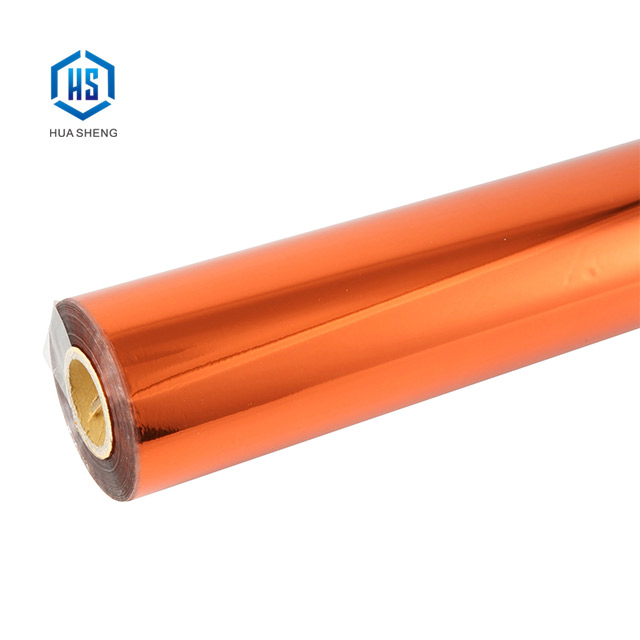
To avoid the pitfalls mentioned above, you must define the physical and chemical properties of the material before placing an order. Establishing accurate hot foil specifications ensures operators can mount the roll, set the temperature, and run the job efficiently. This involves analyzing four critical dimensions of the transfer process.
You must match the sizing layer (the heat-activated adhesive) to the porosity and coating of your chosen paper. Print shops measure paper receptiveness using dyne levels. Raw kraft or uncoated cotton papers feature high porosity and require an aggressive, thick sizing layer to bridge the uneven surface fibers. Conversely, UV-coated folding cartons possess a sealed, low-surface-tension finish. They require specialized chemical sizing designed to bite into slick varnishes. Failing to match the dyne level of the paper results in total adhesion failure.
The carrier film holds the metallic and adhesive layers until the heated die presses them onto the paper. The tension between these layers—known as the release characteristic—must perfectly match the artwork design. Tight release formulations hold onto the carrier film stubbornly. They are strictly necessary for crisp, fine details and elegant typography. Easy or loose release formulations let go of the carrier film rapidly. You require them for large, solid-block coverage to ensure even transfer without pinholing. Using a tight release on a solid block leaves patchy, incomplete coverage.
Table Name: Release Characteristic Application Guide
| Release Type | Artwork Suitability | Best Practice Application | Common Risk if Misused |
|---|---|---|---|
| Tight Release | Fine lines, small text, delicate filigree | Use with brass dies for precision edges | Patchy coverage on large solid blocks |
| Medium Release | Combination designs (text + small logos) | Standard commercial packaging runs | May struggle with extreme micro-details |
| Easy/Loose Release | Solid backgrounds, large geometric shapes | Use heavy stamping pressure for even transfer | Bridging and filled-in text on fine details |
You must specify materials that activate cleanly within the specific thermal parameters of the print shop's equipment. Standard operations typically run between 110°C and 150°C. If a formulation requires 160°C to activate, but the rotary press can only safely sustain 130°C at high speeds, the adhesive will not melt sufficiently. Always verify the thermal capacity of the stamping dies—brass and magnesium conduct heat differently, affecting the actual temperature reaching the substrate.
Moving beyond basic "gold" or "silver" requests involves defining exact optical expectations. You should specify gloss levels for high-reflectance finishes or matte levels for understated, modern luxury. If using pigment foils, define the opacity requirements to ensure underlying dark papers do not show through the transferred color. Holographic patterns require specific depth and orientation callouts to guarantee consistency across the packaging face.
Mechanical specifications matter just as much as chemical ones. Managing how the material is delivered directly impacts production efficiency and overall project budgets. Overlooking physical roll dimensions results in unnecessary edge trim waste and frustrating press delays.
You must determine the correct core size to match the specific mandrels on your printer's press. A standard paper foil roll generally comes on either a 1-inch or 3-inch core. Narrow web rotary presses typically utilize 1-inch cores, while wider, high-speed flatbed presses mandate 3-inch cores to maintain proper web tension. Ordering the wrong core size means the roll simply cannot be mounted on the machine.
Calculating master roll dimensions properly maximizes yield and minimizes edge trim waste. When designing multi-up packaging sheets, spacing dictates material consumption. Follow these steps to optimize your yield:
These materials represent sensitive chemical compounds that degrade if handled improperly. You must address temperature and humidity controls to prevent degradation before the print run. Store rolls vertically to prevent pressure marks or "telescoping" of the layers. Maintain a warehouse environment between 15°C and 25°C, with relative humidity staying below 65%. Exposing stored rolls to extreme heat or damp conditions causes the adhesive sizing to pre-activate or degrade, rendering the material useless upon press mounting.
Modern consumers demand environmentally responsible packaging. Brands face immense pressure to deliver striking aesthetics without rendering the final box unrecyclable. Fortunately, high-quality hot stamping foil for paper can align perfectly with strict environmental mandates if specified correctly.
A common myth suggests that metallic finishes ruin paper recyclability. In reality, the transferred metallic layer is micro-thin, typically measuring less than 2.5 microns thick. Unlike plastic laminations, this process transfers only lacquer, metalizing aluminum, and adhesive—leaving the plastic carrier film behind. Because the aluminum layer is so microscopic, it easily breaks down and disperses during the standard paper repulping process. When specifying materials for sustainable projects, request documentation showing they pass PTS certification (or equivalent regional standards) for repulpability.
Global packaging regulations grow stricter every year. You must ensure the specified materials are entirely free of heavy metals. Demand transparency regarding REACH and RoHS compliance. Furthermore, scrutinize the Volatile Organic Compound (VOC) content of the adhesive and lacquer layers. Many regions now enforce strict local packaging VOC regulations, and utilizing non-compliant decorative finishes can trigger heavy fines or retail bans.
While recyclability is straightforward, compostability presents greater challenges. You must transparently address the current limitations of metallic finishes on certified compostable packaging to avoid accusations of greenwashing. Heavy metallic coverage often disrupts the organic breakdown process required for industrial composting certifications. If you need a fully compostable box, consult with your manufacturer about specialized biodegradable pigment finishes, or limit metallic coverage to less than 1% of the total surface area to pass strict degradation tests.
Even the most rigorous specifications fall flat if your manufacturing partner cannot execute them reliably. Moving from prototype to mass production demands a vendor who understands the nuances of commercial printing. Evaluating a packaging foil supplier requires looking beyond their color catalog and assessing their operational infrastructure.
Never commit to bulk orders based purely on visual swatches. You need to know if the supplier offers robust lab-scale proofing. They should readily provide sample trial rolls tailored to your specific paper substrate. A credible partner will run in-house adhesion tests on your provided paper samples before recommending a specific formulation, drastically reducing the risk of press-side failures.
Luxury packaging demands absolute uniformity across production runs. Evaluate the supplier's quality control tolerances for color matching, typically measured in Delta E values. A Delta E variance greater than 2.0 often results in a visible color shift on the retail shelf. Furthermore, demand documentation on their release consistency; an arbitrary shift from a tight release to a medium release between batches will cause immediate bridging issues on intricate artwork.
When press operators encounter sudden adhesion issues or pinholing, the presses stop, and money burns. Assess the supplier's ability to provide immediate engineering support. The best partners offer rapid remote troubleshooting, analyzing photos of the defect and recommending immediate adjustments to pressure, dwell time, or temperature. Top-tier vendors will even dispatch technicians for on-site support during critical press trials.
Finally, vet their logistical capabilities. You must understand their lead times for standard versus custom-matched colors. Ask about their policies regarding inventory buffering for custom formulations. If your product experiences a sudden spike in demand, you need to know their Minimum Order Quantities (MOQs) and how quickly they can expedite a fresh master roll to your printing facility.
Proper specification bridges the critical gap between visionary design intent and harsh manufacturing reality. By understanding the interplay of dyne levels, release characteristics, and thermal windows, you prevent costly press downtime and ensure crisp, durable brand presentation. The difference between an amateur finish and luxury packaging lies entirely in the technical details defined before printing ever begins.
Your next step should be a thorough audit. Advise your procurement and production teams to collect samples of their current substrates and existing artwork files. Review the surface tensions and detail requirements before requesting a specialized trial roll from your vendor. Do not settle for generic material assumptions.
We encourage you to contact our technical team to develop a custom specification sheet tailored perfectly to your project. Request substrate-specific sample rolls today to experience seamless press operations and elevate your packaging to the highest commercial standards.
A: The primary difference lies in the adhesive sizing layer. Uncoated papers are highly porous and rough, requiring an aggressive, thicker adhesive to bridge the fibers and grip the surface securely. Coated papers feature smooth, sealed surfaces (like UV varnishes), requiring a specialized chemical sizing formulated to melt and bite into slick, low-surface-tension coatings without slipping.
A: Choose metallic formulations when you need high-end reflectance, brilliant shine, and a premium luxury aesthetic. They utilize a micro-thin aluminum layer for brightness. Choose pigment formulations when you need opaque, flat matte, or high-gloss color blocking without the metallic shine. Pigments act more like dry, heat-transferred ink, perfect for bold typography or minimalist designs.
A: Yes, it can be recycled efficiently. The transferred aluminum layer is incredibly thin—typically less than 2.5 microns. During the standard repulping process at recycling facilities, this microscopic metallic layer easily breaks down and disperses into the pulp mass without disrupting the recycling stream or degrading the recovered paper quality.
A: Peeling usually stems from a mismatch between the paper and the material's adhesive sizing layer. The top culprits include inadequate stamping temperature failing to melt the adhesive, excessively low press pressure preventing physical bonding, or attempting to stamp over incompatible paper varnishes that possess surface tensions too low to accept the transfer.


