
close
Choose Your Site
Global
Social Media

Views: 0 Author: Site Editor Publish Time: 2026-08-24 Origin: Site


Achieving a premium metallic finish on plastic components historically meant heavy costs. You often faced complex electroplating processes or actual metal integration. Modern decorative foils provide a highly scalable alternative. They work perfectly for manufacturers and product designers alike. Applying a hairline or brushed metal effect directly to plastic substrates bridges a crucial gap. It merges premium aesthetics and manufacturing efficiency.
This guide evaluates how you select, specify, and implement these decorative layers. We focus heavily on material compatibility and application methods. You will also learn vital supplier evaluation techniques. Applying these insights ensures a durable, defect-free finish on every production run. Proper foil integration transforms plain plastics into striking, high-value consumer goods.
Substrate Matching is Critical: The adhesive layer of a brushed stamping foil must be chemically matched to the specific plastic (e.g., ABS, PVC, PETG) to prevent delamination.
Finish Variability: True "hairline" effects require precise depth control during the foil manufacturing process; specify stroke depth alongside color (e.g., silver vs. gold).
Application Parameters Define Success: Roll-on temperature, pressure, and dwell time dictate whether the plastic sheet foil adheres cleanly without blistering or losing its brushed texture.
Pilot Testing is Non-Negotiable: Always run small-batch line trials with sample rolls before committing to high-volume procurement.
Electroplating plastic parts introduces massive operational burdens. Using real brushed aluminum inserts increases part weight significantly. It complicates the supply chain. It limits your design flexibility. Many product engineering teams seek alternatives to these traditional methods. Heavy metal parts slow down assembly lines. They require separate fabrication facilities. You lose agility in your manufacturing process.
A successful foil implementation must deliver the visual depth of real metal. It must pass strict durability and adhesion tests. We often rely on standard cross-hatch testing (like ASTM D3359) for this metric. Operators score a grid into the surface. They apply specialized tape over the grid. They pull the tape away rapidly. Zero foil removal indicates a perfect bond. The chosen method must scale efficiently in continuous production environments.
Contrast the unit economics of applying hairline foil via hot stamping against traditional metal fabrication. Hot lamination processes stream seamlessly into existing extrusion lines. You bypass slow batch-based vacuum metallization entirely. You conserve manufacturing resources. You increase production throughput immensely. Eliminating secondary finishing steps reduces overall cycle times.
Environmental compliance also plays a huge role today. Modern dry-transfer foils bypass hazardous chemicals completely. Wet plating processes rely on toxic heavy metal baths. They generate hazardous wastewater. Dry foiling helps facilities meet strict environmental regulations easily. You avoid complex wastewater treatment protocols. You protect factory workers from toxic fumes.
Understanding foil anatomy remains essential for success. A standard foil structure contains multiple ultra-thin layers. You start with a PET carrier film. This film supports the entire structure during transfer. A release layer sits right below it. This layer melts under heat to release the design. Next comes a protective topcoat. The metallized layer provides the reflective base. The brushed texture layer gives the physical grain. Finally, a sizing or adhesive layer touches the plastic substrate.
Different plastics demand specific adhesive formulations. Hard plastics like ABS, polystyrene, and acrylic behave rigidly. They require specific heat-activated adhesives to ensure rigid bond strength. You cannot compromise on this formulation. A weak bond causes peeling along the edges. It ruins the product lifespan.
Flexible plastics pose entirely different challenges. Materials like PVC and PET bend and flex. They demand foils offering higher elasticity. High elasticity prevents cracking during bending or thermoforming operations. Formulators adjust the resin binders in the adhesive to match the flexural modulus of the target plastic.
Many manufacturers attempt to use universal adhesives. This often leads to failure. General plastic sheet foil formulations fail under high stress. They delaminate during extreme temperature fluctuations. You must specify chemistry matching your exact polymer blend.
Plastic Substrate Category | Common Materials | Adhesive Requirement | Primary Application Risk |
|---|---|---|---|
Rigid / Hard Plastics | ABS, Polystyrene, Acrylic | High-tack, heat-activated resin | Edge chipping during die-cutting |
Flexible Plastics | Soft PVC, PET, Elastomers | High-elasticity binder | Micro-cracking during thermoforming |
Recycled Blends | rPET, Mixed Polymers | Custom formulation required | Inconsistent adhesion spots |
Visual impact drives consumer purchasing decisions. Silver brush foil dominates the industry standard. You see it everywhere in automotive interiors. Home appliances like refrigerators and microwaves use it heavily. Consumer electronics frequently feature these metallic accents. Experts evaluate silver foils based on their reflectance. They measure the balance between cool and warm metallic tones. A cool silver mimics raw aluminum. A warm silver mimics polished nickel.
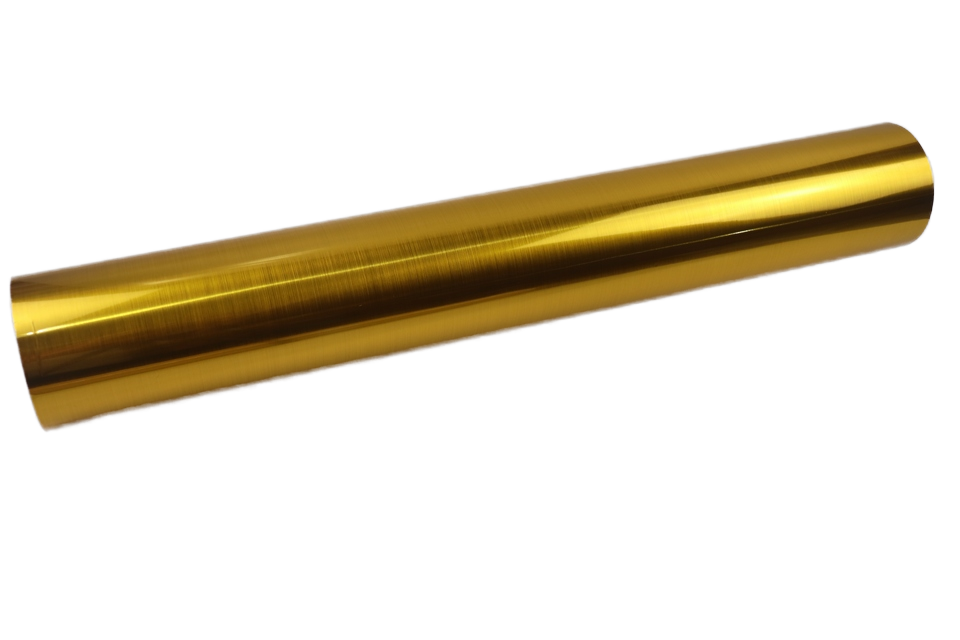
Luxury markets prefer entirely different palettes. Gold brush foil excels in luxury cosmetics packaging. High-end point-of-purchase displays utilize it to grab consumer attention. Architectural wall panels use gold to convey opulence. Designers evaluate gold foils strictly on undertones. They contrast brassy finishes against subtle champagne hues. Champagne tones suggest modern luxury. Brassy tones suggest traditional elegance.
Hairline texture variations dictate the final visual depth. Fine, medium, and coarse hairline strokes create entirely different visual effects. You must align the texture with the product dimensions. Small cosmetic tubes require fine strokes. Large refrigerator doors demand coarse strokes to remain visible from a distance.
Hairline Depth | Visual Characteristics | Tactile Feedback | Best Application Scenarios |
|---|---|---|---|
Fine Stroke | Subtle, highly reflective sheen | Nearly smooth to the touch | Lipstick tubes, small electronics |
Medium Stroke | Balanced grain, distinct metal look | Slight ridge sensation | Laptop casings, interior auto trim |
Coarse Stroke | Aggressive grain, matte appearance | Pronounced physical texture | Large appliance panels, wall sheets |
The depth of the brush stroke impacts light reflection heavily. It dictates how light travels across the curved edges of your product. It also changes the tactile feel of the finished product. Consumers expect a slight physical ridge when they touch a brushed metallic surface. Perfecting this texture builds tremendous brand credibility.
Choosing the right application method is vital for continuous yields. Roll-on hot stamping works best for continuous plastic sheet extrusion. It handles large flat panels efficiently. You use heated silicone rollers. These rollers press the foil evenly across wide webs. Targeted vertical stamping works better for molded, three-dimensional parts. You use shaped silicone dies for targeted applications.
Temperature and pressure tolerance dictate your yield rates directly. Applying too much heat melts the plastic substrate. Excessive heat also distorts the delicate hairline pattern. You lose the premium metallic effect entirely. The resin binders break down under extreme temperatures.
Inadequate pressure creates equally severe problems on the production line. Low pressure leaves trapped air beneath the foil. This causes visible blistering on the surface. Weak edge adhesion frequently follows low-pressure applications. Operators must calibrate silicone roller durometer ratings precisely.
Environmental durability separates premium foils from cheap alternatives. You must evaluate the foil topcoat thoroughly in a lab setting.
UV Resistance: Conduct accelerated weathering tests (ASTM G154). This prevents unsightly yellowing on silver finishes over time.
Scratch Resistance: Test the surface using standard pencil hardness scales. High-wear items demand a 2H or 3H rating.
Chemical Resistance: Expose the surface to common cleaning agents. Wipe panels using isopropyl alcohol and household degreasers.
Monitoring your environment prevents daily scrap spikes. Maintain strict climate control inside the stamping facility. High humidity degrades the sizing layer on exposed rolls.
Best Practice: Always precondition your plastic substrates to room temperature before stamping.
Best Practice: Clean the silicone rollers daily to remove microscopic dust particles.
Common Mistake: Storing foil rolls upright on hard concrete floors. This crushes the edges and causes web breaks.
Common Mistake: Using bare hands to load rolls. Oils transfer to the PET carrier and cause heat-transfer anomalies.
Supplier evaluation guarantees long-term project success. Batch-to-batch consistency serves as the primary trustworthiness indicator. Minor variations in the metallization process spell disaster. They cause highly visible color shifts across large production runs. You should request Delta E color measurement reports from previous batches. Values under 1.5 ensure visual uniformity.
Custom match capabilities separate actual manufacturing partners from mere vendors. Top suppliers engineer specific adhesive formulations. They adapt chemistry for custom polymer blends seamlessly. They even adjust sizing for challenging recycled plastics. Standardized adhesives fail constantly on mixed post-consumer resins.
Testing protocols must remain rigorous. Demand technical data sheets (TDS) from every potential supplier. These documents must prove REACH and RoHS compliance. They should outline industry-specific durability standards clearly. Never accept verbal confirmations regarding chemical compliance.
Frame your pilot process carefully before committing to a massive order. Follow this exact progression to eliminate risk:
Request A4 Flat Samples: Use these small sheets for initial lab adhesion tests and visual approvals.
Define the Stroke: Specify the exact micrometer depth of the desired hairline texture.
Procure a 100-Meter Test Roll: Run this roll directly on your production line to calibrate heat and pressure.
Conduct Destructive Testing: Perform cross-hatch, chemical wipe, and thermal shock tests on the stamped parts.
Lock the Formulation: Sign a specification agreement locking down the exact adhesive and texture recipe.
Transforming standard plastic sheets into high-value components is entirely possible. Proper integration of brush foil achieves this flawlessly. You must rigorously control chemical compatibility between the adhesive and the substrate. Application parameters demand constant monitoring on the factory floor. A slight temperature drop ruins adhesion instantly.
Prioritize suppliers capable of executing formulation adjustments. Avoid off-the-shelf commoditized foils whenever possible. Custom chemistry ensures the product matches your specific manufacturing environment perfectly. Tailored solutions prevent costly delamination failures.
Encourage your procurement and engineering teams to act proactively today. Request comprehensive technical consultations early in the design phase. Always order physical sample rolls for line trials. Rigorous substrate testing prevents costly manufacturing defects down the line. Proper planning yields spectacular, metallic finishes.
A: Standard foil features a smooth, mirror-like finish. It reflects light uniformly across its surface. Hairline foil features an engineered micro-texture. This texture scatters light intentionally. It simulates the mechanical brushing process of solid metal, providing realistic depth and grain.
A: Generally, no. For the brushed stamping foil to adhere properly, the base substrate must be entirely smooth. A textured plastic sheet traps air beneath the adhesive layer. This causes blistering and obscures the engineered brushed effect.
A: High-quality foils include an integrated clear protective layer manufactured into the roll. This handles standard handling and cleaning. However, extreme outdoor environments or high-wear automotive applications often necessitate a secondary UV hard coating for maximum lifespan.


