
close
Choose Your Site
Global
Social Media

Views: 0 Author: Site Editor Publish Time: 2026-09-24 Origin: Site


Opacity failures harbor massive hidden costs in modern manufacturing runs. Substrate show-through instantly ruins carefully matched brand colors. In severe cases, it completely destroys barcode legibility, causing sweeping retail compliance failures and product rejections. Historically, press operators relied on subjective visual approvals to judge these print runs. We must now shift toward objective, standardized inspection of pigment foil to eliminate this expensive guesswork. Relying on the human eye under varying plant lighting guarantees inconsistent batches and quality control gaps.
A rigorous inspection framework requires you to establish distinct methodologies for different material classifications. Porous substrates, such as uncoated paper, absorb heat and coatings unpredictably. Conversely, non-porous, transparent, or heavily dyed substrates—like rigid plastics—present entirely different adhesion and light transmission challenges. You must implement specific testing protocols tailored to these exact material categories. Doing so ensures you accurately evaluate foil performance, block underlying colors, and secure brand integrity before scaling up to large production operations.
Subjective visual checks are insufficient; reliable opacity evaluation requires standardized contrast ratio testing against black and white backings.
Substrate mechanics dictate performance: porosity and surface tension drastically alter how pigment foil behaves on paper versus plastic.
Evaluating high-risk variants, particularly white pigment foil, requires strict dwell-time and temperature testing to ensure pigment isn't thinned during application.
Supplier shortlisting must prioritize documented batch-to-batch consistency and specific formulation matching over baseline material cost.
Insufficient opacity silently drains production budgets. The compounding costs emerge through reprints, excessive material waste, and heavily delayed time-to-market. When you stamp a brand logo on a dark box and the background bleeds through, the entire batch becomes unusable. Brands spend thousands engineering exact Pantone colors. If a translucent foil alters that color visually, the product fails quality control immediately. You must uncover and address these issues before the press begins mass production.
Relying on human eye checks leads directly to inconsistent quality control. Visual evaluation suffers from metamerism. A foil layer might look perfectly dense under the warm incandescent lights of the production floor, but appear highly transparent under the cool fluorescent lighting of a retail store. Operator fatigue also plays a role. An inspector viewing their hundredth sample will perceive contrast differently than they did on the first. Instrumental evaluation removes human error and lighting variations from the equation.
You must establish strict acceptable opacity tolerances before initiating procurement. Establish a minimum contrast ratio percentage as your definitive success criteria. By mandating that a foil must block 98% of light over a standard dark backing, you create an undeniable metric. This prevents suppliers from shipping subpar materials and empowers your procurement team to negotiate based on proven, verifiable performance data.
Paper presents unique challenges driven primarily by absorption and surface texture. Uncoated or highly textured papers feature microscopic peaks and valleys. When heat and pressure apply the foil, the pigment stretches over these gaps. This stretching creates thin spots. Highly porous surfaces literally absorb the adhesive sizing, which pulls the pigment unevenly. You must factor this in when evaluating paper decoration foil coverage.
Rough surfaces heavily increase the risk of "pinholing." Pinholing occurs when tiny dots of the substrate remain exposed through the foil layer. While an individual pinhole seems insignificant, thousands of them collectively reduce the perceived opacity of the stamped area. The color looks washed out or faded. To mitigate this, inspectors must examine the stamped paper under magnification to differentiate between true pigment transparency and mechanical pinholing caused by surface roughness.
Plastic materials demand a different inspection lens. Transparency and surface tension completely alter the evaluation process. When evaluating plastic pigment foil on clear films like PET or BOPP, light transmission exposes the slightest density flaws. Since light passes entirely through the packaging, any thinness in the pigment layer becomes instantly glaring to the consumer.
Furthermore, non-porous adhesion introduces static electricity issues. Static can repel the foil during the transfer process, creating jagged edges or incomplete coverage. Continuous color blocks on plastic are notoriously difficult to keep fully opaque. Without the natural absorption that paper provides, the pigment must lay perfectly flat and bond purely via chemical adhesion and surface energy (dyne levels). Proper testing must account for how these plastics react to the heated stamping die.
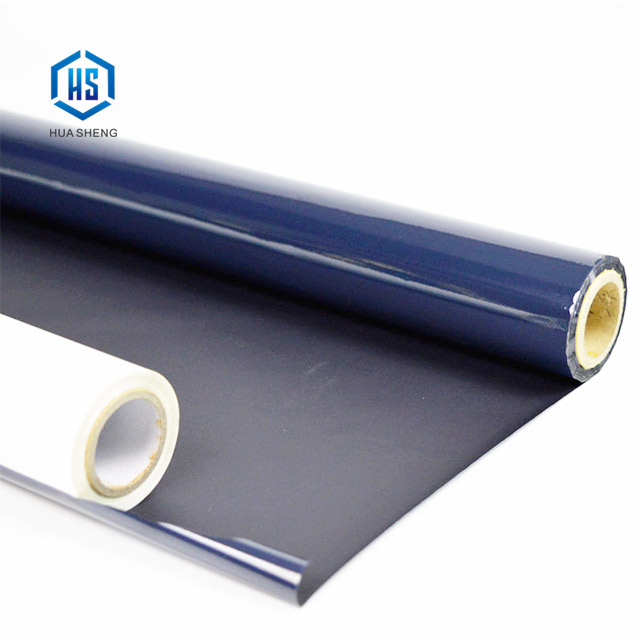
You must always inspect the foil after it has been stamped onto the target substrate. Checking a raw roll is a common but fatal mistake. The heat and pressure generated by the stamping die physically alter the pigment density. The carrier film also acts as a visual barrier while on the roll, masking potential transparency. Only the final transferred layer provides accurate data.
The most reliable objective measurement is the contrast ratio method. This standardizes how we view the percentage of light blocked by the foil. You achieve this by following a strict procedural sequence:
Apply the foil to a standardized clear testing film or the exact target substrate.
Place the stamped sample over a calibrated black backing tile and measure the light reflectance (Y_black).
Move the sample over a calibrated white backing tile and measure the reflectance (Y_white).
Divide the black reflectance value by the white reflectance value and multiply by 100.
Using spectrophotometers or specialized opacity meters guarantees accuracy. These instruments calculate the exact percentage of light blocked, removing all subjectivity. If an instrument returns a 99% contrast ratio, you know the coverage is solid.
If high-end instrumental measurement remains unavailable in your facility, you must execute standardized light box testing. You cannot rely on ambient factory light. Place the samples in a viewing booth calibrated to the D65 illuminant standard, which mimics natural daylight. You must verify opaque stamping foil density across multiple viewing angles. Tilt the sample back and forth to see if the underlying substrate color shifts the perceived hue of the foil.
White formulations demand the highest level of scrutiny. The core formulation challenge revolves around the primary ingredient: titanium dioxide (TiO2). While titanium dioxide scatters light brilliantly, it requires a significant volume of pigment to achieve true coverage. Because of this, white pigments are the most prone to substrate show-through. This vulnerability becomes painfully obvious on dark rigid setup boxes or black plastic cosmetic containers. The dark background easily overpowers a thin white layer.
When implementing your inspection criteria, you must aggressively check for yellowing or graying. If the required stamping temperature is too high, the white pigment foil will scorch, turning a crisp white into a dirty yellow. If the layer is too thin, the black substrate shows through, rendering the white as a dull gray.
You must also rigorously evaluate edge definition. To achieve high opacity, manufacturers apply thicker pigment layers to the carrier film. However, thicker layers often result in flaking or poor release during intricate stamping. If you stamp fine text or detailed barcodes, the thick pigment might bridge across the gaps. You must ensure the foil balances heavy pigment density with clean, sharp release properties.
Laboratory tests often fail to reflect the chaos of the production floor. Application variables constantly skew opacity scores. Excessive stamping temperatures literally volatilize binders or push the pigment layer outward, thinning the center of the stamped image. Over-pressurizing the die achieves the same negative effect. Both scenarios artificially lower the opacity score of an otherwise excellent material. You must align your testing parameters with actual machine settings.
Tooling considerations dramatically impact how the foil transfers. You must inspect the differences between flat stamping and rotary stamping. Rotary stamping provides significantly less dwell time, meaning the foil has less time to adhere and build density. Furthermore, the specific die materials alter heat transfer.
Tooling / Variable | Impact on Foil Transfer | Opacity Risk Level |
|---|---|---|
Brass Dies | Retains high, consistent heat. Transfers heavy pigment well. | Low - Generally promotes highly opaque transfers. |
Magnesium Dies | Cools rapidly. Requires higher baseline machine temperatures. | Medium - Fluctuating heat can thin the foil layer. |
Rotary Stamping | Minimal dwell time. Fast continuous contact. | High - Pigment may not fully release, causing transparent spots. |
Flatbed Stamping | Prolonged dwell time. Deep pressure application. | Low - Allows maximum pigment transfer and dense coverage. |
Finally, you must guard against the batch-to-batch consistency trap. A supplier might provide a perfectly opaque "golden sample" during the quoting phase. However, there is a severe risk of qualifying this sample if the supplier cannot replicate that exact formulation at scale. Subsequent rolls might feature diluted pigment loads. You must spot-test every new batch upon arrival using the contrast ratio method.
Choosing the right partner requires systematic evaluation. Begin by demanding and dissecting the Technical Data Sheets (TDS). You must verify the supplier's stated opacity metrics. Cross-reference their recommended operating windows for temperature and speed with your machinery capabilities. If a supplier promises high opacity but requires dwell times your fast-paced rotary press cannot achieve, the material will fail.
Sample testing requirements must be strictly enforced. Mandate blank sample rolls for in-house testing. You must test these rolls on your actual production equipment using your designated dies. Never accept pre-stamped vendor proofs. A vendor can easily double-stamp a proof in their lab to make it look flawlessly dense. Only in-house testing reveals the truth.
Compliance and safety represent non-negotiable evaluation dimensions. Highly opaque formulations sometimes rely on restricted chemicals to achieve their density. You must confirm that the formulations providing this high coverage do not violate regional regulatory requirements. Strict heavy metal restrictions apply heavily in the packaging industry (such as RoHS or REACH standards). Do not sacrifice compliance for visual density.
Your next-step action is to create an internal scoring matrix. Weigh opacity performance, required stamping speeds, and cost per MSI (Thousand Square Inches). Use this weighted data to finalize your supplier selection objectively. Do not select a vendor solely because their baseline material cost is lower if their opacity failure rate causes excessive waste.
True opacity validation bridges the critical gap between raw material specifications and actual production floor realities. By moving away from subjective visual checks and embracing calculated measurement, you protect brand integrity and eliminate wasteful reprints. Substrate porosity, heat variables, and tooling dynamics directly manipulate how pigments behave upon transfer.
We strongly recommend transitioning immediately to contrast ratio testing on target substrates. Implement this framework before finalizing any new vendor agreements. Stop relying on how a roll looks under factory lighting. Instead, let data drive your procurement and quality control.
Prompt your engineering and purchasing teams to act today. Request updated technical data sheets from your suppliers. Order trial rolls specifically for substrate-specific testing on your press. Finally, audit your current quality control equipment to ensure you have the necessary tools to measure contrast ratio accurately.
A: ASTM D589 for paper and ASTM D1003 for plastics serve as standard baseline references. However, they evaluate the raw substrates. To evaluate the applied foil, you must adapt these methods by using standardized black and white backing tiles beneath the stamped substrate to calculate the exact contrast ratio.
A: No. Formulation chemistry and pigment density matter significantly more than total carrier thickness. Excessively thick foils frequently cause mechanical release issues. They tend to flake off or destroy fine edge definitions during intricate stamping processes. Prioritize pigment concentration over total bulk.
A: The foil's polyester carrier film acts as a visual barrier while rolled up, creating a misleading illusion of density. Additionally, immense heat and stamping pressure physically thin the pigment layer upon transfer. Inspecting the actual stamped application reveals the true, altered state of the material.


