
close
Choose Your Site
Global
Social Media

Views: 0 Author: Site Editor Publish Time: 2026-08-21 Origin: Site


High-stretch knit fabrics, including spandex blends and athleisure wear, present unique mechanical challenges for surface ornamentation compared to rigid wovens. They stretch dynamically during everyday wear. This constant motion demands highly flexible materials. These applied materials must move organically alongside human bodies. Utilizing standard metallic foils on dynamic knits leads to severe micro-cracking. You will also experience poor rebound and rapid degradation after washing. These recurring quality issues result in high return rates. They also cause significant brand damage over time. Manufacturers often struggle to find sustainable solutions preventing these specific surface failures. You need a robust technical evaluation framework. This framework ensures you select and implement high-stretch foils correctly. In this comprehensive guide, we provide actionable strategies. These strategies ensure your decorated designs maintain long-lasting visual integrity. We will explore how you can perfectly preserve the garment's natural drape and inherent elasticity.
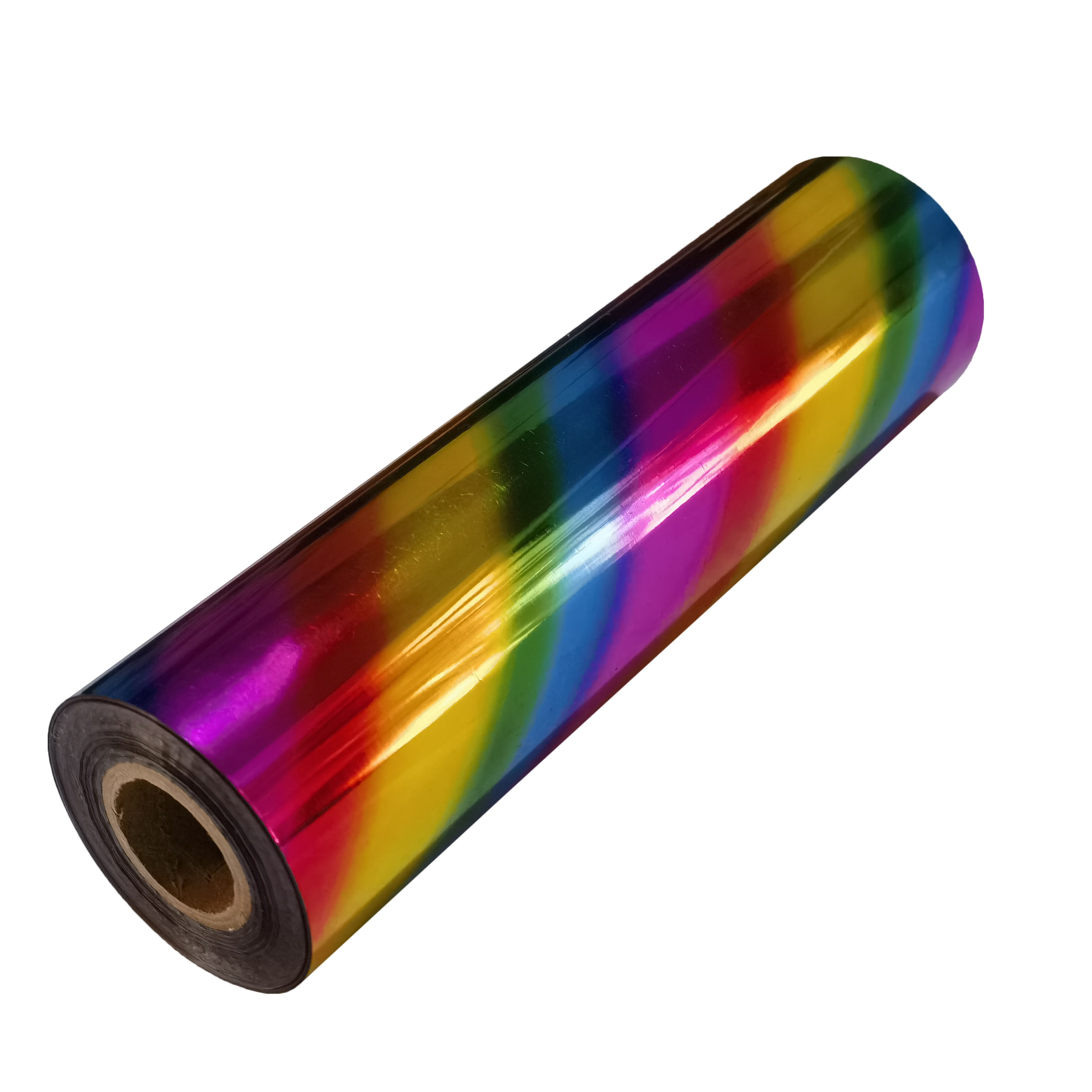
Woven fabrics rely on a rigid, intersecting grid of threads. This traditional structure creates a highly stable surface for decoration. Knit fabrics operate entirely differently. They consist of continuous interlocking yarn loops. These complex loops provide inherent multi-directional elasticity. Stretching a knit fabric forces its surface area to expand rapidly. This reality presents a major stress point for rigid decorations.
Metallic foil layers are generally non-porous. They are also naturally rigid by design. Applying standard foils to activewear forces the metallic coating to expand. If the applied foil lacks built-in elasticity, this mechanical stress breaks it. You will see immediate fracturing across the metallic finish. Micro-cracking destroys the premium aesthetic of the garment instantly. Consumers notice these tiny fissures immediately upon wearing the item.
Another common failure stems from adhesive-foil misalignment. Manufacturers often understand the need for flexible glue. They apply highly elastic adhesives to the knit substrate. However, they then pair this glue with a standard, rigid foil layer. Tension causes the glue base to stretch outward. Simultaneously, the top metallic layer resists this movement. This mechanical mismatch leads directly to severe delamination. The foil flakes off completely. The two layers physically fight each other under tension. We must align the flexibility properties of both materials to prevent this failure.
We must clearly understand specific elongation percentages. In textile manufacturing, this critical metric defines the exact point of fracture. It measures how far you can pull the material before it breaks. High foil elongation prevents post-stretch cracking entirely. Properly engineered stretch foils distribute tension evenly across the applied design. This distribution prevents visible fissures from forming. Visual integrity relies heavily on this stress distribution mechanism. Cracking destroys the commercial aesthetic value of any garment. Premium stretch foils solve this issue by expanding seamlessly.
Rebound matters just as much as stretching capability. High-quality foils recover their original shape quickly. They shrink back perfectly alongside the knit loops. Poor rebound leaves the design looking warped. It can also create an unappealing bubbled texture on the fabric surface. Premium foils always maintain a soft hand-feel. They do not stiffen the natural drape of the garment. You want the decoration to feel fully integrated into the fabric.
Finally, we must address daily wear and tear realities. Friction from physical movement degrades surface decorations over time. Regular laundering accelerates this degradation significantly. Elastic foils hold up much longer under these harsh conditions. They move actively alongside the fabric rather than resisting it. Rigid foils crack during the washing machine's agitation cycle. Flexible alternatives absorb this kinetic energy without sustaining damage.
Procurement requires strict technical evaluation criteria. We must assess multi-directional versus two-way stretch tolerances. High-spandex blends demand foils formulated for extreme elasticity. Identifying a premium stretch textile stamping foil involves specific performance benchmarks. You must test stretch recovery metrics rigorously. Do not accept supplier claims without physical verification.
Adhesive compatibility represents another critical procurement factor. You must pair the foil layer with suitable stretch adhesives. Water-based adhesives offer an excellent soft hand-feel. They work perfectly for lightweight fashion knits. Plastisol stretch adhesives provide high durability. You need plastisol for heavy-duty athletic applications. Always verify chemical compatibility before purchasing bulk supplies.
Release characteristics also demand close attention during evaluation. You must evaluate how cleanly the material separates. It separates from a PET carrier film during heat application. Clean separation directly impacts fine-detail resolution. Complex geometric patterns require highly responsive release layers. Poor release leaves jagged edges on intricate designs. This ruins the crisp appearance expected in professional apparel.
Prioritize compliance and safety certifications during procurement. Verify standard textile certifications for all imported materials. OEKO-TEX certification ensures chemical safety in apparel manufacturing. Sustainable and safe production protects both consumers and your brand reputation. Never compromise on verified chemical safety standards.
Application parameters dictate your production floor success entirely. We must balance temperature and pressure variables carefully. You need sufficient heat to activate the adhesive properly. However, excess heat causes dye migration in synthetic fibers. It can also scorch delicate knit blends permanently. Finding the optimal pressing temperature is a critical operational requirement.
Dwell time represents another major production variable. This metric calculates the exact press time needed. Optimal dwell time ensures deep fiber penetration. The adhesive must sink completely into the knit loops. Only then should you apply the screen printing foil. Insufficient dwell time leaves the adhesive sitting superficially on the surface. This leads to premature peeling after the first wash.
Peeling methodology significantly impacts the final bond strength. High-stretch applications predominantly require a strict cold peel process. The metallic layer must set entirely into the elastic adhesive bed. Ripping the carrier sheet off while hot disrupts this fragile bond. A hot peel lifts the foil before the adhesive solidifies completely. You lose edge definition and overall adhesion strength.
You must mitigate common production floor risks proactively. Inadequate tension control during roll-to-roll pressing causes major defects. The fabric must remain relaxed during application. Uneven platen pressure leaves unbonded patches across the garment. Calibrate your machinery daily to ensure uniform pressure distribution.
Table: Common Application Parameters for Activewear Knits
| Parameter | Target Range | Critical Warning |
|---|---|---|
| Temperature | 300°F - 320°F | Exceeding 320°F risks permanent synthetic fiber scorching. |
| Pressure | Medium-Heavy (40-50 PSI) | Uneven pressure causes partial delamination and patchy designs. |
| Dwell Time | 10 - 15 seconds | Insufficient time prevents deep adhesive penetration into loops. |
| Peel Type | Strictly Cold Peel | Hot peeling destroys the metallic bond and causes jagged edges. |
You must establish strict prototyping protocols immediately. Never rely solely on supplier specification sheets for final decisions. You must run physical stretch-and-recovery tests yourself. Always test on your exact production fabric. Blends behave very differently under heat and tension. Securing the perfect knit fabric foil requires customized validation.
Implement standardized wash-testing cycles for every prototype design. Evaluate real-world hold-up using varied environmental variables. Test different water temperatures and machine agitation levels. Compare line-drying results directly against tumble-drying impacts. Document every point of failure meticulously. Build a comprehensive matrix tracking durability across multiple wash cycles. This data drives intelligent procurement decisions.
Cost versus yield analysis justifies your material choices. Premium stretch foils carry a slightly higher upfront cost. However, they drastically reduce overall defective units on the floor. They also eliminate costly customer returns linked to cracked designs. This massive reduction offsets the initial material expense easily. Focusing on long-term yield always beats hunting for cheap materials.
Your next step involves establishing a controlled pilot run. Lock in your standard operating procedures immediately based on test data. Finalize these specific procedures for the print shop operators. Train your staff thoroughly on the new cold peel requirements. Complete this validation phase before moving into bulk manufacturing.
Proper fabric decoration on knits hinges entirely on substrate awareness. We must acknowledge the dynamic nature of modern activewear. Rigid applications will always fail on constantly moving bodies. Investing time in proper material selection remains crucial for brand survival.
Match the elongation properties of both foil and adhesive precisely. This pairing represents the only verifiable way forward for manufacturers. It guarantees commercial-grade, highly durable metallic finishes. Activewear and fashion knits demand this elevated level of engineering.
Take immediate action to improve your production lines today. Request technical data sheets from trusted foil suppliers. Ask for sample rolls of high-elongation materials. Begin standardized wash-testing on your specific knit blends immediately. Establish your application parameters through rigorous pilot testing.
A: No. Standard foils lack the flexibility to expand with spandex, resulting in immediate cracking and peeling when the garment is worn.
A: Use a specialized stretch foil, pair it with a highly elastic adhesive, ensure a complete cold peel, and follow strict care instructions (wash inside out on cold, avoid tumble drying).
A: While it varies by manufacturer, it typically ranges between 300°F–320°F (150°C–160°C). Crucially, the temperature must be high enough to cure the adhesive but low enough to prevent shrinking or melting the synthetic knit fibers.


