
close
Choose Your Site
Global
Social Media

Views: 0 Author: Site Editor Publish Time: 2026-08-15 Origin: Site


Operating in high-volume production environments magnifies minor material flaws instantly. Even a sub-optimal carrier film can abruptly stall an entire production line during crucial commercial print runs. When this happens, manufacturers face significant operational hurdles. Web breaks and poor foil release lead to continuous machine downtime and heavily wasted substrates. These cascading failures inevitably compromise profit margins by halting your output completely. Overcoming this hurdle requires precision and strategic material selection.
Selecting the correct thickness means balancing web tension requirements with strict thermal conductivity constraints. It also involves adjusting the Time-Temperature-Pressure (TTP) equation to precisely match your specific equipment capabilities. You will learn how to evaluate different material gauges for optimal high-speed performance. We will explore the thermal trade-offs and web stability impacts of each choice. Finally, you will discover actionable decision frameworks to implement the right material seamlessly into your automated production line.
Pushing production speeds inherently shrinks your available dwell time for heat transfer. Modern presses routinely exceed thousands of impressions per hour. This rapid pace leaves mere milliseconds for the foil to release. You must understand how physical forces interact during this split-second window. Heat transfer mechanics dictate the success of your entire run.
The Time-Temperature-Pressure (TTP) equation governs this process at scale. These three variables remain constantly interlinked. A faster run leaves less time for heat to penetrate the material. You must compensate for this missing time. A faster run requires either more heat or more pressure. You cannot ignore one variable without adjusting the others. Operators often increase stamping pressure to compensate. However, excessive pressure can easily crush delicate substrates.
The carrier film plays a complex dual role during production. It acts as the structural backbone pulling the foil through the press. It must withstand immense mechanical forces from unwind and rewind units. Simultaneously, it serves as a thermal barrier. The die heat must penetrate this plastic layer instantly. Mastering high-speed foil stamping means balancing these conflicting demands perfectly. A thicker backbone resists tearing but slows down heat transfer. A thinner backbone transfers heat beautifully but snaps under high tension. You must find the precise middle ground.
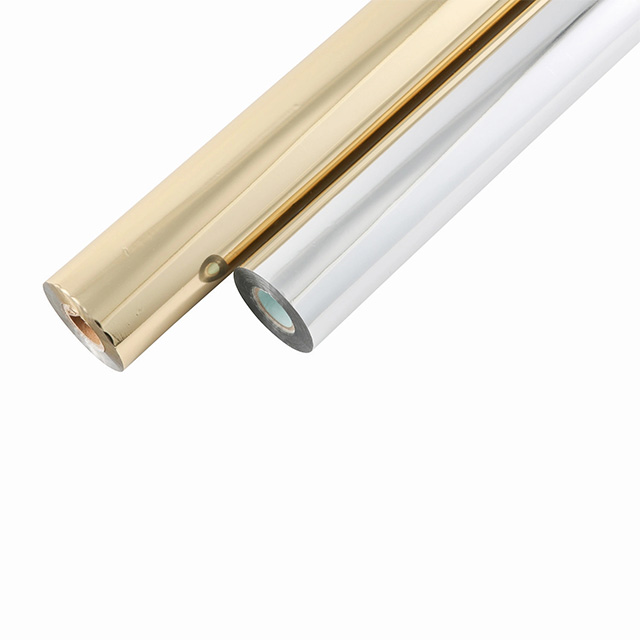
Manufacturers engineer different film gauges for highly specific applications. Selecting the wrong category guarantees production failures. We categorize these films based on their micrometer (µm) thickness. Each category presents unique benefits and strict operational limitations.
Standard gauge films typically measure 12µm in thickness. They dominate the general commercial printing market. You will use them for slower to moderate speeds. They perform exceptionally well in standard label printing. They also suit traditional flat-bed stamping equipment perfectly. However, operators face a severe limitation with this gauge. Standard films remain highly prone to snapping under high web tension. They cannot survive aggressive rotary machine pulls.
Heavy-duty gauge films range from 19µm to over 23µm. Manufacturers design these specifically for demanding environments. They rule rotary high-speed machines. You need them for large solid area coverage. They also excel in deep embossing combination runs. Their strength prevents frustrating web breaks. However, this heavy-duty nature creates a specific limitation. The thick PET carrier film requires much higher operating temperatures. Additionally, they may struggle to reproduce ultra-fine, microscopic details cleanly.
Ultra-thin gauge films measure below 12µm. You reserve these exclusively for highly specialized jobs. They allow for extremely fine detail reproduction. They work wonderfully on highly delicate substrates. Unfortunately, they present a massive operational risk. The risk of sudden web breaks remains exceptionally high. You must never use them in high-tension rotary environments. They belong exclusively on slow, precise flat-bed presses.
| Film Category | Thickness Range | Primary Use Case | Main Limitation |
|---|---|---|---|
| Standard Gauge | 12µm | Slower speeds, flat-bed stamping, standard labels | Snaps under high web tension |
| Heavy-Duty Gauge | 19µm - 23µm+ | High-speed rotary, large solid areas, deep embossing | Requires high heat, struggles with fine details |
| Ultra-Thin Gauge | <12µm | Microscopic details, delicate substrates | Extreme risk of web breaks, low tension tolerance |
You must evaluate tensile strength and web stability rigorously. Assess how well the film withstands mechanical pull. High-speed unwind and rewind systems exert tremendous force. The film must resist micro-stretching during these pulling phases. Even invisible stretching destroys your final image quality. High tensile strength ensures continuous production without machine stops.
We must consider the direct impact on foil registration. Stretching causes microscopic shifts in the image placement. Thicker carriers naturally prevent this unwanted elongation. They keep multi-pass designs perfectly aligned. They maintain tight tolerances across thousands of consecutive impressions. Consistent registration drastically reduces your wasted substrates and rejected orders.
Thermal conductivity realities dictate your tooling choices. You must understand the specific hot stamping foil carrier thickness threshold. Heat penetration drops sharply when crossing into heavy-duty gauges. The plastic acts as a potent insulator. This physical reality necessitates a shift in your tooling. You may need to upgrade from traditional brass dies. Thicker carriers often require highly conductive magnesium or copper dies. These materials push heat through the thick plastic much faster.
Finally, examine the release coat dynamics at play. Different thicknesses interact uniquely with the release wax. The resin melting point becomes critical during split-second dwell times. A thicker carrier delays the heat reaching this wax layer. The wax must melt instantly for a clean transfer. You might need specialized release formulations to compensate for thicker carriers. Standard release layers fail when heat transfer slows down.
Upgrading your film thickness introduces immediate implementation risks. Equipment calibrations demand your strict attention to prevent setup downtime. You must adjust machine torque settings carefully. The tension settings on the hot stamping roll require precise recalibration. Thicker materials behave differently as they unspool. They remain stiffer and resist bending around tight rollers. Failing to adjust these settings causes immediate feeding jams.
Thermal shock and die wear present significant long-term risks. Thicker carriers force you to raise operating temperatures. You need this intense heat to push through the heavy PET barrier. However, this excess heat degrades your expensive dies faster. Metal fatigue sets in earlier under extreme thermal stress. Brass dies often warp or lose edge sharpness. You must budget for more frequent die replacements when using heavy-duty films.
Operators frequently encounter frustrating flaking and pinholing issues. These incomplete transfers plague production lines during material upgrades. Operators often upgrade the thickness but fail to adjust stamping pressure. The thicker film cushions the die impact slightly. You must increase the physical pressure to achieve a solid transfer. Without adequate pressure, the foil fails to bond with the substrate securely.
Beware the hidden cost of over-engineering your material choices. Many managers default to the thickest available carrier for safety. They want to eliminate web breaks entirely. However, this unnecessarily increases your consumable material costs. Thicker films cost more per linear meter. They also yield fewer impressions per standard roll diameter. This bulk limits your fine-line design capabilities. You sacrifice intricate detailing for unnecessary mechanical strength.
Start by assessing your exact equipment constraints realistically. Note your rotary versus flatbed mechanical limitations. Rotary machines demand higher tensile strength than flatbeds. Document the maximum safe operating temperatures of your existing dies. Some older machines simply cannot generate enough sustained heat. They will fail to process heavy-duty films effectively at speed.
Develop a strict substrate and coverage matrix. You must match thickness not just to machine speed. You must consider the roughness of your chosen substrate. A highly textured paper requires more heat and pressure. Factor in the total surface area of the foil stamp. Large solid blocks need thicker carriers to prevent tearing upon release.
Implement a strict pilot testing protocol before any full-scale rollout. Never switch a production line based on theory alone. Use the following structured approach for validation:
Finally, ensure strict vendor compliance regarding material consistency. Your foil manufacturer must provide precise gauge uniformity. Inconsistent thickness across different batches ruins automated production. A roll that fluctuates between 12µm and 15µm causes chaos. It forces your operators into constant, frustrating machine recalibration. Demand strict quality control metrics from your suppliers.
There is no universal "best" thickness for every operation. The optimal choice remains the thinnest gauge that consistently survives. It must withstand your maximum machine speed without stretching or snapping. Balancing web tension against thermal conductivity requires careful, methodical testing. Over-engineering wastes money, while under-engineering causes crippling downtime.
Take immediate action to optimize your production line today. First, audit your last three months of machine downtime logs. Identify the exact root causes of your production delays. If web breaks account for the majority of hot stamping delays, act now. Initiate a controlled pilot test with a heavier gauge film. Adjust your die temperatures accordingly and measure the resulting productivity gains.
A: Yes. Thicker carriers can blunt the transfer of highly intricate details. The thicker plastic diffuses the die impact slightly. For hairline designs at high speeds, alternative release formulations are often a better solution than simply increasing carrier thickness.
A: Thicker films generally cost more per linear meter. They yield fewer impressions per standard roll diameter. This added bulk requires more frequent roll changeovers during production. You will experience higher costs unless you utilize specialized high-capacity unwind systems.
A: Mechanically yes, but thermally they may struggle. Older heating elements may not maintain the consistent temperatures required. You need sustained, higher heat to drive energy through a 19µm+ carrier. Older equipment often drops in temperature during continuous production.


