
close
Choose Your Site
Global
Social Media

Views: 0 Author: Site Editor Publish Time: 2026-09-09 Origin: Site


Standard hot stamping foils adhere flawlessly to rigid plastics. However, they frequently fail, flake, or crack on modified components. This daily mismatch frustrates many production managers. Soft ABS utilizes specialized modifiers and plasticizers. These internal additives drastically alter the substrate's thermal behaviors. They also change the chemical profile significantly. Standard foil formulations simply cannot grip this altered surface. Manufacturers need highly specialized adhesive formulas for success.
This guide delivers a highly technical framework for engineers. We provide evidence-based methods for production teams. You will learn how to evaluate and select the correct formulations. We will explore complex surface dynamics. We will dissect critical thermal balancing acts. Finally, you will discover rigorous validation methods. These steps guarantee success for your flexible ABS production runs.
Failing to match adhesives carries severe business penalties. You face high scrap rates almost immediately. Delayed production schedules frustrate your entire supply chain. Worse, post-production flaking often triggers costly product recalls. These field failures damage brand reputations quickly. You must understand the root cause to prevent these losses.
The science behind this mismatch involves substrate modifiers. Manufacturers add specific chemicals to make standard ABS flexible. These plasticizers lower the inherent heat deflection temperature. They introduce a new set of thermal vulnerabilities. When exposed to stamping heat, the plasticizer migrates. It pushes chemical oils directly to the exterior surface. This migration creates an invisible, slick barrier.
This chemical migration directly impacts surface tension. It significantly lowers the dyne level of the manufactured part. Standard rigid-plastic adhesives require high surface tension for proper adhesion. They cannot wet out across a low-dyne surface. Without proper liquid spreading, they cannot form a permanent molecular bond. We see continuous delamination as a direct result. Monitoring the ABS surface energy remains your first critical step. Proper evaluation ensures you do not waste time testing incompatible glues.
Engineers often rely on standard material charts. However, modified plastics require unique measurements. Review the typical dyne level differences below to understand this gap.
| Substrate Type | Average Surface Energy (mN/m or Dyne/cm) | Adhesion Difficulty Level |
|---|---|---|
| Standard Rigid ABS | 42 - 45 | Low (Easy to bond) |
| Modified/Soft ABS | 34 - 38 | High (Requires specialized sizing) |
| Polypropylene (PP) | 29 - 31 | Very High (Requires pre-treatment) |
If your dyne level drops below 38, standard adhesives fail. You must source specialized elastomeric formulations to bridge this chemical divide.
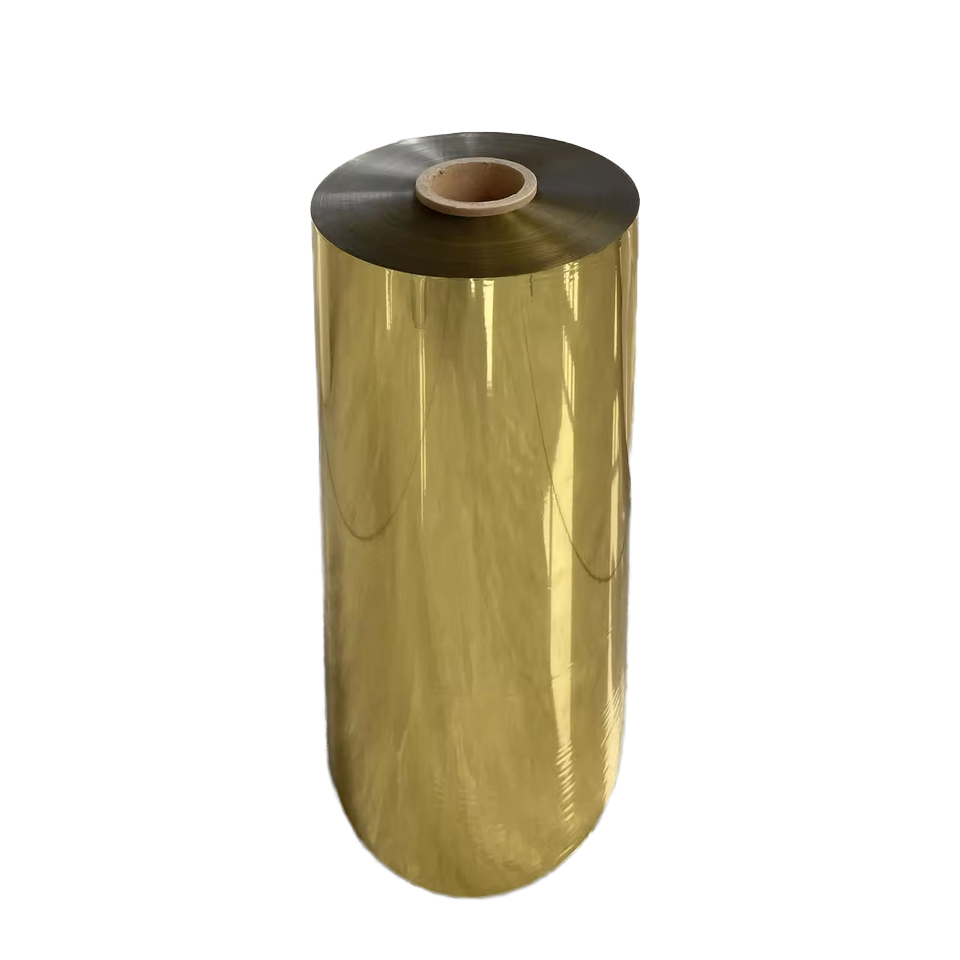
You must understand the structural anatomy of a foil stack. This knowledge helps you evaluate different supplier options accurately. A standard foil roll contains several distinct layers. Each layer performs a specific mechanical function during the stamping process.
The sizing is the foil adhesive layer. It dictates your success on flexible parts entirely. This layer requires specialized elastomeric properties. It must stretch dynamically alongside the soft ABS. If it lacks true elasticity, it shatters under mechanical stress. This shattering cracks the upper metallic layers instantly. You will notice these micro-cracks during routine quality inspections.
You must also evaluate tack and activation properties. The sizing must activate swiftly upon die contact. It requires significantly lower activation temperatures than standard formulations. Soft ABS melts or warps quickly under high heat. You must evaluate the activation range carefully before running production. An ideal adhesive activates between 110°C and 130°C. This lower range protects the structural integrity of your soft substrate.
Soft ABS provides a notoriously narrow processing window. Standard rigid plastics tolerate broad temperature swings during production. Modified plastics deform easily under identical conditions. You must control your thermal dynamics precisely to avoid rejecting entire batches.
Die selection plays a massive role in this control. You cannot use rigid metal dies successfully on flexible substrates. Metal transfers intense, localized heat far too quickly. Instead, you must use high-quality silicone rubber dies. Silicone rubber conforms perfectly to slight compressions. It distributes the heat evenly across the target area. This even distribution prevents localized melting. It ensures consistent heat transfer bonding across complex part geometries.
Follow these sequential steps for thermal optimization:
Demand accurate Technical Data Sheets (TDS) from your suppliers. Many suppliers make vague, universal compatibility claims. Reject these statements immediately. You need exact temperature ranges for their adhesives. You need precise pressure settings. You must know the optimal dwell time. Evidence-oriented data prevents costly trial-and-error runs on your factory floor.
Applying brilliant metallic finishes challenges production engineers daily. Applying a gold plastic foil to a flexible substrate requires extreme precision. Automotive interiors and premium consumer electronics often demand this combination. The final visual finish looks identical to rigid applications. However, the mechanical reality differs entirely under the surface.
The cracking risk remains exceptionally high for metallics. Your base adhesive might bond flawlessly to the plastic. However, a brittle top lacquer ruins the entire application. The metallic layer will micro-crack instantly upon bending. Soft ABS flexes naturally during assembly and consumer use. The entire foil stack must absorb this repetitive mechanical stress. It cannot resist the movement.
You must update your procurement decision criteria. Evaluate foils explicitly categorized as pliant or flexible metallics. Verify this flexibility applies to the entire stack. Do not focus solely on the bottom glue layer. You need a fully specialized hot stamping foil for soft ABS. The carrier, the release coat, and the colored lacquer must all stretch. If one layer remains rigid, the entire decoration fails inevitably.
Risk mitigation demands rigorous physical testing. You cannot trust a simple tape-peel test for flexible parts. You need a comprehensive validation framework. This framework verifies the supplier's technical claims definitively.
First, test the initial adhesion quality. Perform the cross-hatch tape test using the ASTM D3359 standard. Execute this test immediately after the stamping process cools. Use a specialized cutting tool to create a precise grid. Apply aggressive testing tape and pull rapidly. Ensure no foil lifts from the grid squares.
Second, conduct aggressive flexural testing. Bend the stamped part manually in your laboratory. Push the plastic to its maximum intended tolerance. Use a magnifying glass to check closely for micro-cracking. The foil should not wrinkle or delaminate during this bend. It must mimic the substrate's exact curvature.
Third, utilize environmental cycling protocols. Expose the stamped parts to heat and humidity aging tests. Place them in an 85°C chamber at 85% relative humidity for 72 hours. Plasticizer migration accelerates heavily under high heat. Ensure the chemical bond survives this accelerated aging process without degrading.
Apply smart shortlisting logic before buying. Contact two or three highly vetted suppliers. Request specific sample rolls engineered for flexible substrates. Run these experimental rolls on your actual production equipment. Never commit to bulk purchasing before completing these physical trials.
Matching decorative foil to soft ABS requires serious engineering. It represents a complex chemical and thermal balancing act. You cannot treat this material like a standard commodity purchase. Proper selection demands elastomeric adhesives, low-temperature activation, and precise thermal control.
Your next steps require proactive communication. We encourage manufacturing engineers to consult specialized foil manufacturers directly. Procurement teams should assist in this technical dialogue. Provide these manufacturers with un-stamped soft ABS samples. Request thorough lab-matching prior to placing any orders. This upfront collaboration guarantees a flawless, durable finish for your flexible products.
A: It varies heavily by specific formulation. Generally, it requires a lower activation temperature than rigid plastics. You should target between 110°C and 150°C at the die face. This lower range prevents the soft substrate from melting, warping, or suffering permanent indentation during the stamping cycle.
A: Lower surface energy prevents standard adhesives from wetting out and bonding securely. Pre-treatment methods like corona or flame treatment are rarely used for hot stamping. Instead, the adhesive sizing itself must be chemically engineered. It must match the substrate's specific, lowered dyne level to grip the surface properly.
A: Usually no. While the visual finish looks identical, the structural mechanics differ entirely. Rigid ABS foils use brittle adhesives and hard lacquers. These rigid layers will micro-crack or flake immediately when applied to flexible parts that bend or compress under normal physical stress.


