
close
Choose Your Site
Global
Social Media

Views: 0 Author: Site Editor Publish Time: 2026-09-06 Origin: Site


Balancing production efficiency and quality often frustrates press operators daily. Maintaining sharp details without slowing lines down to unprofitable levels is notoriously difficult. Hot stamping relies on a critical triangle of operational variables. Temperature, pressure, and dwell time must harmonize perfectly during every machine cycle. Operators must balance them to achieve pristine results on diverse substrates. Finding the optimal hot stamping foil speed for fine details is never a universal number. Instead, it acts as a calculated formula customized for your exact run. It depends heavily on foil release grade, tooling material, and equipment type. Buyers and operators need a reliable framework to evaluate their mechanical setups. We will preview exactly how you can diagnose your current machinery quickly. You will learn how to select the right process upgrades for your facility. Optimizing these parameters ensures consistent quality while maximizing your daily production volume.
Understanding the precise relationship between machine velocity and physical dwell time is crucial. Machine velocity dictates your overall impressions per hour. Dwell time represents the exact milliseconds of physical contact between materials. During this brief contact, the heated die presses the metallic layer against the substrate. The thermal energy must activate the sizing adhesive fully to bond properly. If you run the equipment too fast, you encounter severe transfer issues. The adhesive fails to reach its required melting point before separation. This rapid separation directly causes flaking, pitting, and incomplete line transfers. Operators often notice broken serif fonts or dashed borders when velocity exceeds thermal capacity.
Conversely, running production machines too slow introduces an entirely opposite problem. Prolonged physical contact triggers excessive heat bleed into the surrounding paper grain. Overexposure destroys foil edge definition rapidly and ruins intricate typography. Heat spreads laterally beyond the intended image area mapped by the die. Delicate fine lines and micro-textures quickly fill in with unwanted metallic flakes. The print industry universally calls this specific defect bridging. Bridging forces operators to discard hundreds of sheets, destroying project margins.
Operators must baseline their optimal parameters systematically rather than guessing randomly. A controlled, stepped speed-test provides accurate diagnostic data for any new job. You begin the press run at a high, ambitious velocity. You gradually reduce the velocity incrementally while observing the output sheets closely. You stop reducing velocity immediately once you achieve a clean, sharp transfer. This methodical approach establishes your fastest viable production rate safely. You document this baseline velocity to standardize future runs using identical materials.
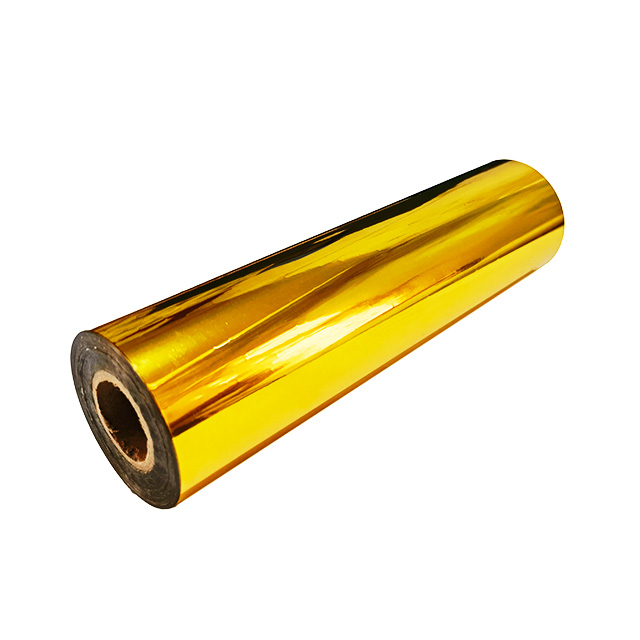
The internal chemistry of the roll dictates how metallic layers separate. Manufacturers engineer distinct release grades by altering the internal wax and resin layers. They generally categorize these formulations as easy, medium, and tight release grades. You must understand these distinct categories to achieve flawless results on complex jobs. Clean fine-line foil transfer strictly requires a highly engineered tight release formulation. Easy release variants separate from their polyester carriers far too quickly. They work beautifully for large solid blocks or heavy coverage areas. However, they flood delicate micro-details with excess material instantly.
Tight release variants grip the carrier film much more aggressively. They release the metallic pigmentation only where the die applies direct heat. This strict separation precision introduces a mandatory operational trade-off for press crews. Tight formulations demand highly precise temperature control across the entire heating block. They require specific press speed limits to function correctly during production. If you run them too fast, they pull excess material or fail entirely. The sizing adhesive needs adequate milliseconds to grip the paper fibers securely.
Operators must calibrate their mechanical settings meticulously based on these chemical properties. Effective communication with your material suppliers prevents costly purchasing mistakes upfront. You must specify your intended production velocity alongside your artwork line-weight. You should also provide details about your intended substrate texture and coating. This proactive evaluation prevents purchasing the wrong rolls for delicate typographic designs. Your supplier can match the exact resin formulation to your mechanical constraints.
Table 1: Foil Release Grade Characteristics
| Release Grade | Best Application | Temperature Requirement | Bridging Risk |
|---|---|---|---|
| Easy Release | Large solid areas, heavy coverage | Lower operating temperatures | Very High on fine details |
| Medium Release | Combination designs (text and solids) | Standard operating range | Moderate depending on substrate |
| Tight Release | Micro-textures, delicate serif fonts | Requires higher baseline heat | Low (maintains crisp edges) |
Tooling material heavily impacts thermal conductivity and overall machine efficiency. The chosen metal dictates the critical heat recovery rate between continuous impressions. Common materials include magnesium, copper, and specialized brass alloys. Each metal handles thermal energy transfer differently during high-speed commercial production. Understanding these thermal properties helps managers select the right tooling for profitability.
Magnesium offers an extremely cost-effective entry point for commercial print shops. Photo-engravers etch magnesium plates very quickly using chemical acid baths. They work exceptionally well for prototyping delicate details and short production runs. However, implementation reality reveals significant drawbacks during extended commercial manufacturing cycles. Magnesium possesses noticeably slower heat recovery compared to denser industrial metals. The tooling surface loses temperature rapidly during continuous, rapid-fire stamping cycles. This thermal drop severely limits maximum operating velocities on longer commercial runs. The operator must slow the machine down frequently to allow heat regeneration.
Copper and brass represent the gold standard for high-volume commercial facilities. They require a substantially higher upfront financial investment from the production team. CNC machines route brass mechanically, making the edge geometry highly precise. Implementation reality heavily favors these denser materials for massive manufacturing scale. Brass and copper boast vastly superior heat retention and transfer capabilities. They recover thermal energy almost instantly after each physical impression cycle. This vital trait allows for significantly faster stamping rates on modern machinery. You do not drop fine details or lose image integrity at high velocities.
Facilities must frame this tooling decision carefully based on efficiency metrics. You justify the higher cost of a brass tool through profound operational savings. The denser metal reduces total machine time dramatically across a 50,000-sheet run. It minimizes constant operator troubleshooting, thermal adjustments, and expensive scrap waste. The upfront tooling expense pays for itself rapidly during continuous, uninterrupted production.
Operators frequently encounter frustrating physical defects during highly intricate production jobs. Industry forums and technical workshops constantly discuss these common pain points. Delicate typography fails to bond, looks jagged, or bridges together entirely. Operators need systematic, evidence-based solutions rather than reactive guesswork on the floor. Proper diagnostics require isolating one mechanical variable at a time.
Problem 1: Bridging or Filling In. Bridging occurs when molten adhesive spills laterally outside the designated image area. It completely ruins elegant typography, thin borders, and detailed vector art. You can solve this defect by adjusting three mechanical parameters systematically. First, speed up the equipment slightly to reduce the physical dwell time. This shorter contact window stops the heat from spreading laterally. Second, lower the heating block temperature by a few incremental degrees. Third, check the machine for excess physical tonnage. Too much pressure physically squeezes the molten adhesive outward beyond the die.
Problem 2: Flaking or Incomplete Lines. Flaking indicates insufficient adhesive activation during the brief impression window. The sizing layer never melted fully before the carrier film pulled away. You solve this issue primarily by slowing down the equipment speed. This adjustment increases dwell time, pushing more thermal energy into the sizing. You must also verify the physical texture of your chosen substrate. Heavily textured papers or deep cotton stocks trap microscopic air pockets. They require significantly longer contact time to push material down into the grain.
We must strongly warn against a very common operator error. Many operators instinctively increase impression tonnage when delicate lines fail to transfer. They ignore velocity and temperature adjustments, assuming pressure solves everything. Excessive pressure permanently crushes the paper grain and damages the substrate surface. It degrades edge sharpness severely and prematurely wears out expensive brass dies. You should always adjust dwell time and thermal settings before altering tonnage.
Diagnostic Action Checklist
Modern printing facilities must continuously choose between traditional analog and digital methods. Traditional hot stamping presses rely entirely on physical dies and mechanical pressure. Modern high-speed digital foil fusing utilizes advanced toner-reactive polymer technology. Both methodologies offer distinct advantages and limitations for producing delicate metallic designs. Production managers must evaluate their equipment based on typical client demands.
Traditional setups eventually hit physical velocity limits governed by mechanical physics. The heavy tooling must physically touch, press, and release the paper substrate. Mechanical movement inherently restricts maximum impressions per hour, regardless of operator skill. Digital fusing completely eliminates the physical metal die from the production equation. The machinery applies heat directly to digitally printed toner, fusing the foil instantly.
Scalability represents a massive operational advantage for digital fusing methods. Digital fusing excels at executing high-speed, variable-data printing jobs. You can print intricate personalized names without purchasing hundreds of expensive dies. The machinery runs consistently at high velocities because it lacks heavy mechanical stamping actions.
However, strict physical limitations exist for polymer fusing technology. Fusing struggles heavily with deep impressions on textured or highly porous substrates. It frequently fails on heavily textured cotton stocks or uncoated artisan papers. Traditional stamping still reigns supreme for luxury packaging and uncoated wine labels. The analog die forces the metallic layer deeply into complex paper grains reliably.
Production managers must apply strict shortlisting logic when upgrading their shop floors. You should audit your average job mix carefully before buying new equipment. Examine your typical run lengths, primary substrate types, and average line thicknesses. Long runs utilizing uncoated, textured paper strongly justify optimizing your traditional presses. Short runs featuring smooth coated stocks and variable data justify digital fusing equipment.
Table 2: Traditional Stamping vs. Digital Foil Fusing
| Evaluation Metric | Traditional Hot Stamping | Digital Foil Fusing |
|---|---|---|
| Tooling Requirements | Requires physical brass, copper, or magnesium dies | No dies required (toner-reactive process) |
| Variable Data | Impossible without changing physical plates | Highly scalable for personalized prints |
| Substrate Versatility | Excellent on uncoated, textured, and thick stocks | Limited (best on smooth, coated papers) |
| Setup Time | Moderate to High (requires manual registration) | Very Low (digital alignment) |
Achieving pristine fine-line details at profitable commercial speeds requires careful daily balancing. It involves mastering a critical triad of interconnected operational variables. You must deploy tight release foils to keep micro-details sharp and clean. You need highly conductive tooling like brass to maintain rapid thermal recovery. You must also calibrate your physical dwell times to match substrate requirements precisely. We advise taking immediate, evidence-based action on your production floor today. Audit your current scrap rates to identify where bridging and flaking occur most. Request tight-release material samples from your supplier to conduct a controlled speed test. Consult a certified equipment specialist to evaluate any lingering heat recovery issues. Direct your specific material questions to our technical team for targeted product recommendations. You can optimize your daily workflow and eliminate frustrating quality variations permanently.
A: The standard temperature range generally falls between 100°C and 130°C (210°F–265°F). However, this baseline must adjust inversely with your chosen machine speed. Faster mechanical speeds require slightly higher temperatures to compensate for the drastically shorter physical dwell time. Always run stepped thermal tests when introducing a new substrate to find the perfect balance.
A: Poor edge clarity usually stems from using a material with an "easy" release formulation. This formulation drops too much pigmentation onto the substrate. Jagged edges also occur when running the press too hot or too slow. Excessive thermal exposure causes the adhesive to melt and spread laterally beyond the engraved die area.
A: Desktop tools use localized heated pens rather than massive impression tonnage and full-surface dies. They are strictly limited by the plotter's maximum drawing speed. They cannot replicate the rapid, pressure-assisted release performance achieved by heavy commercial hot stamping or digital fusing machines. Commercial machines stamp entire layouts in mere milliseconds.
A: Yes. Uncoated or heavily textured papers trap air and resist thermal transfer. They require significantly longer dwell times and slower speeds. This allows the heated adhesive to penetrate deeply into the complex paper grain. Conversely, perfectly smooth, coated stocks accept adhesive quickly and can run at much higher velocities.


