
close
Choose Your Site
Global
Social Media

Views: 0 Author: Site Editor Publish Time: 2026-08-25 Origin: Site


Applying metallic accents to premium packaging instantly catches the consumer eye. However, executing this flawless finish on a slick surface presents demanding technical hurdles. Poor adhesion frequently leads to flaking and unacceptable defect rates during production. Choosing the wrong material creates similar performance issues. These critical failures ultimately diminish brand equity for luxury spirits, high-end cosmetics, or signature perfumes. Packaging engineers and procurement managers need highly reliable solutions. You must evaluate options carefully to ensure flawless execution on the production line. This guide provides a comprehensive framework for selecting the correct foiling method. We will deeply explore substrate compatibility, production scalability, and overall cost-efficiency. Readers will learn how to balance visual aesthetics against daily manufacturing realities. By following these industry-tested principles, brand directors can confidently optimize their high-volume lines. You will avoid expensive product recalls and successfully safeguard your brand reputation globally.
Glass presents a unique physical barrier in packaging. It features zero porosity and extremely high surface tension. We call this the non-porous reality. Direct adhesion fails constantly on such smooth substrates. Liquid adhesives cannot soak into the material. Standard materials simply slide off or flake away. You need specific pre-treatment methods to achieve permanent glass surface bonding. Glass factories apply cold-end coatings during manufacturing. These invisible friction-reducing layers severely impede external adhesion.
You must implement rigorous pre-treatment requirements. Manufacturers rely heavily on UV primers to create a vital anchor layer. Screen-printed adhesives bond aggressively to this primer base. Some production lines utilize direct flame treatments instead. This localized heat burns off invisible manufacturing residues instantly. Applying glass bottle foil demands these exact preparatory steps. The primer acts as a chemical bridge between the slick glass and the metallic layer.
Skipping these compatibility tests creates massive business risk. Product recalls destroy carefully planned profit margins. Consumers notice flaking metallic accents immediately upon handling. They subconsciously perceive the brand as cheap or poorly made. You must demand rigorous adhesion testing before mass production. Mitigating this risk requires standard tape peel tests. Your engineering team should verify primer curing times strictly. Proper preparation guarantees the metallic finish survives transit vibrations and daily consumer handling.
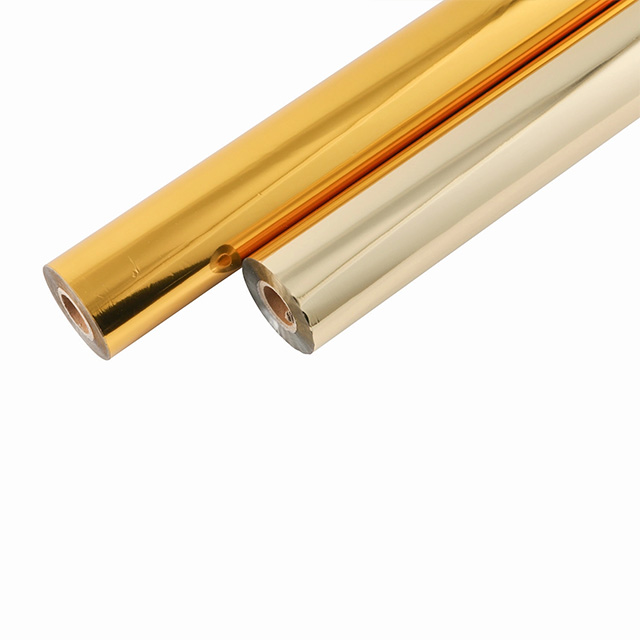
Selecting the right application method defines your ultimate success in bottle decoration. Manufacturers primarily choose between two distinct transfer technologies. Each method utilizes entirely different mechanical principles.
This traditional method uses intense heat and high pressure. Machines utilize a heated silicone or solid metal die. The die presses the metallic layer directly onto the pre-primed substrate. hot stamping foil for glass bottles releases cleanly under these specific thermal conditions. Silicone dies easily conform to slight manufacturing imperfections on the container surface. Metal dies allow for much sharper, crisper edge definition.
This process delivers superior metallic luster and exceptional durability. You can achieve deep, tactile embossing effects seamlessly. This requires pairing the heat process with a thick UV base coat. Consumers love the tactile feedback of raised metallic lettering. We recommend this primarily for premium spirits and luxury cosmetics. High-margin goods benefit immensely from this premium visual presentation. The tactile feel actively drives retail conversions and justifies higher price points.
Cold foil operates on a fundamentally different chemical principle. The machine screen-prints a UV-curable adhesive directly onto the container. The metallic film then rolls over this wet adhesive layer. A high-intensity UV lamp cures the adhesive instantly through the film. Finally, the machine peels away the carrier film. The metallic layer remains perfectly anchored only where the adhesive was printed.
This technique offers significantly lower tooling costs. You do not need expensive heated brass dies. Setup times drop dramatically compared to thermal methods. Cold foil excels at producing fine gradients and broad surface area wraps. We suggest this method for mid-tier fast-moving consumer goods (FMCG). It handles highly detailed, multi-color wrap designs with incredible speed. However, it generally yields a slightly less brilliant shine than its thermal counterpart.
Table 1: Technical Comparison of Foiling Methods
| Feature | Hot Stamping | Cold Foil Transfer |
|---|---|---|
| Primary Mechanism | Heat and physical pressure via dies | UV-curable adhesive and peeling |
| Tooling Costs | High (Requires brass or silicone dies) | Low (Utilizes standard screen printing) |
| Setup Time | Longer (Requires precise thermal calibration) | Faster (Quick adhesive screen setup) |
| Visual Brilliance | Maximum metallic luster | Moderate to high luster |
| Ideal Applications | Luxury spirits, raised tactile embossing | FMCG, complex gradients, full wraps |
Procurement teams must evaluate material specifications rigorously. Relying solely on aesthetic appearance invites disaster. You must verify how the material performs under stress. We recommend a strict four-point evaluation framework. This ensures the chosen material survives the entire product lifecycle.
Financial planning requires separating tooling expenses from daily operational spend. You must understand your exact volume thresholds. Small miscalculations in waste percentage destroy project budgets quickly. Brand directors need transparent cost visibility before committing to a specific design path.
Thermal application demands significant upfront capital. You must purchase precision-machined brass or molded silicone dies. Brass dies last longer but cost considerably more to engrave. Silicone dies conform better to curved containers but wear out faster. You must also budget for extended machine setup time. Operators need hours to calibrate heat zones and stamping pressure perfectly. Cold application avoids these expensive metal dies entirely. It relies on much cheaper printing screens. This drastically reduces initial launch budgets for new product lines.
Daily running costs dictate your long-term profitability. Roll consumption represents the largest variable expense. You must calculate waste based on design spacing carefully. Wide gaps between logos waste massive amounts of unused metallic film. Modern machines utilize precise web advance systems to minimize this blank space. Energy consumption also plays a major role. Heating large stamping dies requires substantial electricity. Conversely, powering high-intensity UV curing lamps also draws heavy current. You must model these utility costs accurately.
Every brand must identify its financial crossover point. At what production volume does expensive tooling become economical? Low-volume runs heavily favor cold application methods. The minimal setup cost keeps short-run budgets manageable. However, as volumes scale into the millions, thermal application becomes highly cost-efficient. The extreme durability and rapid cycle times offset the initial die investments. Procurement managers must analyze their Minimum Order Quantities (MOQ) strictly. Align your chosen technology with your projected annual sales volume.
Transitioning from design prototypes to mass production introduces severe mechanical risks. Glass manufacturing tolerances fluctuate constantly. These slight variations wreak havoc on precision decoration machinery. You must anticipate these exact pitfalls during pilot phases.
Never commit to a full production run blindly. A beautiful flat paper proof means nothing. You must demand a physical proof on the exact production container. Different manufacturing batches behave differently under heat. Demand a pilot run of 50 to 100 units minimum. Test your line speed accurately. Verify the adhesive curing under real manufacturing conditions. Subject these pilot units to extreme friction and chemical exposure. Only sign the final contract when these pilot units pass every internal stress test.
Selecting the right decorative finish requires careful strategic balance. You must weigh aesthetic demands against strict budget constraints. Furthermore, you must respect the unforgiving physics of non-porous substrates. Ignoring surface tension realities leads directly to expensive manufacturing failures. Success demands rigorous pre-treatment and precise tooling choices.
Your immediate next steps dictate the project outcome. First, request a detailed material specification sheet from your supplier. Second, demand localized adhesion tests on your exact production containers. Third, calculate your volume thresholds to determine the most cost-effective machinery approach. Fourth, execute a strict pilot run to verify mechanical tolerances. Finally, standardize your quality control testing protocols before launching the mass production phase. Taking these deliberate actions ensures your premium packaging consistently commands attention on the retail shelf.
A: No. It requires a specialized bonding agent. You typically use a screen-printed UV primer or a thermal adhesive. This pre-treatment ensures the metallic layer anchors permanently to the slick, non-porous substrate. Without it, the material simply flakes off during handling.
A: Generally, yes. The metallic layer transferred to the container is microscopically thin. It usually burns off entirely in the high-temperature recycling furnace. This process does not compromise the structural integrity or purity of the resulting glass cullet.
A: Plastic requires significantly lower application temperatures to avoid melting the substrate. Conversely, glass withstands extreme high heat easily. However, glass requires highly specialized aggressive adhesives to overcome its complete lack of surface porosity and high surface tension.


