
Views: 0 Author: Site Editor Publish Time: 2026-08-23 Origin: Site


Achieving a high-end, realistic metallic finish relies entirely on the consistency of the foil's grain. Misaligned application can easily ruin product aesthetics. It destroys batch uniformity across your manufacturing lines. Product designers often envision a flawless brushed metal look. However, the manufacturing floor faces strict physical limitations.
True hairline finishes are not merely printed. Engineers micro-emboss or brush these patterns directly into the foil carrier during manufacturing. You must understand how this physical brush direction aligns relative to your specific application method. The orientation dictates the final optical result completely. Ignoring this technical reality guarantees visual defects.
We will explore the mechanics behind these premium finishes. You will see how substrate interactions impact final quality. This article provides a technical framework for evaluating, specifying, and sourcing hairline foil materials. By applying these standards, you ensure zero-defect production runs and protect your brand's visual identity.
Mastering the hairline brush foil direction requires looking at the foil's microscopic structure. Suppliers do not simply print a metallic texture. They physically alter the material.
Manufacturers create a hairline pattern through physical or chemical modification. They micro-scratch or emboss the release and lacquer layers. They do this before the vacuum metallization phase. These tiny grooves form physical channels in the carrier film. When aluminum particles deposit onto this layer, they follow the exact contours of the scratches. This process creates the authentic look of brushed steel or aluminum.
Grain orientation dictates how you apply the foil to your product. You must choose between two primary directions based on your machinery.
Table 1: Comparing Machine Direction and Transverse Direction
| Feature | Machine Direction (MD) | Transverse Direction (TD) |
|---|---|---|
| Grain Flow | Parallel to the roll length | Perpendicular to the roll length |
| Primary Use | Continuous web laminating | Wide-format cut panels |
| Availability | Industry standard, highly available | Specialty order, higher minimums |
| Registration Difficulty | Low to moderate | High |
Light interacts uniquely with micro-grooves. These grooves trap and reflect light in specific patterns. Consistent direction ensures uniform reflection. If the grain wanders slightly off-axis, light scatters differently. This inconsistency creates visible "banding." You will notice harsh shading differences across different product batches. Strict optical tracking during manufacturing prevents these disruptive variations.
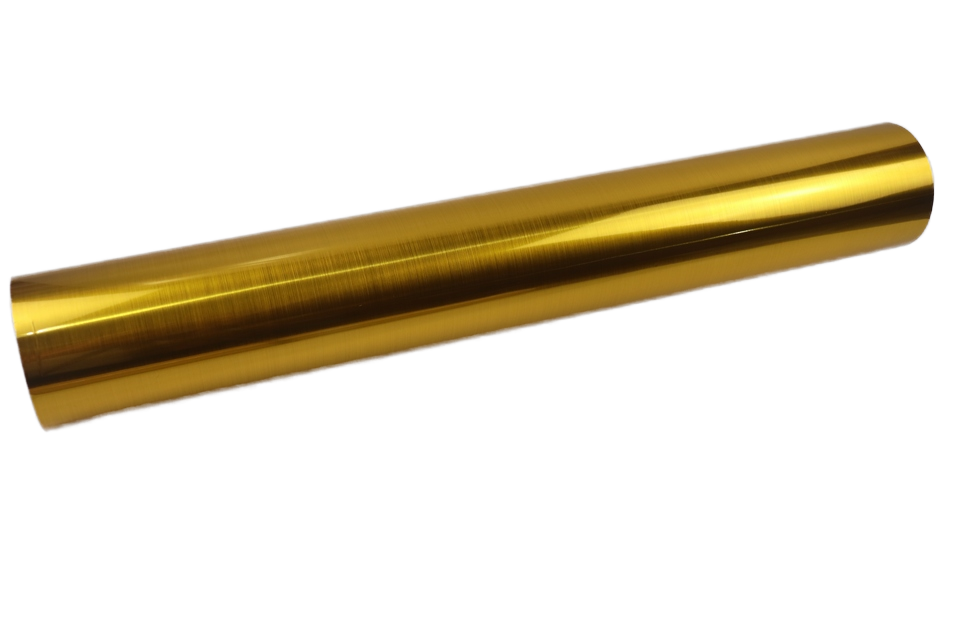
Rigid substrates introduce new challenges. Applying plastic sheet foil requires precise environmental control. Plastics react aggressively to thermal and mechanical stress.
Common substrates include PET, PVC, and ABS. These materials soften rapidly under heat. Excessive web tension during lamination stretches the carrier film. This tension physically pulls the micro-embossed grooves apart. The stretching warps the brushed appearance. You lose the tight, authentic metallic look. Operators must calibrate tension controllers to minimum viable levels. This protects the delicate physical structure.
Applying foil to semi-rigid plastic sheets demands specific adhesive chemistry. Standard adhesives often fail here. You need formulations capable of bonding instantly. However, the adhesive must not flood the micro-embossed depth. If glue fills the tiny grooves, the finish turns flat. The release layer must let go cleanly at high speeds. Sticky release layers cause the foil to tear or stretch during separation.
Plastic sheets expand when heated. They shrink as they cool. The foil carrier has a different thermal expansion rate. If you ignore this difference, micro-cracking occurs along the brush lines. You must match the foil's heat tolerance to the plastic sheet's cooling rate.
Premium colors require stricter quality control. When you specify a brushed gold foil, you face unique optical challenges. The interaction between color and texture defines the final product.
The depth of the texture directly affects perceived color. Deep brushing traps more light. This trapped light makes a gold hue appear significantly darker. A shallow hairline pattern reflects more light. This makes the gold look brighter but less authentic. You must define an acceptable depth range. Otherwise, your packaging will look mismatched on the retail shelf.
Do not rely on visual checks alone. Human eyes easily miss subtle variations in grain alignment. You must audit a supplier’s QA process. Ask them how they measure consistency.
A deep, aggressive brush texture looks incredibly premium. However, deeper grooves are harder to protect. You need a robust topcoat to prevent oxidation and scratching. Unfortunately, thick topcoats pool inside the grooves. They mute the finish. Formulators must strike a careful balance. They use ultra-thin, high-crosslink density lacquers. These protect the metal without burying the texture.
Even perfect materials fail if handled poorly. Understanding how the directional brush effect breaks down saves thousands in rejected parts. Manufacturing teams see three recurring failure modes.
This failure occurs frequently during assembly. Operators accidentally rotate panels 90 degrees. Two identical panels suddenly look entirely different. Light reflects horizontally off one and vertically off the other. The resulting "checkerboard" ruins the premium appearance. Always mark the application direction on the non-viewable side of the substrate. This simple step eliminates assembly errors.
Wide panels often require multiple foil strips placed side-by-side. Edge-to-edge alignment must be flawless. Sometimes, the foil grain wanders slightly during roll unwinding. This tracking error creates a harsh, visible seam. The lines simply do not match up. You must specify tight tolerance limits for grain straightness.
Operators often increase heat or pressure to improve adhesion. This instinct causes severe damage. Excessive stamping pressure literally crushes the micro-structure. High lamination heat melts the delicate grooves. The result is a flat, unconvincing mirror finish instead of a brushed look.
Vague communication leads to poor materials. You must dictate exact parameters to your suppliers. Treat hairline finishes as highly engineered components.
Never ask for "brushed foil." Your Request for Quotation (RFQ) must read like a technical blueprint. Clear specifications eliminate assumptions. Include these vital parameters:
Flat A4 swatches look great in an office. They tell you nothing about machine performance. Swatches cannot show tracking errors. Always ask for a 10-meter sample roll. Run this roll on your actual production equipment. Evaluate the release characteristics under real heat and tension. If a supplier refuses to provide a short roll, find another partner.
Verify manufacturer capabilities before placing massive orders. Can they maintain grain consistency across multi-ton deliveries? Inconsistent suppliers will ship variations that ruin your product line. Furthermore, check for environmental compliance. Verify RoHS compliance in their lacquer formulations. Premium packaging must meet global regulatory standards.
Mastering hairline finishes represents an engineering decision, not just a design choice. The physical orientation of the micro-grooves dictates your manufacturing approach. From managing substrate tension to controlling thermal expansion, every step requires precision. A deep understanding of grain alignment separates flawless products from costly rejections.
Always align your foil grain specification with your converting machinery's capabilities. Never move to full-scale production without validating material performance on your own equipment. Standardize your procurement language to eliminate ambiguity.
Take action by reviewing your current material specifications. Request a comprehensive technical data sheet from your supplier today. Ask for a directional sample book to test compatibility thoroughly. Secure your production process by demanding measurable consistency.
A: Yes, though non-standard angles typically require custom tooling. A 45-degree diagonal brush is technically possible but rare. This customization significantly increases minimum order quantities (MOQs) and lead times. We recommend adjusting your packaging layout to accommodate standard MD or TD foils whenever possible to control manufacturing costs.
A: Generally, yes. Deeper micro-embossing changes the physical dynamics of the release layer. It can require slightly more dwell time. You might also need a marginally higher temperature to ensure clean release. This becomes particularly noticeable on high-speed roll-to-roll continuous lamination lines.
A: You must strictly control the tooling temperature and application pressure. Do not over-pressurize the substrate. Using a silicone die rather than a hard metal die helps immensely. The silicone conforms better, preserving the delicate directional brush effect, especially when stamping onto slightly uneven rigid plastic substrates.


