
close
Choose Your Site
Global
Social Media

Views: 0 Author: Site Editor Publish Time: 2026-09-01 Origin: Site


Commercial tankers face unique high-visibility challenges on the road today. Adhering rigid materials to curved, expanding, and heavily washed cylindrical surfaces proves exceptionally difficult for fleet operators. Metals shift with temperature variations, and aggressive chemical washing routines constantly attack exterior safety markings. Selecting the incorrect tape width or material composition inevitably leads to dangerous edge-lifting and severe compliance violations. Fleet operators risk costly DOT or FMCSA fines alongside highly inflated maintenance labor costs. Our article provides fleet managers and procurement officers with a definitive evaluation framework. We will help you select the correct tape width, material composition, and adhesive backing for your heavy vehicles. You will learn how to balance strict regulatory requirements against real-world durability and mechanical stress. This guide ensures your next material choice withstands harsh transport conditions and protects your drivers effectively.
Federal mandates dictate strict dimensions for heavy vehicle safety across the transportation industry. The Federal Motor Carrier Safety Administration (FMCSA) and DOT-C2 standards require commercial trucks to display highly visible retroreflective sheeting. These agencies establish a firm baseline width to guarantee vehicle visibility at highway speeds during nighttime operations. Regulators globally rely on these specific measurements to create predictable patterns for motorists. They ensure a uniform safety standard across varying transport sectors, from dry vans to hazardous material carriers. When you equip a fleet, you must adhere strictly to these established legal frameworks. Ignoring these baselines exposes your company to severe operational risks and regulatory scrutiny.
Selecting a 5cm tanker reflective tape offers distinct mechanical and legal benefits. It hits the precise intersection of legal compliance and optimal retroreflectivity. A two-inch width is physically easier to apply cleanly around the tight curved radiuses of bulk liquid carriers. The dimensions provide sufficient surface area for micro-prismatic reflection to bounce light back to trailing headlights. However, they remain narrow enough to avoid extreme structural tension on the outer edges. This delicate balance ensures long-lasting adhesion and superior visibility for trailing drivers. Engineers design these tapes specifically to maximize light return without compromising the physical bond to the truck body.
Deviating from standard compliance dimensions introduces significant legal and operational hazards for your fleet.
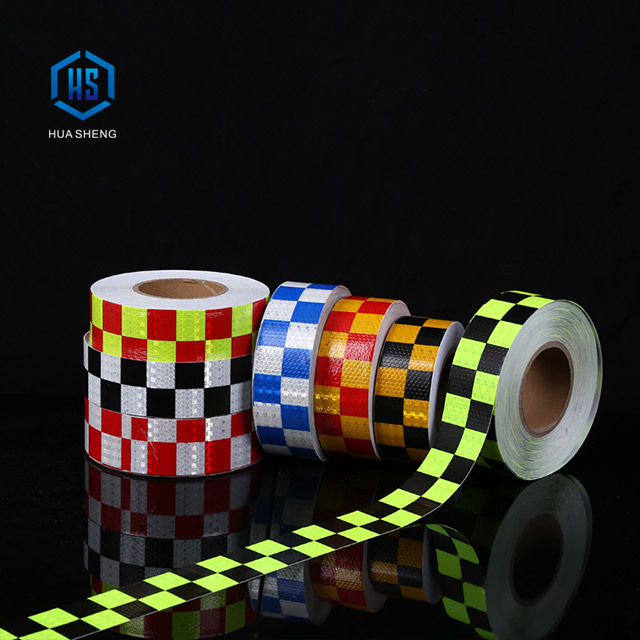
Applying safety markings to a commercial tanker requires a deep understanding of applied physics. Tanker metal expands and contracts dramatically with daily temperature fluctuations and internal load changes. Curved cylindrical surfaces create constant, outward tension on the tape edges. This continuous tension attempts to pull the adhesive layer away from the metal substrate. Standard flat-surface markings simply cannot withstand these dynamic environmental forces over time. You must account for continuous structural shifts when specifying materials for your fleet. If you ignore thermal expansion, your safety markings will inevitably pop off the vehicle.
Fleet managers usually choose between rigid and flexible substrates during the procurement phase. We break down the stark differences below to guide your selection.
Many operators assume all highly reflective materials work universally across all vehicle types. This assumption proves incredibly costly for tanker fleets. Flexibility ultimately dictates longevity on curved tanker shells. While rigid acrylics might gleam brightly in a laboratory, they quickly peel off a working fuel tanker. PVC balances excellent retroreflectivity with critical mechanical compliance. You should always prioritize material flexibility over minor gains in static brightness. A slightly dimmer tape that stays attached performs infinitely better than a brilliant tape lying on the highway.
| Material Type | Flexibility Rating | Memory Effect Risk | Curved Surface Adhesion |
|---|---|---|---|
| Rigid (PET/Acrylic) | Low | High (Constantly tries to flatten) | Poor (Frequent and rapid edge lifting) |
| Flexible (PVC Vinyl) | High | Low (Naturally adapts to curves) | Excellent (Maintains long-term bond) |
Commercial tankers operate in brutal chemical and physical environments every single day. They endure high-pressure hot water washes regularly to prevent hazardous cross-contamination. Road salts, industrial chemical spills, and relentless UV degradation bombard the exterior shell constantly. Standard retail-grade safety tapes disintegrate rapidly under these extreme chemical conditions. You need specialized industrial solutions to survive real-world trucking operations. Transporting corrosive liquids further escalates the demand for chemically resistant safety materials. Fleet managers must anticipate these harsh realities.
We must strongly differentiate standard safety film from genuine waterproof tanker tape. Standard films often feature exposed micro-prisms at the factory cut lines. Unsealed edges act as microscopic sponges during the washing process. They allow moisture, heavy grease, and harsh cleaning agents to penetrate the internal layers. This chemical intrusion destroys the reflective micro-prisms from the inside out. Black mold and road dirt eventually replace the once-bright reflective surface. Once the prisms flood, the tape loses all safety value entirely.
Water ingress aggressively compromises the underlying adhesive layer over time. When pressurized water seeps beneath the unsealed edges, it weakens the chemical bond to the tanker shell. This degradation leads to a phenomenon known as "flagging," where corners progressively peel up. Flagging catches high-speed highway winds, which further accelerates the detachment process. Once flagging begins, automated pressure washers easily tear the strip off the vehicle completely. You must prevent water from reaching the adhesive at all costs.
Look specifically for single-layer construction or sonically welded edges when sourcing materials. These advanced engineering techniques guarantee long-term waterproof performance on the road. Sealed edges encapsulate the delicate reflective elements entirely. They actively block moisture penetration and prevent catastrophic adhesive failure. Implementing these high-quality tapes ensures your fleet passes strict visual inspections year after year. Investing in edge-sealed technology eliminates the constant need for mid-cycle tape replacements.
Deploying effective high visibility marking requires a highly structured architectural approach. You must carefully map out placement zones across the tanker’s side profiles and rear contours. Federal guidelines mandate specific alternating patterns and exact coverage percentages. Continuous strips along the lower structural rail provide critical side-impact awareness for passenger vehicles. Rear contour markings completely outline the full shape of the bulk liquid carrier. Proper spatial distribution maximizes driver reaction times at night, significantly reducing rear-end collisions.
Taping directly over weld seams or structural rivets creates severe implementation risks. These physical obstacles trap large air pockets beneath the tape's adhesive backing. Trapped air expands dramatically when heated by the sun, causing the strip to blister and rupture. You must carefully route or cleanly cut the tape around structural tanker elements. Bridging empty gaps over protruding rivets guarantees premature material failure. Your maintenance team must exercise patience and precision during the application phase.
Fleet supervisors must institute strict visual inspection checklists for all active vehicles. Drivers should routinely identify micro-cracking, flagging, or severe reflectivity loss before official DOT audits occur. You can easily use a bright flashlight at night to test retroreflectivity during standard walk-arounds. Early detection of flagged edges allows maintenance teams to patch small sections cheaply. Proactive validation prevents massive fleet-wide compliance failures and ensures constant highway safety. Consistent monitoring remains your best defense against unexpected fines.
Procurement teams require a highly structured matrix to evaluate commercial vehicle tape effectively. You cannot rely on manufacturer marketing claims alone when outfitting heavy transport units. A rigorous assessment process ensures regulatory compliance, mechanical reliability, and operational safety. Evaluate prospective suppliers based on specific chemical profiles and structural criteria. We outline the most critical evaluation factors below to streamline your purchasing decisions.
Focusing on these precise metrics eliminates substandard products during the initial bidding phase. You ensure your maintenance bays spend less time scraping off failed materials. High-quality adhesives combined with flexible face films provide the ultimate solution for heavy transport fleets. Make evidence-based decisions to protect your drivers and your bottom line.
Our final assessment firmly points to a standardized, high-quality approach for fleet safety markings. A 5cm tanker reflective tape made of flexible PVC remains the most risk-averse choice for commercial tankers. Choosing true waterproof sealing protects your fleet against rapid chemical degradation and unexpected compliance audits. You effectively avoid the constant operational frustration of edge-lifting and premature adhesive failure.
We urge fleet procurement teams to take immediate, action-oriented next steps today. First, request physical material samples from prospective suppliers specifically for curved-surface testing. Second, conduct these adhesion tests directly on your actual fleet assets, not flat office surfaces. Finally, perform extensive pressure-wash validation over several weeks before finalizing any contracts. Never commit to a massive fleet-wide rollout without verifying field performance firsthand.
A: No. Rigid tapes will eventually lift at the edges due to constant surface tension. The strong memory effect of rigid materials fights the adhesive bond continuously. Flexible PVC is strictly required for curved applications to prevent premature peeling.
A: High-quality edge-sealed tapes typically last 5 to 7 years in the field. This lifespan depends heavily on the frequency of harsh chemical washes, road salt exposure, and daily UV degradation. Routine maintenance inspections help maximize this lifecycle.
A: Yes. Without proper edge sealing, high-pressure washes force water, grease, and debris between the tape layers. This intrusion permanently destroys the internal reflectivity and rapidly causes severe delamination across the vehicle.
A: The surface must be entirely stripped of old adhesive and road grime. It must be degreased, washed heavily with isopropyl alcohol, and allowed to flash completely dry. This protocol ensures the pressure-sensitive adhesive bonds correctly to the metal.


