
close
Choose Your Site
Global
Social Media

Views: 0 Author: Site Editor Publish Time: 2026-08-28 Origin: Site


Achieving flawless, high-diffraction effects on printed materials is never a happy accident. It requires tight alignment between the substrate, the coating, and the film. Converters frequently face operational hurdles when setting up these specialized processes. Incorrect material choices lead to web snaps, poor pattern transfer, excessive varnish consumption, and severely compromised reusability.
You cannot afford press downtime just because a roll stretches or curls under tension. Choosing the wrong film chemistry will instantly ruin a premium packaging hologram. This article serves as a technical buyer’s framework for your next print project. We will show you how to evaluate, shortlist, and choose the right holographic films. You will learn to optimize your press speeds and production budget without sacrificing final quality.
You must clearly define your project objectives before reviewing technical data sheets. Brands typically pursue two distinct paths. Some brands want purely aesthetic visual disruption. They need eye-catching rainbow effects to dominate retail shelves. Other brands require structural brand security. These security applications rely on custom micro-text and hidden optical features. You must specify your film accordingly. Security films demand much tighter tolerances to ensure crisp replication of microscopic details. Aesthetic films often prioritize maximum diffraction brilliance over microscopic precision.
You must understand the mechanical difference between casting processes and traditional lamination. The casting process relies on a temporary embossing mold. You apply a wet UV varnish to your printed substrate. You then nip the casting film against the wet varnish. The UV light cures the varnish through the clear film. Finally, you peel the film away. The cured varnish retains the microscopic pattern. Unlike standard UV lamination film, no plastic remains on the package. You rewind the clear casting film and reuse it on subsequent impressions.
Environmental compliance drives many packaging decisions today. Traditional metallic foils complicate recycling efforts. They leave layers of aluminum and polyester permanently bonded to paperboard. The casting process offers a distinct environmental advantage. It creates highly decorative packaging without rendering the paperboard unrecyclable. You achieve premium metallic and holographic effects using only a microscopic layer of cured varnish. This keeps your folding cartons compliant with strict municipal recycling guidelines. Brands heavily leverage this sustainability advantage in their marketing campaigns.
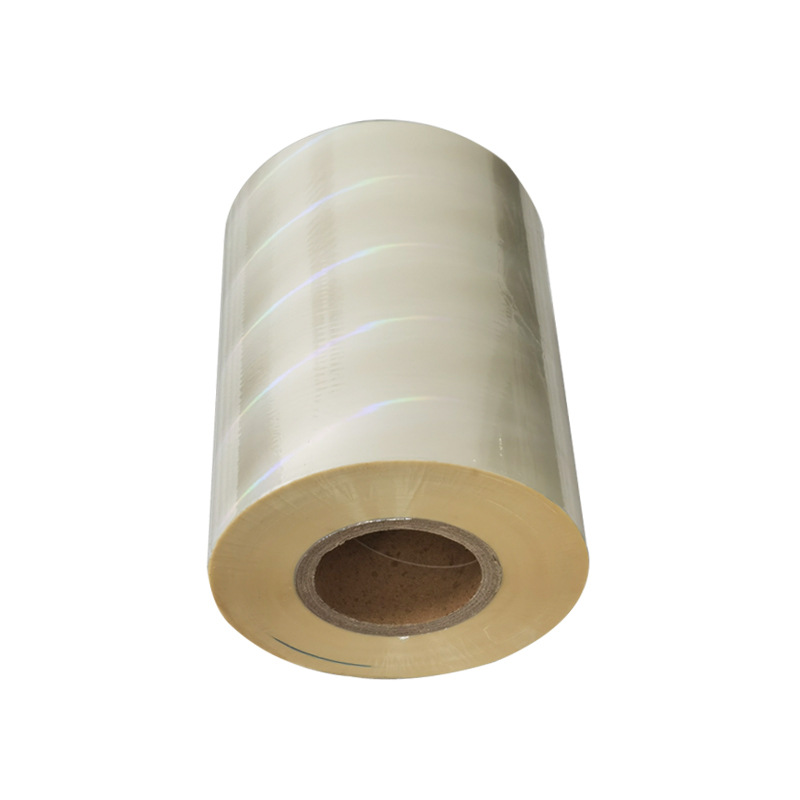
Industry professionals rely on specific polymers for casting applications. Biaxially Oriented Polypropylene is the undisputed industry standard for general folding cartons and labels. It offers exceptional cost-efficiency and optimal release characteristics. A high-quality BOPP cast cure film handles web tension beautifully on standard flexo and offset presses. However, you might occasionally specify Polyethylene Terephthalate (PET). PET handles higher curing temperatures much better than BOPP. You specify PET when running high-heat mercury vapor lamps or extremely high-tension web paths.
Film thickness dictates press performance. Standard micron thicknesses usually range between 15 and 20 microns. If you specify a film too thin, you risk web snaps and severe wrinkling. If you specify a gauge too thick, the film loses its flexibility. It will fail to conform over heavy ink coverage or textured substrates. You must balance tensile strength against conformability. Proper gauge selection directly impacts your web tension controls and wrinkle resistance at high operating speeds.
You must define exact pattern parameters in your cast and cure film specifications. You need to decide between seamless patterns and shim-line patterns. Seamless patterns offer continuous visual effects but cost more to originate. Shim lines show a faint grid where the holographic master plates meet. You also need to evaluate pattern depth. Deeper holographic patterns create bolder optical effects. However, deeper patterns require a much higher volume of UV varnish for full replication. Thicker varnish layers increase your consumable spending and require higher UV curing energy.
| Attribute | BOPP Film | PET Film |
|---|---|---|
| Primary Use Case | Standard labels and folding cartons | High-heat or high-tension applications |
| Heat Resistance | Moderate | Excellent |
| Flexibility/Conformability | High | Moderate to Low |
| Cost Efficiency | Very High | Moderate |
Successful execution requires a perfect chemistry handshake. You cannot treat the film and the coating as isolated commodities. They function as an integrated system. The film relies on a specific surface release chemistry. This chemistry must cleanly repel your chosen UV or Electron Beam (EB) coating. If the release coat chemically bonds with the varnish, the film will permanently stick to the substrate. You will experience catastrophic web snaps. Always verify chemical compatibility with your coating formulator before running live production.
Varnish viscosity determines the clarity of your final optical effect. You must specify a film compatible with low-viscosity varnishes. Thin varnishes flow smoothly into the microscopic topography of the casting film. This smooth flow is called "wet-out". Excellent wet-out prevents microscopic air bubbles, commonly known as pinholing. When you eliminate pinholes, you ensure complete holographic transfer. Poor wet-out results in dull, patchy, and visually unacceptable packaging.
Your curing equipment completely alters your film specification requirements. You must evaluate the UV transmission rates of your chosen film. The clear polymer must allow specific UV wavelengths to pass through unhindered. These wavelengths must reach the wet varnish underneath to cure it instantly.
The industry is transitioning from traditional mercury vapor lamps to LED-UV systems. Mercury lamps generate intense infrared heat. This heat can distort thin BOPP films. LED-UV systems run much cooler, reducing thermal distortion risks. However, LED-UV systems emit narrow wavelength bands. You must ensure your film transmits these exact narrow bands efficiently to achieve a full cure.
The primary economic driver of this decorative process is reusability. You rarely consume the film in a single pass. You rewind it and run it again. Most operations reuse a single roll anywhere from 3 to over 10 passes. This reusability multiplier drastically reduces your consumable footprint. You must track how many clean impressions you extract from a single roll. If your operators only achieve two passes before the pattern degrades, you have a process control problem.
You need concrete metrics to evaluate film longevity. You should inspect the rewound film after every single pass. Look closely for micro-scratching on the patterned surface. Abrasive substrates or dirty nip rollers cause micro-scratches. You must also monitor for coating build-up. Sometimes, uncured varnish transfers onto the film. This build-up blocks the holographic effect on subsequent runs. High-quality films feature robust release coats that resist both physical scratching and chemical build-up over multiple high-speed runs.
Press operators must master rewind tension controls. The supplier must also deliver perfectly wound virgin rolls. Flawless rewind characteristics are absolutely non-negotiable. If a roll is wound too loosely, it will telescope during transit or press operation. Telescoping ruins the roll edges and causes severe wrinkling. Poorly wound rolls severely limit the number of viable reuses on the converter's floor. You should immediately reject any virgin rolls exhibiting uneven tension or dished profiles.
Press trials expose the harsh realities of web handling. You must push the film to its breaking point during testing. Watch carefully for web stretching under high tension. BOPP films can elongate if you apply too much brake tension. You must also test for delamination resistance if you are running multi-layer synthetic films. Static build-up is another major failure point. Fast-moving plastic generates massive static charges. This static attracts dust and interferes with varnish laydown. You must employ active static eliminators at multiple points along the web path.
Your chosen substrate dictates how the varnish behaves. You must test the specified film against your exact production substrate. Porous materials, like uncoated Kraft board, absorb liquid rapidly. They will suck the UV varnish away from the film before curing occurs. This causes a dull, patchy effect. You usually need an aqueous primer to seal porous boards. Non-porous materials, like synthetic label stock, offer excellent coating hold-out. The varnish stays on the surface, ensuring a brilliant, high-gloss mold. Test every substrate variable extensively.
You must establish clear quality parameters before signing procurement contracts. What constitutes an acceptable print run? You need a documented standard. Define acceptable defect rates clearly.
Do not proceed to live production until all stakeholders sign off on these exact defect tolerances.
| Defect Type | Root Cause | Immediate Action Step |
|---|---|---|
| Patchy Transfer | Porous substrate absorbing varnish | Apply aqueous primer before UV varnish |
| Web Snapping | Excessive rewind tension | Reduce brake tension, check for roll telescoping |
| Film Sticking | Incompatible release chemistry | Consult formulator; change varnish or film type |
| Pinholing | High varnish viscosity (poor wet-out) | Heat varnish or reformulate to lower viscosity |
Evaluating a supplier goes far beyond browsing a stock pattern list. Beautiful catalogs mean nothing if the supplier lacks operational reliability. You must assess supplier transparency. Ask them about their raw material origins. Supply chain disruptions can halt your production entirely. You must also establish firm lead times for both stock patterns and custom origination. Look for partners who invest heavily in quality control equipment and can prove their gauge consistency.
You must execute trial roll requests with rigorous precision. Never order a generic sample roll. Mandate that the trial roll width matches your press web width exactly. It must also match your cylinder width. Improperly sized trial rolls cause messy varnish overflow. You should also demand a Certificate of Analysis (COA) with every sample. The COA proves the supplier actually measured the surface energy, thickness, and optical density of that specific batch.
Once you receive the sample rolls, establish a formal pilot-run framework. Do not run the trial in isolation. Put the film supplier, the coating formulator, and your lead press operator in the same room. A joint trial eliminates finger-pointing if issues arise. The coating expert adjusts the viscosity. The film expert advises on tension settings. The press operator manages the mechanical web path. This collaborative approach guarantees a highly optimized, production-ready system.
Successful casting implementation relies on treating the film, the coating, and the press as a single engineered system. Treating these elements as isolated commodities leads directly to press downtime and unacceptable waste. Your success depends on precise chemistry alignment, rigorous web tension management, and uncompromising quality assurance protocols.
We recommend you prioritize suppliers who offer robust on-site technical support during your initial press validations. A partner who stands at the press console with your operators delivers far more value than a vendor competing solely on a price-per-square-meter basis. Standardize your specifications, lock in your coating chemistry, and you will achieve flawless, highly profitable decorative runs.
A: Most films maintain optimal performance for 12 to 18 months if stored correctly. You must control storage conditions carefully. Keep rolls in a climate-controlled environment, ideally between 60°F and 75°F. Excessive humidity or extreme heat will degrade the delicate surface release chemistry and distort the microscopic pattern.
A: Yes, but you must prep the surface. Water-based inks often leave a porous surface. You must apply a proper aqueous primer or base coating first. This seals the sheet and prevents the UV varnish from absorbing into the paperboard prior to contacting the film.
A: Custom patterns require unique origination and shim-mastering. This complex optical engineering process typically adds 4 to 8 weeks to your lead time. Because the supplier must create custom master plates, MOQs usually jump significantly compared to off-the-shelf seamless patterns.
A: Yes, gradual degradation is inevitable. Micro-scratches accumulate, and microscopic dust or cured varnish particles can adhere to the film surface. Proper press setup, perfectly clean nip rollers, and optimized web tension significantly mitigate early wear, allowing up to 10 pristine reuses.


