
close
Choose Your Site
Global
Social Media

Views: 0 Author: Site Editor Publish Time: 2026-08-30 Origin: Site


Specifying the wrong PET metallized film thickness for high-speed converters results in web breaks, edge curling, and compromised barrier integrity. These failures inevitably lead to costly machine downtime and excessive material waste on the production floor. Lamination operators often default to standard 12-micron gauges out of sheer habit. However, variations in adhesive systems, running speeds, and final flexible structure requirements demand a much more calculated approach to substrate selection. You cannot rely on a one-size-fits-all metric when dealing with aggressive converting environments.
This article provides procurement and production teams with an evidence-based framework for evaluating Vacuum Metallized PET (VMPET) gauge. You will learn how to match your material specifications against converting capabilities, yield economics, and strict barrier demands to optimize your daily output. We help you eliminate guesswork so you can confidently select the ideal material for your next run.
The relationship between material thickness and machine efficiency requires close attention. Operators must balance tensile strength against mechanical forces. When you increase the lamination line speed, you amplify the pulling forces exerted on the web.
Different PET gauges react uniquely to mechanical pulling forces. Tensile strength dictates how much force a web can handle before it permanently deforms. Thinner films falling under 10 microns demand highly sensitive, low-tension control systems. If your tension rollers apply excessive force, the thin web stretches beyond its elastic limit. This elongation distorts printed designs. It also fractures the fragile aluminum layer, instantly destroying the material's barrier properties. Conversely, thicker gauges withstand aggressive web handling without stretching.
Heat tolerance plays a massive role during adhesive curing and extrusion coating. Converting equipment generates significant thermal energy. Hot nipping rollers and drying tunnels expose the web to sudden temperature spikes. Thicker gauges naturally absorb more thermal energy. This increased mass reduces the risk of heat-induced shrinkage. Shrinkage often manifests as fatal wrinkling on the finished roll. If your machinery runs at elevated temperatures, a heavier gauge provides a much-needed safety buffer against thermal distortion.
Mismatched tension between layers frequently causes post-lamination curling. Imagine mating a highly tensioned, ultra-thin metallized layer to a heavy sealant web like Polyethylene (PE) or Cast Polypropylene (CPP). The heavier web exerts dominance over the thinner one as they cool and contract. This imbalance leads to edge curl or camber. To prevent this defect, you must match the tensile profiles of the joining webs. Upgrading the metallized gauge often stabilizes the final composite structure.
Understanding industry baselines helps you avoid over-engineering your structures. Each thickness tier serves distinct functional purposes across the flexible packaging landscape.
These ultra-lightweight variations cater to decorative layers and highly specialized laminates. They maximize yield per roll, making them economically attractive for high-volume, low-barrier applications. However, running these gauges requires advanced web handling capabilities. You need flawless tension control to prevent snapping. They suit lightweight twist wraps or decorative labels where structural rigidity matters less than surface yield.
The 12-micron gauge reigns as the industry baseline. It offers an optimal balance of machineability, cost efficiency, and adhesive compatibility. Most standard snack wrappers rely on this specification. It provides sufficient mechanical stability for standard printing and laminating speeds. When buyers specify packaging film for general food applications, they typically start here. It handles both solvent-based and solventless adhesives well.
Rigid stand-up pouches and industrial applications demand robust physical properties. Mid-to-heavy gauges supply necessary stiffness. They excel in demanding multi-layer structures, such as VMPET 3-layer laminates. These heavier films resist puncture forces effectively. Industrial insulation products also leverage these gauges for their superior durability during rough handling. If your product requires shelf presence and stiffness, you need these thicker substrates.
Specialty treatments often add functional thickness to the base web. Matte metallized films provide a premium visual finish. PE-coated metalized variations build heat sealability directly into the web. These chemical coatings or structural modifications slightly alter the handling characteristics. Operators must account for this added functional thickness when calibrating nip roller pressure.
Table 1: Standard PET Metallized Thickness Applications
| Thickness Range | Primary Applications | Handling Requirements |
|---|---|---|
| 8–10 Microns | Twist wraps, decorative labels, lightweight laminates | Requires highly sensitive, low-tension web control |
| 12 Microns (48 Gauge) | Standard snack packaging, dry food pouches | Industry baseline; runs on standard converting lines |
| 15–25+ Microns | Stand-up pouches, heavy-duty industrial insulation | Requires robust cutting tools; handles high tension |
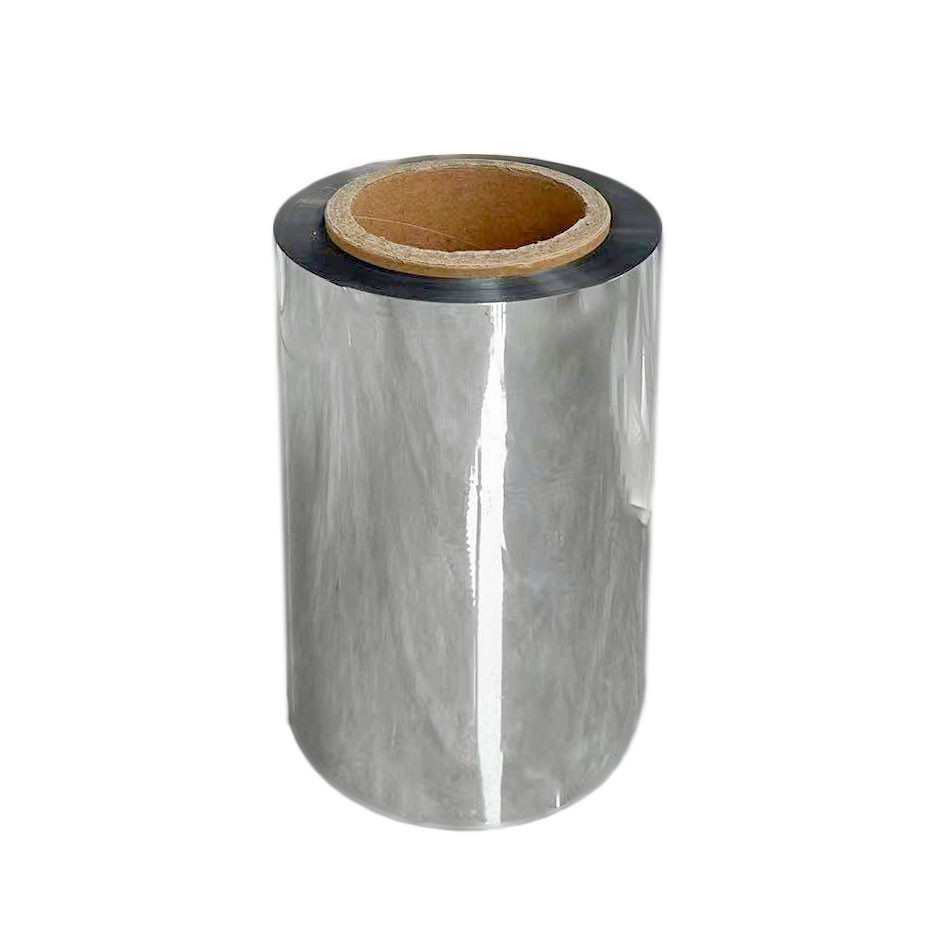
Many procurement specialists mistakenly believe they must purchase thicker base films to achieve better barrier performance. This misconception inflates material costs unnecessarily. We must separate the mechanical carrier from the active barrier.
The base PET thickness primarily provides mechanical support. The ultra-thin aluminum deposition layer actually dictates the barrier properties. Upgrading your base film thickness offers diminishing returns for oxygen and moisture blocking. Instead, you must focus on the Optical Density (OD) of the metal layer. A 12-micron film with an OD of 2.5 provides vastly superior barrier performance compared to a 15-micron film with an OD of 1.8. Buyers should specify higher metal deposition rates rather than thicker base plastics to improve Oxygen Transmission Rate (OTR) and Water Vapor Transmission Rate (WVTR).
Cost efficiency relies heavily on accurate yield calculations. We use material density formulas to determine the square-meter yield per kilogram. By moving from a 12-micron to a 15-micron metallized film gauge, you significantly reduce your surface area per roll. This gauge increase directly impacts procurement costs. You purchase film by weight but consume it by area. Therefore, a heavier gauge yields fewer packaging impressions per dollar spent. Always run a density-to-weight ratio analysis before upgrading thickness.
Sometimes aggressive barrier requirements force structural changes. You must decide whether to specify a thicker metallized structure or adopt PVdC-coated polyester. PVdC coatings offer exceptional flex-crack resistance and barrier stability. Heavy metallized films might lose barrier integrity if sharply folded. We recommend comparing the cost-per-impression of high-OD metallized films against PVdC alternatives when designing for extended shelf-life products.
Chart: Yield vs. Barrier Tradeoffs Analysis
| Strategy | Impact on Cost/Yield | Impact on Barrier (OTR/WVTR) | Best Use Case |
|---|---|---|---|
| Increase Base PET Thickness | Decreases yield per kg; raises cost | Minimal improvement | When pouch stiffness is required |
| Increase Optical Density (OD) | Negligible impact on yield | Significant improvement | When blocking moisture/oxygen is priority |
| Switch to PVdC Coated PET | Higher material cost | Excellent flex-crack resistance | Aggressive chemical or liquid packaging |
Your chosen thickness must harmonize with your adhesive chemistry and lamination methods. A poor match causes delamination, tunneling, and visual defects. You must view the entire composite structure holistically.
Adhesive coat weights interact directly with the chosen film thickness. Solventless adhesives require precise nip pressures to achieve adequate wet-out. Thinner films remain highly susceptible to curing distortion. If you apply heavy coat weights onto a fragile 10-micron web, the adhesive shrinkage during curing creates localized wrinkling. Solvent-based systems pose different risks. Thin PET lamination film can suffer from solvent retention if drying oven temperatures exceed the material's thermal threshold. Thicker films tolerate aggressive drying profiles much better.
Extrusion lamination introduces severe thermal shock. The process drops a curtain of molten polymer directly onto the metallized surface. Thinner gauges struggle to dissipate this sudden heat load. They often warp or lose metal adhesion. Heavier metallized gauges absorb and distribute this thermal shock effectively. They maintain excellent flatness during high-speed extrusion processes. If you run extrusion lines, defaulting to 12-micron films without testing invites massive quality control failures.
Flexible packaging rarely uses just two layers. You must map the thickness ratio between all structural components. Consider a structure combining Nylon (BOPA), VMPET, and a PE sealant layer. The VMPET layer must flex without cracking the metal surface. If the PET layer proves too thin compared to the rigid Nylon, the metal layer bears disproportionate stress during bending. Proper multi-layer synergy ensures optimal flex-crack resistance. You balance the stiffness modules across the entire web profile.
Preventing downtime requires rigorous material qualification before full-scale production begins. Procurement teams should mandate strict quality control checks upon roll delivery.
Poor metal-to-PET adhesion causes fatal delamination, commonly called "metal transfer." This defect destroys the package structure regardless of your base film thickness. The adhesive bonds to the metal, pulling it entirely off the PET carrier. You must verify surface energy by checking dyne levels before running the web. Consistent dyne levels ensure proper adhesive anchorage. Demand supplier guarantees regarding metal bond strength across the entire web width.
Gauge variations across the web width cause catastrophic failures on wide-web lamination machines. These inconsistencies create baggy edges or tight bands within the roll. When a baggy edge enters the lamination nip, it folds over itself, creating a hard wrinkle. This forces immediate machine stoppage and web splicing. You should audit your supplier's winding uniformity. Perfect roll geometry remains just as important as the nominal thickness specification.
Never transition to a new thickness without executing a structured trial run. We recommend following a rigid pilot testing protocol to validate material compatibility:
Adhering to this protocol minimizes financial exposure and prevents thousands of meters of defective scrap.
Determining the optimal PET metallized film thickness represents a calculated compromise. You must balance your machinery's line speed capabilities against required tensile strength and target cost-per-impression. Blindly selecting standard gauges leads to inefficiencies, whereas over-engineering inflates your procurement costs unnecessarily. Evaluate your specific web handling limits and barrier targets before placing a purchase order.
Moving forward, we advise production teams to audit their current tension specifications. Document the maximum thermal loads your equipment generates. Finally, instruct buyers to request detailed Technical Data Sheets (TDS) from suppliers. These documents must explicitly detail both the mechanical film thickness and the precise Optical Density of the metal deposition.
A: The flexible packaging industry uses a standard conversion rule. One mil equals exactly 25.4 microns. Furthermore, one mil equals 100 gauge. Therefore, a standard 12-micron film converts to roughly 0.48 mils or 48 gauge. Using this baseline formula ensures accurate communication with global material suppliers.
A: No, increasing base thickness does not affect sealing properties. Standard VMPET possesses no inherent heat-sealable properties, regardless of its gauge. To achieve heat sealability, the material must be explicitly layered or extrusion-coated with a compatible thermoplastic polymer, such as Polyethylene (PE) or Cast Polypropylene (CPP).
A: Wrinkling typically stems from three primary culprits. First, improper tension control causes the web to stretch or sag before entering the nip. Second, an uneven roll profile (baggy edges) feeds inconsistent material into the rollers. Finally, excessive adhesive curing temperatures can cause the thin PET substrate to thermally shrink and warp.


