
close
Choose Your Site
Global
Social Media

Views: 0 Author: Site Editor Publish Time: 2026-09-10 Origin: Site


Selecting a holographic foil pitch is a structural engineering decision. It is not merely a graphic design choice. Procurement and packaging teams often mismatch foil specifications. They regularly pair incorrect foil designs against their legacy application machinery. Many brands also misjudge the security threshold required for their product lines. This operational disconnect leads to massive budget overruns. It also severely compromises overall brand protection efforts. Medical devices, aerospace components, and luxury cosmetics require flawless authentication. A poorly aligned optical device fails to protect these goods. Evaluating the precise gap between optical patterns dictates your tooling costs. It impacts application speed across your entire production line. It ultimately determines your true defense against sophisticated counterfeiting rings. This comprehensive guide breaks down essential technical parameters. You will learn how to align pitch specifications against physical operational realities. You can then select the exact format for your unique packaging setup. We remove the guesswork from complex optical security procurement.
Manufacturing optical security devices requires exact mathematical spacing. We call this spacing the pitch. It measures the absolute distance between repeating optical elements. It also measures the gap between designated registration marks. Think of pitch as the structural heartbeat across a foil web. Every interval must align perfectly alongside your printing cylinder. The micro-embossing process transfers microscopic grooves into a thin resin layer. This layer repeats endlessly across massive master rolls. The distance from the center of one design to the next defines the pitch length.
Pitch spacing dictates overall structural integrity. It determines the operational viability of any security label. An incorrect specification creates massive production downtime. It forces machine operators to constantly adjust web tension. Brands must separate simple marketing appeal from strict functional security. Holographic shine certainly attracts consumer attention on crowded retail shelves. However, precise pattern placement guarantees true compliance. Precise placement ensures field inspectors can authenticate products quickly. Using an accurate holographic pattern pitch separates standard labels from highly secure assets. You build a formidable barrier against unauthorized reproduction. Your brand reputation relies entirely on this microscopic precision.
Two primary configurations dominate the security packaging industry. You must choose between continuous and registered layouts carefully.
High-value pharmaceuticals strictly require registered positioning. Electronics and luxury goods demand this exact precision too. Sophisticated replication attempts easily bypass random wallpaper designs. A registered image forces counterfeiters to replicate the exact spatial relationship. They rarely possess the advanced optical tooling necessary for this task. Registered elements defeat common digital scanning tactics effortlessly.
Comparison of Holographic Pitch Configurations
| Feature Parameter | Continuous (Wallpaper) Pitch | Registered (Single-Image) Pitch |
|---|---|---|
| Origination Cost | Low to Moderate | High (Custom Master Tooling) |
| Application Speed | Very Fast | Slower (Requires Micro-Adjustments) |
| Sensor Requirement | None Required | High-Precision Optical Eyemark Readers |
| Security Level | Basic Tamper Evidence | Advanced Anti-Counterfeit Defense |
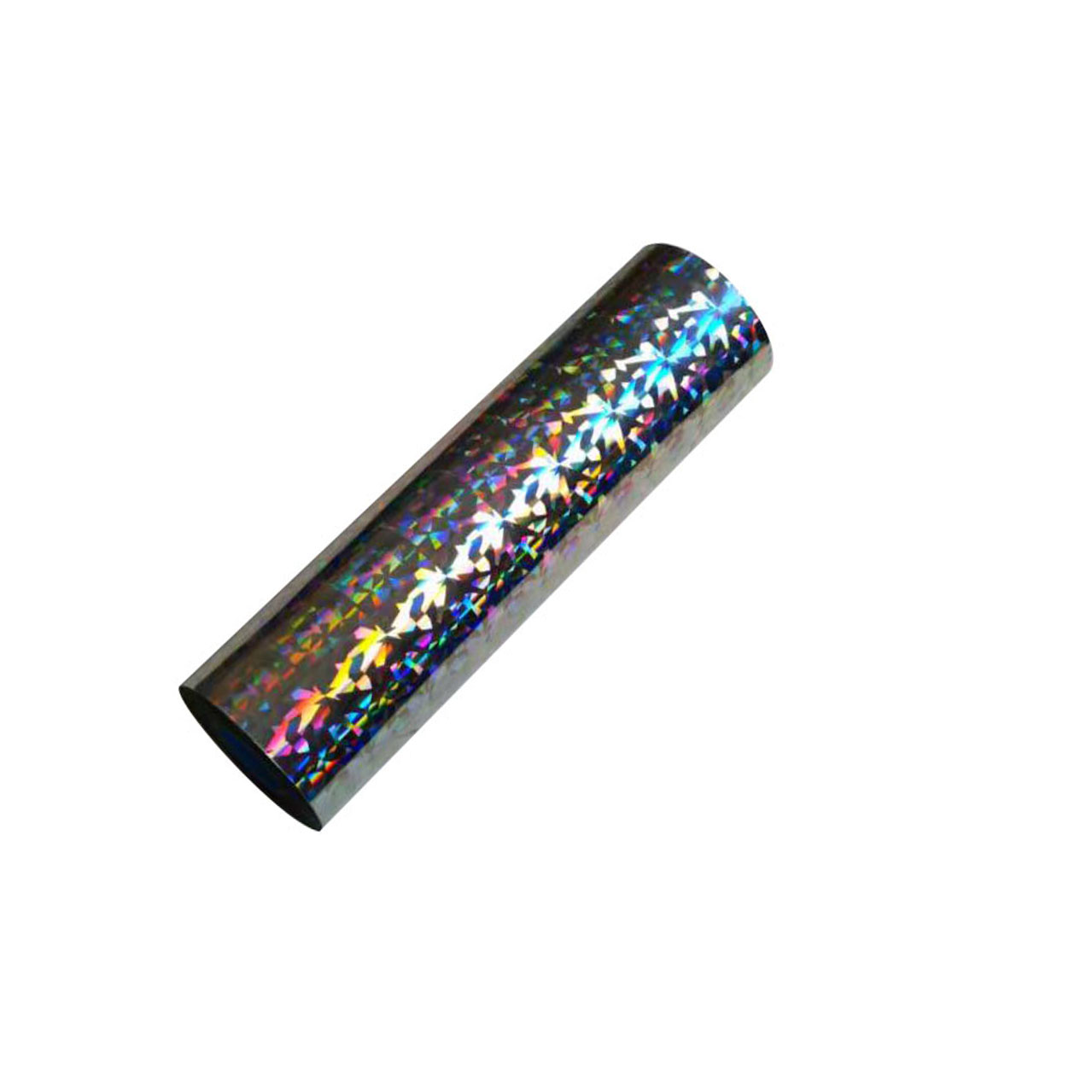
Legacy application hardware poses a massive operational risk. Older machines usually lack modern digital tension control systems. They struggle to maintain accurate web feeding over long runs. Mismatching your chosen layout against older hardware causes immediate registration drift. Your labels will look misaligned and entirely unprofessional. You risk destroying thousands of units during a single bad shift.
Registered label stamping foil demands high-end optical sensors. Eyemark readers sit directly on the application line. They scan the moving web continuously. They trigger the stamping die at the exact correct microsecond. Missing this digital window by a fraction of a millimeter ruins the entire label. You cannot run registered materials blindly. High-speed setups rely heavily on UV or infrared contrast sensors.
Acceptable spatial tolerance usually hovers around +/- 0.5mm across the printing industry. Flatbed stamping machinery handles variance quite differently. Flatbeds allow slight mechanical pauses for micro-adjustments. Rotary stamping runs at much higher continuous speeds. Rotary setups require tighter tolerances. Loose tolerances in rotary machines cause cumulative drift errors rapidly. Heat fluctuations often stretch the carrier film. This stretching alters the pitch mid-run.
Holographic mastering inherently involves visible joining lines. Industry engineers call these shim lines. The mastering equipment stitches smaller holographic plates together. Your spatial calculation heavily affects shim line placement. You must ensure shim lines never cross critical visual elements. Proper mathematical spacing keeps shim lines completely hidden inside the waste matrix. Poor planning leaves an ugly seam right across your premium brand logo.
Evaluating your risk profile dictates your final procurement choice. We break down two distinct operational scenarios below.
Moving from concept to physical production requires a strict auditing process. Follow these exact steps to ensure complete compatibility.
Selecting optical security elements requires careful balancing. There is no universal best pitch in this industry. There is only the right pitch tailored for your specific product line. It must fit your precise risk profile perfectly. It must also match your unique mechanical production environment. Align your procurement team first. Bring brand protection officers into the initial conversation. Include production floor managers before signing off on any holographic master. Ensure everyone understands the mechanical realities governing application speeds and sensor limits. Making an informed structural decision today protects your brand equity tomorrow.
A: Industry standards generally dictate a pitch tolerance between +/- 0.3mm and +/- 0.5mm. This variance depends heavily on your specific application machinery. High-speed rotary presses demand the tightest tolerances to prevent cumulative drift errors. Modern optical sensors can manage minor fluctuations. However, excessive stretching of the carrier film will push the pitch out of acceptable bounds.
A: Yes. You can invest in custom wallpaper origination instead of relying on generic stock patterns. A custom continuous design repeats your specific logo seamlessly across the entire web. This approach removes the need for precise application sensors while still offering a proprietary visual element. Counterfeiters cannot buy your custom pattern off the shelf.
A: Registration drift usually stems from poor web tension control. If your machinery pulls the carrier film too tightly, the plastic stretches. This stretching physically elongates the pitch gap. Drift also occurs due to improper sensor calibration. Ensure your optical readers contrast the eyemark cleanly against the background. Dust on the sensor lens frequently causes missed registrations.
A: Upgrading machinery depends entirely on your current hardware. You must possess advanced registration mark sensors to read the eyemarks accurately. You also need precise servomotors capable of micro-adjusting web tension dynamically. Legacy mechanical presses often lack these critical digital controls. Applying a registered layout blindly on older equipment guarantees severe misalignment and massive material waste.


