
close
Choose Your Site
Global
Social Media

Views: 0 Author: Site Editor Publish Time: 2026-08-24 Origin: Site


An effective brand protection strategy is only as robust as its physical materials. Counterfeiters increasingly use advanced technology to replicate packaging. Defeating them requires diligence. Sourcing the right material involves balancing strict operational constraints and high security demands. Production teams must align press compatibility and maintain high throughput speeds. Security teams require covert authentication features and a rigorous chain of custody.
This article serves as a buyer’s roadmap. It guides procurement managers, packaging engineers, and brand protection officers through a complex landscape. You will learn how to transition from an initial design concept to scalable label production. We explore threat level assessments and evaluate custom versus stock options. We also break down press compatibility. You will discover how to audit vendors properly and test materials before full deployment. Let us build a resilient, secure label program.
Defining the exact threat level dictates whether a stock pattern or a highly controlled custom origination is required.
Production compatibility (hot stamping vs. cold foil) directly impacts unit economics, throughput speeds, and substrate choices.
Credible suppliers must demonstrate verifiable facility security (e.g., ISO 14298) and strict master shim control to prevent parallel supply chains.
Implementation success hinges on thorough pre-production testing for foil adhesion, flaking, and environmental degradation.
You cannot deploy a successful security strategy without understanding the specific threat. Organizations often overspend on unnecessary features or underspend and leave vulnerabilities open. You must categorize the counterfeiting threat targeting your supply chain. This establishes the necessary barrier to entry.
Threats generally fall into two categories. Casual duplication involves small-scale bad actors. They use commercial scanners and basic commercial printing equipment to fake packaging. Organized syndicate cloning is much more dangerous. These groups utilize dedicated printing presses. They possess deep supply chain knowledge and significant funding. Defeating a casual duplicator requires minimal visual barriers. Defeating an organized syndicate requires highly restricted materials. You must select anti-counterfeit foil designed to withstand your specific threat category.
A successful program relies on matching visual effects to user capabilities. You must decide who will authenticate the product. Will it be a consumer, a retail worker, or a trained field investigator? We break these needs into specific functional categories.
Overt Needs: These are naked-eye authentication features. Consumers rely on these. Examples include kinetic movement and 3D depth effects. They immediately verify authenticity without tools.
Covert Needs: These are machine-readable features. Field investigators use these. Examples include micro-text, hidden UV images, and nano-optical structures. They require loupes, UV lights, or laser readers.
Tamper Evidence: You must decide how the label behaves if removed. Should it self-destruct into pieces? Should it leave a clear void pattern on the substrate? This prevents product tampering and label reuse.
Every security tier impacts your unit economics. You must establish realistic cost-per-label assumptions early. Do not demand nano-optical covert features for a low-margin consumer good. High-security features increase master tooling costs. Weigh the expected loss-rate of your product against the physical cost of the label. The math must justify the security investment.
Buyers must choose between off-the-shelf holographic wallpapers and fully bespoke designs. Each category serves a specific purpose in the market. You must evaluate the trade-offs regarding security, cost, and lead times.
Stock materials feature repeating generic patterns. Manufacturers produce these in massive master rolls. You buy them as needed.
Pros: You pay zero origination fees. Suppliers offer very low Minimum Order Quantities (MOQs). Lead times are incredibly rapid.
Cons: The security threshold is significantly lower. Malicious actors can theoretically purchase the exact same pattern. We recommend stock foils only for low-risk aesthetic enhancement. They also work for basic tampering indication where the threat level remains low.
Custom materials feature proprietary, brand-owned designs. The supplier creates a unique master shim specifically for your program.
Pros: You achieve a high-security exclusive origination. You can integrate brand-specific micro-graphics. It provides strong legal defensibility. It is much easier to prosecute counterfeiters copying proprietary designs.
Cons: You face high upfront master tooling costs. Lead times are longer. You typically wait 4–8 weeks for origination. Suppliers enforce strict MOQs to justify running custom batches. Custom holographic foil demands careful inventory planning.
Use the matrix below to guide your initial upgrade strategy. It maps product value against counterfeiting risk.
Material Selection Based on Risk Profile | |||
Product Retail Value | Counterfeit Risk Level | Recommended Solution | Primary Benefit |
|---|---|---|---|
Low (Under $20) | Low to Moderate | Stock Pattern | Speed to market, zero tooling fees |
Medium ($20 - $100) | Moderate to High | Custom Wallpaper | Proprietary design, moderate tooling cost |
High (Over $100) | High (Organized Syndicate) | Custom Registered Hologram | Maximum security, covert tracking |
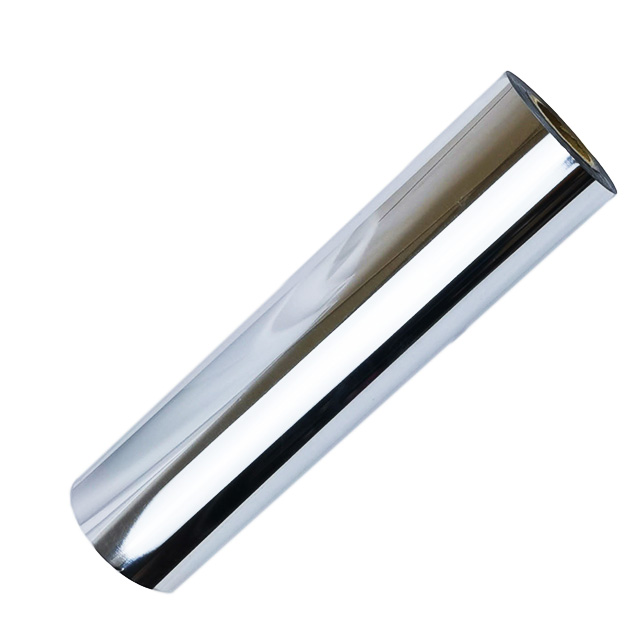
Great security designs fail if they cannot be printed efficiently. You must align the chosen material type against your converter’s existing printing press infrastructure. Unexpected equipment upgrades delay rollouts. Poor press compatibility causes production bottlenecks. Sourcing the right holographic stamping foil requires a deep understanding of application methods.
Press operators face daily battles regulating speeds, temperatures, and tensions. Before buying master rolls, you must confirm the application technology. We generally see two dominant methods used in label production.
This traditional method uses severe heat and pressure. The press forces a heated metal die against the material.
Mechanism: Heat melts the release coat. Pressure physically transfers the hologram into the substrate.
Best for: Rough or uncoated substrates handle this well. It provides high-end finishing. The process deeply embeds the image into the material fibers.
Limitations: It requires slower press speeds. Operators need specific dwell-time and temperature tuning. You will face higher tooling costs for the heavy metal dies. Holographic hot stamping foil struggles on highly heat-sensitive plastics.
Cold transfer is a modern, high-speed alternative. It completely eliminates the need for heated metal dies.
Mechanism: The press applies a UV-curable adhesive using a standard flexo plate. The material sticks only to the adhesive. A UV lamp cures it instantly.
Best for: Smooth substrates like films and coated papers excel here. It allows inline high-speed production. It is perfectly safe for heat-sensitive label materials.
Limitations: It provides a slightly less tactile finish. The visual effect appears dull if operators apply the adhesive inconsistently.
Hot Stamping vs. Cold Transfer Applications | ||
Application Feature | Hot Stamping | Cold Transfer |
|---|---|---|
Press Speed | Slower (Requires Dwell Time) | Fast (Inline Flexo Speeds) |
Tooling Required | Engraved Brass/Magnesium Dies | Standard Flexo Polymer Plates |
Substrate Preference | Textured Papers, Uncoated Stocks | Smooth Films, Coated Papers |
Heat Sensitivity | High Risk for Thin Plastics | Zero Risk (No Heat Applied) |
Follow these progressive implementation steps to ensure seamless production:
Audit the converter's current press capabilities and preferred tooling.
Select the application method based on your chosen label substrate.
Request generic sample rolls matching your application choice.
Run a blank trial on the press to confirm speed and adhesion.
Your supply chain is only as secure as your weakest vendor. You must thoroughly audit a supplier's security claims. An unverified supplier introduces immense vulnerability. If a master shim leaks, your entire anti-counterfeit program collapses. You must vet anyone producing security label foil.
Do not accept marketing claims at face value. A credible supplier invites rigorous auditing. They operate with total transparency regarding their physical security. If a vendor hesitates to explain their facility protocols, you should walk away.
You must require documented proof of high-security printing management. The gold standard is ISO 14298. This certification governs security printing processes. It mandates secure perimeter controls. It demands employee background checks. It strictly regulates visitor access. If a supplier lacks ISO 14298, ask for equivalent national standards. Ensure independent third parties conduct these audits.
The master shim is the crown jewel of your program. You must question their chain of custody aggressively.
Do they manufacture the master shim in-house? Outsourcing origination introduces a dangerous third party.
How are production plates stored between runs? They must reside in access-controlled vaults.
How do they destroy rejected materials? Ask for certified destruction logs.
What happens to the master shim if you terminate the contract? Ensure your non-disclosure agreement dictates immediate surrender or destruction.
A secure facility must also manufacture quality goods. Evaluate their Quality Assurance (QA) tolerances. Ask about registration drift limits. Check their brightness indexing standards. Inquire about adhesive coat weight consistency. Variable coat weights ruin application speeds. Consistent QA ensures your labels look identical across global production facilities.
Experience-driven implementation focuses on anticipating failure points. Do not scale to millions of labels before running extensive physical trials. A beautiful design is worthless if it curls off the packaging during transit.
You must test materials against the exact specific label stock. Substrates vary wildly. A PET film reacts differently than a PVC film or a textured paper. Poor release causes tearing on the press. Incorrect adhesives cause flaking on the final product. Edge curling ruins automatic label applicators. Run physical adhesion trials using the exact base stock intended for the final product.
Labels face harsh real-world conditions. You must assess degradation limits. Place test labels in humidity chambers. Expose them to extreme UV light. Cycle them through varying temperatures. Shipping containers easily reach 120 degrees Fahrenheit. A label must survive global logistics without losing its optical brilliance or tamper-evident properties.
Set transparent assumptions about placement tolerances. Printing presses vibrate and shift. Continuous wallpaper patterns are forgiving. They require no specific alignment. Registered holograms are difficult. They require precise eye-mark tracking capabilities on the press. The machine reads a printed mark and places the discrete hologram perfectly within the die-cut boundaries. If your converter lacks high-end eye-mark sensors, you must stick to continuous patterns. Unrealistic registration expectations lead to massive waste.
Sourcing these materials requires a careful balancing act. You must align threat mitigation, press capability, and vendor integrity. Do not let aesthetic desires override production realities. Always match the security tier to your realistic risk profile.
When shortlisting vendors, prioritize those who offer transparent facility audits. Demand detailed pre-production sampling. A trustworthy partner helps you navigate press capabilities rather than just selling master rolls.
Take action immediately. Draft a robust Non-Disclosure Agreement (NDA). Request generic sample rolls for press-testing on both hot and cold systems. Once testing succeeds, initiate a formal origination capabilities review to design your custom security features.
A: It usually takes 4 to 8 weeks for the master shim creation and the initial production run. The exact timeline depends heavily on the complexity of covert features. Adding nano-optical structures or hidden UV images will push lead times closer to the 8-week mark.
A: It is risky. Thermal transfer easily warps thin materials like polyethylene or shrink films. Cold transfer or pre-registered security stickers are much safer alternatives for heat-sensitive substrates.
A: An eye-mark is a printed registration block on the edge of the roll. It allows the application machine's optical sensors to align a discrete, custom hologram perfectly within the die-cut label boundaries. This prevents random placement.
A: Request their ISO 14298 certification documentation immediately. Require an onsite or virtual facility audit before signing a contract. Furthermore, enforce strict non-disclosure agreements and demand secure destruction logs for all rejected tooling and materials.


