
close
Choose Your Site
Global
Social Media

Views: 0 Author: Site Editor Publish Time: 2026-08-08 Origin: Site


High-end leather goods demand flawless branding. However, intricate logos often suffer from bridging, fill-in, or flaking during the hot stamping process. Operators frequently blame temperature settings for these defects. Sometimes they adjust the pressure hoping for a quick fix. Yet, the root cause of sloppy fine details is usually an incorrect release grade.
Evaluating the exact release characteristics of your material is absolutely crucial. It is the only predictable way to ensure crisp, durable monograms and crests. You can protect luxury brand standards without increasing scrap rates on premium hides. We will explore how different formulations behave under heat. You will learn to match these specific mechanics to your leather tannage and texture.
Every roll of foil looks remarkably simple on the surface. However, it contains multiple highly engineered layers. We must deconstruct these distinct layers to understand how they perform under heat and pressure.
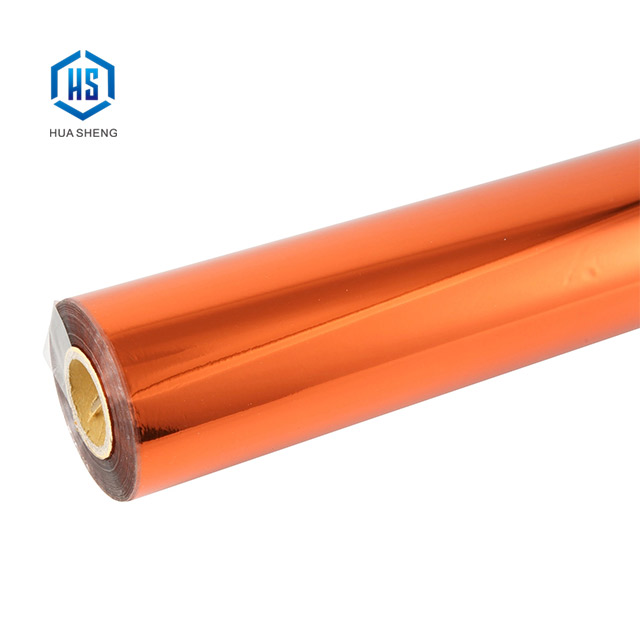
The topmost layer is the carrier film. Manufacturers usually make it from a thin polyester or PET plastic. It holds everything together during the stamping process. Beneath the carrier sits the release layer. This layer melts when exposed to heat. Next comes the metallic, pigment, or holographic layer. Finally, the bottom layer consists of sizing. This sizing acts as a specialized heat-activated adhesive.
When engineers discuss a foil release grade, they refer to a specific mechanical threshold. Heat causes the metallic layer to separate from the carrier film. If the release layer melts too easily, excess material drops onto the substrate. If it heavily resists melting, only the exact die footprint transfers cleanly onto the material.
This mechanical threshold carries a massive commercial impact for your business. Specifying the correct leather stamping foil drastically reduces product rejection rates. You maintain stringent luxury brand standards effortlessly. Flawless branding remains non-negotiable in premium leather goods decoration. Brands lose money when intricate logos blur. They lose prestige when gold flakes off expensive bags or wallets. You must specify the right formulation to protect your profit margins and brand integrity.
Different designs require completely different mechanical release properties. You cannot use one universal formulation for every single stamping job.
You strictly need tight release formulations for intricate crests. They work perfectly for micro-text and highly precise line-art. Thin serif fonts also demand this exact grade. A fine detail leather foil is intentionally formulated to resist premature separation.
The core mechanism relies on highly localized heat and heavy pressure. The tight release ensures a clean, incredibly sharp break at the outer edge of the die. It only transfers the exact footprint of your custom design. You effectively eliminate "fill-in" completely. This grade rarely leaves jagged edges around delicate serifs.
Medium release offers a reasonable middle ground for certain projects. It works adequately for standard block lettering. You can successfully use it for moderately thick logos. However, it introduces significant quality risks on sub-millimeter lines.
Easy release serves a totally different industrial purpose. Engineers design it specifically for large, solid graphic blocks. High-speed automated production runs rely heavily on easy release grades to maintain throughput.
We must issue a strong risk warning here. Using an easy release for a logo hot stamping foil on intricate designs guarantees failure. You will undoubtedly see bleeding and messy edges. Negative spaces inside letters like 'e' or 'o' will fill in entirely. It creates an amateur, smudged appearance.
Leather is an organic, highly unpredictable substrate. Its physical surface characteristics directly dictate your raw material choices.
Smooth leathers provide an ideal flat bonding surface. Calfskin and cordovan fall clearly into this category. Tight release formulations are highly effective on these flat planes. The heated brass die makes uniform contact across the entire design simultaneously. You do not have to fight against varying depth levels.
Textured or pebbled leathers present a much tougher mechanical challenge. Epsom and Togo leathers feature distinct peaks and deep valleys. Deep die penetration becomes mandatory here. A tight formulation might fail to adhere in the deep valleys. The adhesive simply cannot make contact with the recessed leather. You must often compromise and shift toward a medium-tight release.
Tannage chemistry also plays a massive role in adhesion success. Chrome-tanned and veg-tanned hides possess totally different surface tensions. The sizing adhesive must perfectly match the specific leather finish. A tight formulation only works if the adhesive bites into the topcoat. Sometimes the natural waxes or oils in veg-tanned leather repel certain standard adhesives.
| Leather Type | Surface Characteristics | Recommended Release Approach | Common Pitfalls |
|---|---|---|---|
| Smooth Calfskin | Flat, even topcoat, highly uniform | Strictly Tight Release | Using easy release causes severe bridging |
| Pebbled (Epsom/Togo) | Deep valleys, uneven contact points | Medium-Tight Release | Foil drops out inside the deep grain valleys |
| Heavy Veg-Tanned | Rich in natural oils and surface waxes | Tight Release (High-Tack Sizing) | Standard sizing fails to bond to oily surfaces |
| PU Coated Leather | Synthetic top layer, plasticized feel | Tight to Medium Release | High heat easily melts the synthetic PU topcoat |
Do not rely blindly on generic manufacturer claims. You must rigorously validate performance on your own specific equipment.
Establishing a proper baseline is your very first step. Set up a controlled test using your specific brass or magnesium dies. Brass dies hold and distribute heat much more consistently. Magnesium dies heat up quickly but lose their target temperature faster during long production runs.
Conduct strict visual and physical quality assurance checks on every new batch.
Machine calibration reality often ruins perfect theoretical parameters. Manual toggle presses yield vastly different dwell times compared to automated pneumatic machines. Tight release formulations generally require highly accurate, slightly longer dwell times. The heat needs an extra fraction of a second to activate the stubborn release layer fully.
Even the absolute best operators encounter stamping defects. You need to diagnose these common issues systematically.
The "Bridging" or "Fill-In" problem happens constantly in leather workshops. You see excess material connecting individual letters. The negative spaces inside loops completely fill with metallic material. Operators usually assume the release is too loose. However, you should stop and verify the stamping temperature first. If the machine runs too hot, it melts the release layer excessively. If your temperatures are perfectly correct, switch immediately to a tighter release.
The "Drop-Out" problem is equally frustrating for quality control teams. Fine lines are completely missing from the logo. The material simply is not sticking evenly across the entire impression. The release might actually be too tight for your specific leather finish. Alternatively, your dwell time or physical pressure is insufficient. Increase the pressure slightly. Add a tiny fraction of a second to your dwell time. If it still fails, gracefully downgrade to a slightly looser formulation.
| Defect Symptom | Primary Root Cause | Immediate Action Step |
|---|---|---|
| Complete Fill-In (Bridging) | Temperature too high or release too easy | Lower heat by 5°C. If unresolved, use tighter foil. |
| Partial Drop-Out (Flaking) | Insufficient pressure or release too tight | Increase pressure. Extend dwell time by 0.2s. |
| Fuzzy, Jagged Edges | Die moving during press or loose release | Check machine stability. Switch to tight release. |
| Leather Discoloration | Dwell time too long (scorching the hide) | Reduce dwell time drastically. Lower temperature. |
Sourcing the right material requires highly precise communication. Procurement framing is vital for success.
When you request samples from new suppliers, be incredibly specific. Tell them you are actively testing tight release formulations for micro-detailed leather applications. Do not ask for generic hot stamping samples. Generic requests yield generic, often unusable, materials.
Evaluate supplier expertise based entirely on their technical responses. Look for manufacturers who provide specific operating windows. They should gladly offer exact temperature ranges. They should provide detailed compatibility matrices for different leather tannages. Avoid suppliers who make generic promises. True industry experts clearly understand the deep nuances of leather surface chemistry.
For fine, detailed leather logos, a tight release foil is non-negotiable. It remains the only reliable way to maintain crisp, professional edges. Your luxury products absolutely deserve flawless, permanent branding.
However, we must add a final caveat. The absolute best formulation will still fail under poor workshop conditions. You cannot ignore strict machine calibration. Your heat, pressure, and dwell time must be perfect. Proper leather surface preparation remains equally critical.
Your next step is clear. Request technical data sheets today. Order several sample rolls of tight-release formulations mapped specifically to your primary leather tannage. Conduct a standardized brass die test to validate their performance before launching a full production run.
A: Generally, no. A single project with both micro-details and large solid blocks usually requires a compromise (medium release) or, ideally, a two-pass stamping process with two different foils.
A: Heat activates the release layer. If you run a machine too hot, even a tight release foil will act like an easy release foil, causing blurring and bridging.
A: Yes. Brass dies hold and transfer heat more consistently than magnesium, which can improve the clean break of tight-release foils on highly detailed runs.


