
close
Choose Your Site
Global
Social Media

Views: 0 Author: Site Editor Publish Time: 2026-08-28 Origin: Site


Specifying the wrong hot stamping foil dimensions directly erodes your production margins. You will face excessive changeovers, costly edge waste, or unwind equipment mismatches on the press floor. Many converters default to standard sizes provided by suppliers. They miss crucial opportunities to optimize machine uptime and improve material yield. This common oversight leads to hidden inefficiencies across multiple jobs. We need a better approach to defining these daily production parameters. You can transform your entire operation by calculating exact dimensions based on web width, job length, and machinery limits. This guide introduces a data-backed framework to help you specify the exact dimensions your press requires. We will break down how minor adjustments in roll specifications yield massive gains in overall equipment effectiveness. You will learn to eliminate guesswork and build a precise standard for every future material order.
Poor material specification hides massive costs within standard daily operations. You might not notice the immediate financial drain of incorrect dimensions. However, these small inefficiencies compound over hundreds of production hours. Understanding this business problem requires looking closely at how operators interact with machinery. We must evaluate downtime, material waste, and safety risks simultaneously. Every incorrect measurement chips away at your ultimate profit margin.
Short rolls drastically increase the number of required operator changeovers. Imagine running a high-speed press and stopping it every 3,000 feet. You lose valuable minutes during each stop to re-web and register the new roll. If you optimize the length to 10,000 feet instead, you eliminate two full machine stops. This continuous running keeps your press operating at optimal thermal levels. Frequent stops also increase the risk of registration errors upon restarting. You lose both time and quality during these unnecessary transitions.
Waste metrics tell an equally frustrating story on the financial side. Ordering material just half an inch too wide sounds harmless initially. Yet, this excess material adds up over a high-volume run. You pay for thousands of square feet of unused foil over a week. This edge waste heads straight to the recycling bin or landfill. It directly reduces your yield per dollar spent. We must scrutinize width parameters just as strictly as length.
Handling risks present another critical danger when over-specifying dimensions. You want fewer changeovers, but massive rolls become incredibly heavy. Operators cannot load oversized rolls safely without specialized lifting equipment. Rolls exceeding your web tension control limits will cause tearing or wrinkling. Heavy rolls carry a high rotational inertia. Your press brakes might struggle to stop a massive roll quickly. This leads to web snapping and catastrophic material loss.
You must balance image area coverage against normal mechanical tracking variances. Establishing a custom foil width requires understanding standard industry tolerances. Never order a width identical to your stamping die. You should add a 1/8-inch to 1/4-inch (3mm to 6mm) margin beyond the image area. This bleed margin accommodates natural web weave during high-speed transit. If the web shifts slightly, this margin prevents unfoiled edges on your final product. Precision prevents costly product rejections.
Converters optimize costs significantly by understanding master roll yields. Manufacturers produce material in wide master rolls, typically 24 inches or wider. You should specify widths dividing evenly into these master dimensions. If a master roll measures 24 inches, ordering a 4-inch width yields six perfect slits. Ordering a 5-inch width yields four slits, leaving 4 inches of scrap. Suppliers often charge you for these unusable offcuts. Smart dimensioning prevents you from absorbing this hidden penalty.
Multi-lane setups require careful evaluation of your press capabilities. You must decide when to run multiple narrow rolls versus a single wide roll. This decision relies heavily on your machine tension control capabilities. Wide rolls span across multiple labels but require uniform tension across the entire web. If your press exhibits uneven tension, narrow rolls provide superior stability.
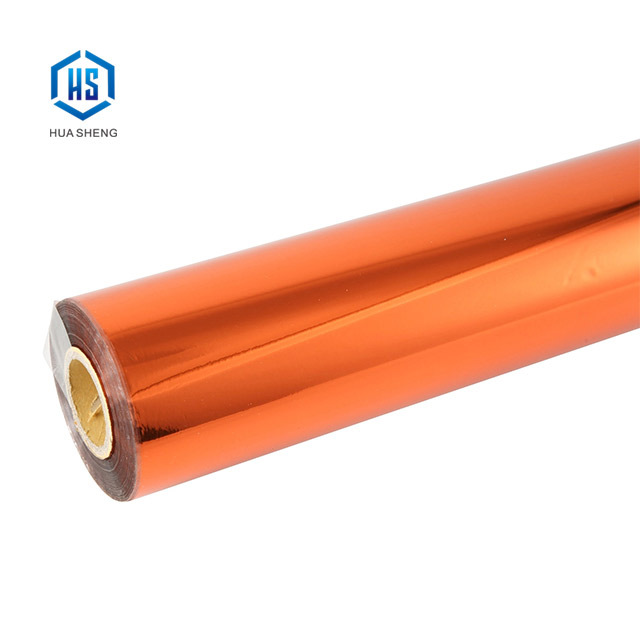
Aligning changeovers keeps your operators highly productive. The ideal scenario matches your foil roll length perfectly to your substrate roll length. If this proves impossible, use a direct multiple instead. For example, a 10,000-foot substrate roll pairs perfectly with a 5,000-foot foil roll. The operator changes the foil twice for every single substrate change. Predictable cycles prevent unexpected machine stops and reduce operator fatigue. Predictability breeds operational efficiency.
Your machine maximum unwind Outer Diameter (OD) dictates the absolute maximum length. You cannot squeeze a 15-inch OD roll onto a press designed for 12-inch maximums. The roll will rub against machine frames or adjacent web paths. This friction destroys the fragile foil carrier and snaps the web. You must measure the physical clearance on your unwind spindle carefully. Always leave at least one inch of safety clearance between the full roll and the machine frame.
Core Inner Diameter (ID) plays a massive role in run stability. Different run lengths require vastly different core strengths. A 1-inch core works perfectly for short runs on narrow web presses. However, industrial environments require much stronger foundations. Long-length applications demand 3-inch or even 6-inch cores to prevent crushing. Small cores simply collapse under the extreme weight and tension of high-yardage rolls.
| Core Size (ID) | Typical Application Type | Maximum Roll Weight Limit | Tension Capability |
|---|---|---|---|
| 1-inch Core | Short runs, narrow web, tabletop | Low (Under 15 lbs) | Low tension |
| 3-inch Core | Standard industrial converting | Medium to High | Standard high tension |
| 6-inch Core | Ultra-long runs, wide web setups | Extreme (Heavy duty) | Maximum tension stability |
Accurate converter foil specifications rely heavily on geometry rather than guesswork. You should use standard roll calculators to determine optimal dimensions. These industry formulas calculate the relationship between material thickness, core OD, and total length. This approach prevents ordering rolls exceeding your physical press limits. The fundamental length-to-diameter equation uses Archimedean spiral principles. It computes exactly how many layers of material fit within a specific radial boundary.
Material thickness alters your calculations dramatically. The PET carrier film thickness dictates the total length fitting on a specific roll OD. A 12-micron carrier film packs much tighter than a 15-micron film. You can fit significantly more footage on a 12-inch OD if you use thinner material. This variable changes your optimal hot stamping foil roll size completely. Never use the same length assumptions when switching between different film grades.
Theoretical math faces significant limitations in actual production environments. Winding tension affects the final roll diameter immensely. A tightly wound roll holds more length than a loosely wound roll of the same OD. You must account for these mechanical realities. We advise converters to ask suppliers for a detailed dimensional tolerance chart.
Purchasing material at scale amplifies both benefits and risks. Sourcing bulk stamping foil requires strict supplier quality audits. You must demand clear splice guarantees before signing any purchase order. Excessive splices in large rolls ruin consecutive product impressions. A splice passing through the heated die causes an immediate defect. Define acceptable standards clearly. You might accept one splice per 3,000 feet, but zero splices per 1,000 feet. Enforce these limits strictly.
Slitting tolerances represent another critical supplier evaluation metric. The industry standard for slit width accuracy sits at +/- 1/32 of an inch. You should demand documentation proving your supplier meets this strict standard. Poor slitting causes the web to wander across the machine path. This wandering leads to registration failures and damaged roll edges. High-quality slitting ensures smooth transit from the unwind to the rewind spindle.
Packaging and transit integrity protect your heavy investments. High-length rolls weigh significantly more than standard rolls. They risk severe edge damage during rough transit conditions. If a heavy roll drops on its edge, the foil layers fuse together. This renders the entire roll completely useless. Suppliers must use suspension packaging for bulk shipments. This method uses robust end-caps to keep the roll suspended mid-air inside the box. Suspension packaging isolates fragile edges from devastating impact forces.
Exact material specifications perfectly balance your raw material costs against operational efficiency. You optimize yield by choosing precise widths while maximizing uptime through optimal lengths. Minor adjustments in your ordering habits generate massive returns on the production floor. You must audit your most common job run lengths immediately. Check your press OD limits and core strength requirements before placing your next bulk order.
Take action by gathering your production data this week. Consult your foil manufacturer technical team directly. Ask them to run exact OD-to-length calculations using your specific machine parameters and chosen film thickness. They possess the proprietary winding data needed to give you perfect dimensions. Moving away from standard sizes toward engineered specifications will permanently elevate your production efficiency.
A: You need three specific data points to calculate maximum length. First, measure your press's maximum OD clearance. Second, identify your required core ID. Finally, determine the exact thickness (caliper) of the foil's carrier film. Inputting these into an industry roll calculator yields the exact maximum footage.
A: Custom widths reduce per-impression material waste significantly over time. However, they may carry minimum order quantities (MOQs) or distinct slitting fees. You must evaluate the choice based on your total job volume. High-volume runs always benefit financially from precise custom widths.
A: Generally, 3-inch inner diameter (ID) cores act as the standard for industrial converting. They provide the necessary structural integrity to support the extreme weight and high tension of high-yardage rolls. Smaller cores risk collapsing and crushing under these heavy production demands.


