
close
Choose Your Site
Global
Social Media

Views: 0 Author: Site Editor Publish Time: 2026-06-25 Origin: Site


Lamination plays a critical role in modern packaging. It protects printed assets from damage and significantly enhances brand perception. Shoppers judge a product by its exterior finish. However, choosing the wrong application method introduces serious business risks. You face a stark choice between heat-activated and pressure-sensitive adhesives. This choice directly impacts unit economics, production bottlenecks, and substrate integrity. An incorrect pairing can ruin entire production runs. Machine downtime quickly erodes profit margins. We must evaluate these methods objectively. This guide breaks down the operational realities, material costs, and technical constraints of both approaches. We help packaging managers finalize their equipment and material sourcing decisions. You will learn exactly how to match the right adhesive technology to your specific operational needs. Making the correct choice ensures smooth manufacturing and beautiful retail displays.
Thermal lamination film dominates high-volume, continuous-run packaging due to lower long-term consumable costs and faster processing speeds.
Cold lamination film is non-negotiable for heat-sensitive substrates (e.g., synthetic papers, specialized labels, certain vinyls) and specific digital inks prone to color shifting under heat.
Material selection (such as BOPP lamination film vs. PET lamination film) plays an equally critical role in determining barrier properties, rigidity, and finish.
We must establish a technical baseline first. We need to understand how each film adheres to packaging substrates. This section focuses on operational realities rather than basic definitions. Different adhesive technologies demand entirely different workflow management.
Most thermal films rely on an EVA (Ethylene Vinyl Acetate) adhesive layer. This layer remains solid at room temperature. It activates upon passing through heated rollers. Typical activation temperatures range from 200°F to 250°F. Operators must manage warm-up times before starting any production run. They also require continuous temperature monitoring throughout the shift. A sudden drop in heat causes immediate delamination. Excessive heat leads to blistering on the print surface. You must carefully calibrate roller speed. It must perfectly match the heat transfer rate. High-quality thermal lamination film ensures consistent melting. It provides reliable adhesion across long packaging runs.
Cold films utilize pressure-sensitive adhesives (PSA). They rely entirely on mechanical roller pressure. Heat plays no part in the bonding process. A protective release liner covers the sticky adhesive layer. The laminator machine must mechanically peel away this liner during application. This stripping process demands precise tension control. Operators benefit greatly from "instant-on" capability. You experience zero machine warm-up time. The complete absence of heat eliminates thermal distortion risks entirely. You can safely apply cold lamination film over delicate or unstable materials. The rubber nip rollers press the adhesive into the paper fibers seamlessly.
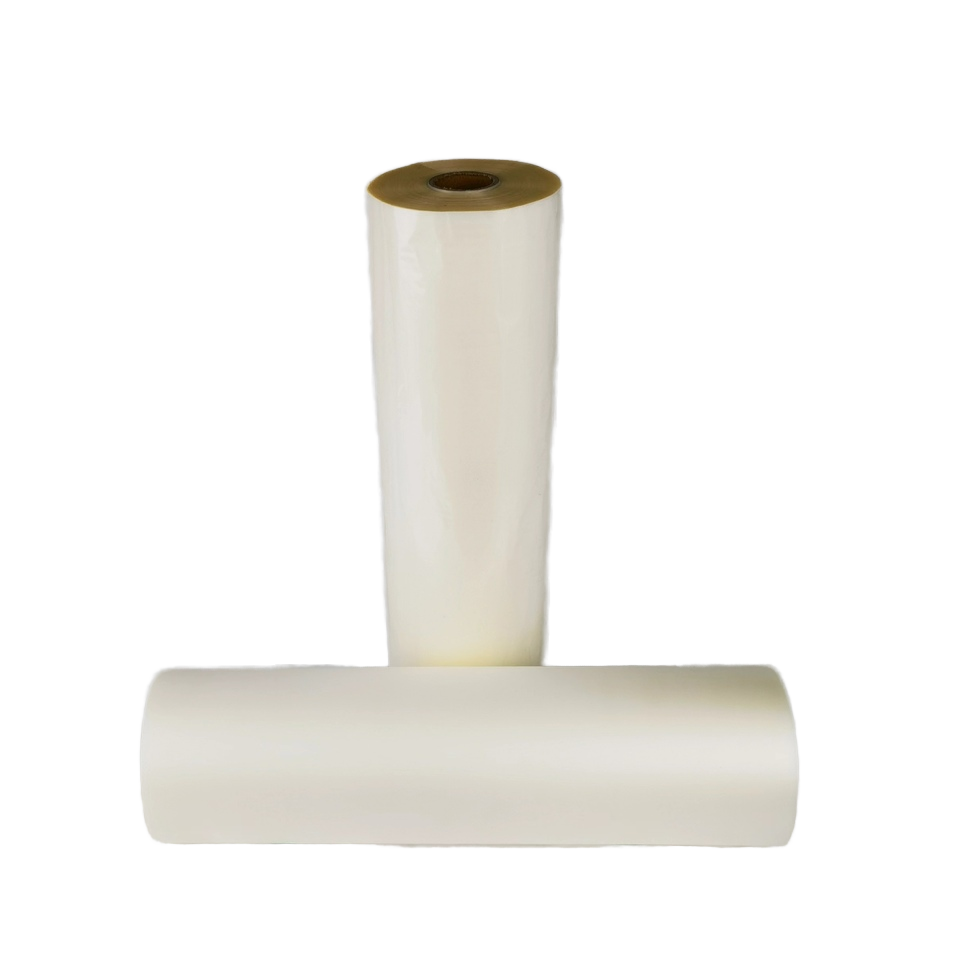
You must map specific film types to exact packaging use cases. This mapping aids in shortlisting the right materials. Different products demand different barrier properties.
Thermal application excels in high-volume environments. It works perfectly for standard folding cartons, rigid boxes, and heavy-stock paperboards. These robust substrates withstand high temperatures easily. They absorb melted EVA adhesive efficiently.
BOPP lamination film: We recommend this for standard cosmetic and food packaging. It provides excellent moisture resistance. It also maintains high flexibility for creasing and folding operations.
PET lamination film: We recommend this for premium electronics packaging. It offers extremely high tensile strength. It provides supreme scuff resistance and superior structural rigidity.
Cold application becomes mandatory for heat-sensitive items. You must use it for thin synthetics, wax-based inks, and delicate plastics. Some digital inks experience color shifting under intense heat. Cold adhesives prevent this color degradation entirely. We also see high utility in wide-format packaging mock-ups. It suits short-run custom labels perfectly. Setting up a massive thermal laminator for a 50-piece run proves economically unviable. Cold processing provides a fast, flexible alternative. It allows prototype shops to turn around jobs instantly. You avoid waiting for heated cylinders to reach operational status.
Packaging engineers and procurement teams care about specific operational metrics. We provide a structured decision framework based on these core metrics. You must weigh upfront expenses against long-term operational efficiency.
Cold films carry a noticeably higher per-roll cost. The disposable release liner and specialized PSAs drive up manufacturing expenses. Thermal films offer a much lower raw material cost. However, they consume significant electrical energy. Heating large steel rollers requires massive power draw. For long continuous runs, thermal lamination scales much better. High-speed automated packaging lines handle thermal webs efficiently. The lower consumable cost eventually offsets the higher energy consumption. Cold lamination remains cost-effective only for intermittent, low-volume batches.
Both categories offer custom finishes to boost retail shelf appeal. You can select soft-touch, holographic, or standard gloss options. A high-quality matte gloss film provides a premium tactile experience. Consumers associate matte finishes with luxury brands. However, you must watch out for specific application defects. Cold lamination sometimes causes a "silvering" effect. These trapped micro-bubbles look like tiny silver specs. They occur if operators calibrate roller pressure incorrectly. Thermal lamination carries a different risk. It sometimes causes substrate curling. Curling happens if operators fail to balance web tension and heat correctly. The cooling plastic pulls the paperboard inward.
We must compare capital expenditure (CapEx) for equipment. Thermal laminators require heavy-duty heated cylinders. They need robust electrical systems and proper exhaust ventilation. This complexity drives up initial machinery costs significantly. Cold laminators utilize a mechanically simpler design. They lack complex heating elements or thermal sensors. Consequently, they prove generally less expensive upfront. Facility managers often prefer cold machines for secondary or backup lines.
Evaluation Criteria | Thermal Lamination | Cold Lamination |
|---|---|---|
Energy Consumption | High (constant power for heated rollers) | Low (motor drive only) |
Consumable Expense | Lower cost per square foot | Higher cost (due to release liner) |
Production Throughput | High-speed, continuous integration | Slower, better for batch work |
Initial Machinery CapEx | Higher investment required | Lower investment required |
Warm-up Time | 15 to 45 minutes | Instant start |
Production runs rarely go exactly as planned. Unexpected variables disrupt schedules. We must highlight what goes wrong on the floor. More importantly, we explain how you can mitigate these risks effectively.
Paperboard moisture content causes major operational issues. High humidity environments introduce excess water into paper fibers. This moisture turns into steam bubbles during thermal lamination. The intense heat flashes the water to vapor. Operators must acclimate substrates to the production room environment beforehand. Film shrinkage presents another persistent danger. Excessive heat warps the final packaging film layer. The plastic contracts as it cools down. This contraction bows the carton board. You must carefully manage cooling fans and chill rollers.
Managing waste release liners creates a substantial logistical footprint. You must spool and dispose of the backing material continuously. Bins fill up quickly during long runs. Furthermore, PSAs demand a strict dust-free environment. They inherently generate static electricity during the unspooling process. This static instantly grabs airborne particulates. Dust specs create visible bumps under the clear layer. Cleanroom conditions or powerful anti-static bars become strictly necessary. You cannot operate cold laminators in dusty warehousing areas.
The learning curves differ significantly between the two methods. Thermal lamination requires a nuanced understanding of thermodynamics. Operators must balance heat, speed, and nip pressure simultaneously. A faster run speed requires higher roller temperatures. Cold lamination requires intense focus on mechanical tension. You need precise tension control across the web. Poor tension leads to immediate wrinkling. A single wrinkle can ruin meters of printed stock. Operators must deeply master their respective machine constraints.
We offer a definitive framework to push your team toward a qualified decision. Use these criteria to finalize your procurement strategy quickly.
Your facility runs high volumes of stable, heavyweight paperboard consistently.
Unit consumable cost serves as your primary manufacturing KPI.
Management has already approved machinery CapEx for industrial heated rollers.
Your typical production runs exceed 5,000 units per batch.
Your packaging relies heavily on heat-sensitive synthetics or specialty vinyls.
You run highly customized, short-batch labels for boutique clients.
You cannot accommodate the lengthy warm-up and cool-down cycles of thermal machinery.
Your facility lacks the electrical infrastructure for high-draw heating elements.
Do not commit to a bulk procurement contract immediately. Request sample rolls for your specific substrate first. You must conduct a dyne level test on your printed stock. This test verifies the surface energy of your substrate. Proper surface energy guarantees strong adhesive bonding. Weak surface energy leads to peeling edges. Test both the ink and the base material thoroughly.
Neither method proves universally superior across the board. Substrate tolerance and production volume dictate actual superiority. High-volume carton manufacturing heavily favors thermal applications. Short-run specialty synthetics require cold processing. The right material aligned exactly to the correct application method ensures zero-defect output. It ultimately protects your brand equity on the retail shelf. Contact your technical sales representative today. Ask them to run a comprehensive substrate compatibility test. You should evaluate dyne levels and ink curing methods. Address these variables early to secure smooth, profitable production runs.
A: Yes, if your machine features a dedicated cold setting. Dual-purpose machines can disengage their heating elements completely. You must ensure the rollers have cooled down to room temperature first. Running cold films over warm rollers will melt the pressure-sensitive adhesive. This mistake causes immediate jamming and ruins the entire roll.
A: Scuff resistance depends strictly on the base polymer rather than the application method. A PET film provides significantly higher durability and scuff resistance than a standard BOPP film. Choose PET when your packaging faces rigorous shipping environments. You can apply PET either thermally or cold.
A: Yes. Matte and textured films transfer heat differently than smooth gloss films. Matte coatings often require slightly higher roller temperatures. Alternatively, you might need slower run speeds. This ensures the EVA adhesive melts completely. Always test a small batch to find the optimal heat-to-speed ratio.
A: Yes. The packaging industry now offers cellulose-based films for both methods. However, eco-friendly pressure-sensitive adhesives for cold films remain quite expensive. Thermal compostable films are gaining rapid traction. You must verify the specific EVA blend meets your local industrial composting standards.


