
close
Choose Your Site
Global
Social Media

Views: 0 Author: Site Editor Publish Time: 2026-09-01 Origin: Site


Combining metallic brilliance and subsequent print layers raises the stakes for modern packaging projects. A flawless finish demands absolute chemical harmony on the press. Many production teams fall into a highly common trap. They choose a standard foil based purely on visual appeal. Soon, they experience severe adhesion failure during secondary processing. Wet inks bead up rapidly. Cured varnishes flake off at the slightest friction. This guide provides a rigorous technical framework for your evaluation process. We will show you how to select specific foil chemistries correctly. You will learn to ensure reliable ink trapping and highly durable varnish adhesion. Proper testing protects your production margins and eliminates costly rework. Read on to master the complex chemistry of flawless overprinting.
The financial impact of adhesion failure destroys production margins quickly. Spoilage rates skyrocket when inks fail to trap. Missed delivery deadlines frustrate key clients irreparably. Unplanned machine downtime wastes extremely valuable press hours. Standard metallic foils actively repel liquids to maintain high surface gloss. This exact chemical trait causes massive problems later. It forces overprinted inks to bead up immediately. Applied varnishes simply flake off during post-press handling.
You cannot solve this by adding more coating. You need a chemically specialized over printable foil. Its unique lacquer layer accepts wet fluid coatings seamlessly. We measure a successful overprint through strict physical testing. Success requires passing the standard cross-hatch tape test flawlessly. You must achieve perfectly sharp ink trapping. You must observe zero flaking at the micro-edges. Protecting your bottom line means understanding these chemical realities deeply.
Common Mistakes: Do not assume visual similarity equals chemical similarity. Standard and overprintable foils look identical on the roll. Always verify the formulation type before mounting the roll. Using standard foil for a complex multi-pass job guarantees failure.
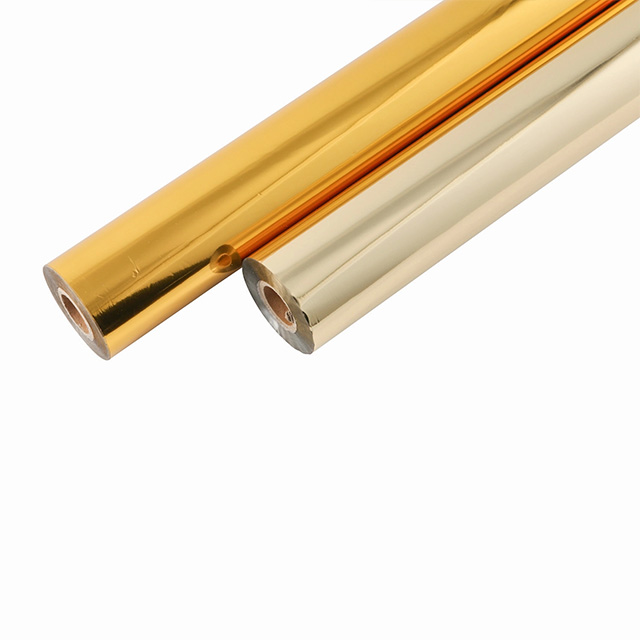
Surface tension dictates the entire overprinting success rate. A foil surface energy must match your topcoat perfectly. We calibrate dyne levels carefully for successful chemical adhesion. If dyne levels mismatch, the liquid coating cannot spread properly. Release coat chemistry acts as another fundamental performance pillar. Standard applications use an "easy release" layer for speed. Overprinting strictly requires a "tight release" formulation instead. Tight release layers prevent unwanted foil lifting during processing. Heavy-tack ink passes exert immense pulling forces on the substrate. The foil must resist this mechanical pull completely.
Thermal stability is a non-negotiable factor in modern pressrooms. Applied top layers must withstand intense UV curing lamps. A highly reliable overprintable hot stamping foil resists bubbling perfectly. It retains its brilliant metallic luster despite extreme heat exposure. Clean die-cutting at high speeds ensures optimal hot stamping compatibility. The foil must separate cleanly before it reaches the inking unit. Ragged foil edges ruin the trapping alignment instantly.
Industry standards recommend verifying the topcoat dyne level dynamically. Ask your supplier for specific dyne testing metrics. You want numbers aligning closely to your chosen varnish tension. Proper alignment guarantees a smooth, pinhole-free top layer.
Evaluating substrates forms the foundation of proper material selection. Porous uncoated paper needs different adhesive sizing than non-porous films. Synthetic films like BOPP and PET demand highly aggressive sizing. This prevents uncontrolled foil migration during the stamping process. You must specify appropriate paper and film foil formulations accordingly. Choosing the wrong adhesive back-coat ruins the initial transfer.
Applying high-gloss or matte UV coatings poses extraordinary chemical challenges. A specialized UV varnish foil manages these aggressive interactions safely. Photoinitiators in the UV varnish must bond securely. They link directly to the foil's receptive lacquer layer. Standard lacquers block this micro-bonding completely.
The order of press operations changes everything dynamically. Printing ink or varnish over foil is a highly reliable process. It simply requires a properly receptive topcoat. Stamping foil over a cured UV print behaves differently. It remains a notoriously difficult and unstable production method. Cured UV coatings create extremely hard, slick surfaces. Stamping over them requires highly specific and aggressive adhesive properties.
Substrate Evaluation Guidelines
We use specific evaluation criteria when matching foils to substrates. Review these critical parameters before launching your job.
| Substrate Type | Porosity Level | Required Foil Adhesive Sizing | Overprint Difficulty |
|---|---|---|---|
| Uncoated Paper | High | Thick, deeply penetrating formulation | Low to Medium |
| Coated Paperboard | Medium | Standard reactive formulation | Medium |
| BOPP / PET Film | Zero | Aggressive synthetic bonding agents | High |
| Pre-Cured UV Surface | Zero | Specialty ultra-tack formulation | Extremely High |
Press operators face numerous hidden variables during production runs. UV lamp degradation acts as a massive operational blindspot. Incorrect wattage leaves the clear varnish severely under-cured. This false failure mimics bad foil adhesion perfectly. The operator blames the foil, but the lamp is dying. Regular radiometer checks prevent this costly misdiagnosis.
Ink formulation conflicts destroy perfectly planned production runs. Standard oxidative drying inks conflict chemically against metallic topcoats. We exclusively recommend using UV-cured inks over foil surfaces. Specially formulated foil-oxidizing inks serve as a secondary fallback option. Environmental factors alter production stability quietly but drastically. High ambient humidity alters foil release properties overnight. Pressroom temperature fluctuations change your varnish viscosity unpredictably.
A rigorous verification framework eliminates guesswork entirely. You must empirically verify adhesion before initiating a full run. Perform these mandatory pre-production tests sequentially:
If any test fails, stop production immediately. Recalibrate your curing energy or verify your dyne levels. Pushing through a failure guarantees a rejected client delivery.
Vetting supplier claims requires looking far beyond glossy marketing materials. Demand a comprehensive Technical Data Sheet (TDS) immediately. Request an updated Material Safety Data Sheet (MSDS) alongside it. These documents verify chemical suitability and thermal limits directly. Do not accept vague verbal assurances regarding overprintability.
Batch consistency defines true supplier reliability in our industry. Evaluate their internal quality control tolerances rigorously. A short sample roll might work perfectly during testing. A massive 10,000-meter production roll must perform absolutely identically. Inconsistent release agents cause mid-run catastrophic failures.
Structure your controlled trials methodically to establish safe operating windows. Do not rush this validation phase.
We strongly advise requesting specific sample rolls next. Base this request on your exact press setup. Mention your specific substrate type and varnish manufacturer explicitly. Precision in your request yields precision in the supplied formulation.
Reliable overprinting remains a product of exact chemistry, not blind chance. Standard foils simply cannot handle the chemical demands of wet varnishes. Evaluating overprintable foils through strict press trials protects your profit margins. Surface energy matching guarantees predictable success on premium packaging jobs. Proper pre-production testing eliminates costly pressroom surprises completely.
You now possess the technical framework needed to evaluate these materials. Prioritize tight release chemistry and thermal stability during your shortlisting phase. Always align your substrate type directly with the foil's adhesive sizing. Take action by contacting technical support today. Request spec-matched samples for your upcoming production trials. Secure your next high-end packaging run by choosing the right chemistry first.
A: Generally no, you should avoid this practice. Standard hot stamping foils utilize topcoats designed to repel liquids. Applying UV varnish over them leads to severe beading and flaking. A specialized UV varnish foil is required to ensure proper chemical bonding and a smooth finish.
A: Ink rub-off usually indicates a chemical or curing failure. Focus on mismatched dyne levels between the ink and the foil surface. Investigate potential under-cured UV inks caused by degrading press lamps. Alternatively, you might be using a foil with an incompatible top lacquer.
A: Printing UV over foil is significantly better and more reliable. Stamping foil over cured UV coatings is technically difficult. Cured UV creates a hard, non-porous surface resisting standard foil adhesives. Overprinting a chemically receptive foil yields much higher production consistency.
A: It depends on the applied coating. Clear UV varnishes generally maintain the underlying high gloss perfectly. Certain overprinting inks can mute the metallic effect drastically. You must specify inks formulated with high transparency to preserve the bright metallic shine.


