
close
Choose Your Site
Global
Social Media

Views: 0 Author: Site Editor Publish Time: 2026-08-26 Origin: Site


Procuring substandard materials introduces hidden costs you rarely see coming. Dull finishes, flaking edges, and rejected print runs quickly drain production budgets. They also quietly damage your brand perception in the market. Consumers instantly notice poor packaging quality. You cannot rely on vendor photos or digital mockups to judge final results. These digital files fail to accurately capture physical light refraction. They completely ignore how materials interact on your specific substrate in real-world scenarios. This article provides a systematic, evidence-based framework for evaluating gold and silver hot stamping foil before you commit to high-volume production runs. We will explore exactly how to test physical samples thoroughly. You will learn to measure reflectivity under proper standardized lighting. Finally, we will show you how to vet supplier capabilities to ensure long-term operational success.
Consumers subconsciously link packaging aesthetics directly to product quality. We call this cognitive bias the "halo effect." When buyers see a highly reflective, flawless metallic finish, they assume the product inside holds premium value. Conversely, a dull or tarnished finish signals cheapness. This psychological link heavily influences price positioning. Brands relying on metallic accents for luxury packaging cannot afford visual inconsistencies. A flawed finish immediately breaks consumer trust.
Low-tier stamping materials frequently trigger severe production failures. These failures often remain hidden until the product reaches the warehouse. Oxidation is a primary culprit. Cheap materials react to ambient air and humidity. They tarnish rapidly over time, ruining shelf appeal. Micro-scratching presents another major risk. During transit, foil layers can rub against each other or the shipping cartons. Poorly formulated top coats sustain microscopic scratches, dulling the overall shine. Outgassing also plagues inferior products. When adhesives break down under heat, they release gases. These gases create microscopic bubbles under the metallic layer, permanently distorting the visual gloss.
To avoid these pitfalls, buyers must establish strict success criteria. A successful procurement strategy balances two opposing forces. First, you need high aesthetic gloss for shelf impact. Second, you demand operational stability on the press. High gloss means nothing if the material fails to adhere properly. You need reliable release rates from the carrier web. You also require strong, permanent substrate adhesion. Finding this balance separates a successful production run from a costly disaster.
Evaluating gloss requires objective measurement, not just a casual visual check. Industry professionals measure reflectivity using Gloss Units (GU). This scale quantifies how much light reflects at specific angles. A 60-degree angle serves as the standard baseline for most packaging materials. When conducting a foil gloss inspection, you must use standardized lighting. D50 viewing booths provide a consistent 5000K color temperature. They simulate natural daylight perfectly. Without D50 lighting, you risk metamerism. Metamerism causes colors and finishes to look completely different under varying light sources. Standardized lighting ensures your evaluation remains entirely objective.
Surface tension dictates how well the material handles secondary processes. Packaging designs often require overprinting. You might need to apply UV coatings or protective varnishes over the stamped area. A true premium hot foil features a highly receptive top coat. It accepts these secondary varnishes without losing its inherent metallic luster. Poor surface tension causes inks and varnishes to bead up. They refuse to lay flat, destroying the final aesthetic.
Edge acuity represents the sharpness of the stamped design. Clean breaks are absolutely vital for modern packaging. High reflectivity becomes irrelevant if the material bridges across fine details. Bridging occurs when the metallic layer fails to snap cleanly from the carrier web. It fills in the tiny gaps in small text or intricate logos. Poor edge acuity leaves jagged, fuzzy edges on serif typography. We inspect edge acuity under magnification to ensure absolute precision.
Adhesion and flake resistance guarantee long-term durability. We evaluate adhesion strength using the industry-standard cross-hatch tape test. You apply aggressive 3M testing tape directly to the stamped area. You press it firmly to remove air bubbles. Then, you pull it off rapidly at a 180-degree angle. If the metallic layer flakes or peels, it fails the test. Strong adhesion prevents post-production damage during consumer handling.
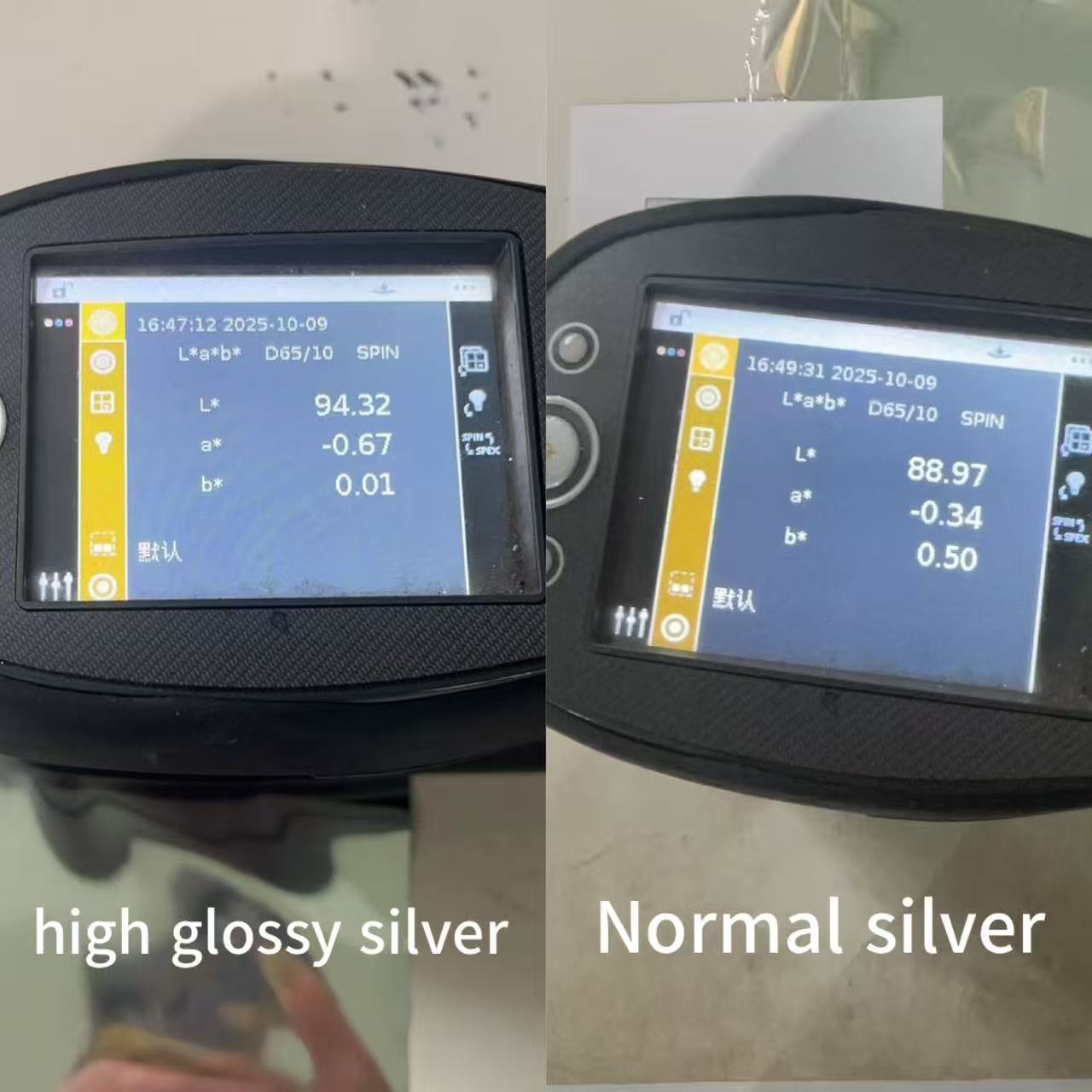
Never base procurement decisions on pre-stamped promotional cards. Vendors produce these marketing tools under absolute perfect conditions. They use ideal substrates, optimal temperatures, and zero time constraints. These ideal states rarely match commercial reality. Instead, you must demand raw production-grade rolls. You need a physical metallic foil sample to run on your exact equipment.
The substrate serves as the biggest variable in gloss retention. Uncoated paper absorbs adhesives aggressively. It often requires different sizing or primers. Soft-touch laminates actively resist adhesion due to their silicone-like surface energy. Rigid packaging boards require significantly higher press pressure. The exact same high gloss stamping foil behaves completely differently across these three materials. Always conduct your pre-order tests on the exact production substrate.
Machinability stress-testing separates reliable products from problematic ones. Follow these distinct testing phases:
Finally, perform a rigorous scratch and rub test. This simulates the aggressive wear-and-tear of post-production shipping. Commercial facilities use a Sutherland Rub Tester for mechanized, repeatable results. If you lack this equipment, perform a manual test. Rub the stamped area vigorously with a blank piece of the substrate material. Check for any degradation, color transfer, or gloss reduction under your D50 lighting booth.
Every design requires specific release characteristics. Manufacturers engineer foils in two primary categories: easy release and tight release. Easy release formulations separate from the carrier web with minimal heat and pressure. They are absolutely ideal for large solid blocks of color. They provide smooth, unbroken coverage over wide areas. However, they bleed easily. If you use an easy release formulation on tiny text, the letters will fill in and blur.
Tight release formulations require more energy to transfer. They hold their structure tenaciously. This makes them perfect for fine line art and delicate serif typography. They snap cleanly, leaving razor-sharp edges. However, they struggle immensely with heavy coverage. If you use a tight release formulation on a large solid block, you will likely see pinholes and incomplete transfers.
You must accept a fundamental design rule assumption. No single formulation excels at both microscopic details and heavy solid coverage. Buyers must evaluate the primary design application before ordering. If a design features both elements, best practice dictates separating them into two different stamping passes using two different formulations.
| Specification Feature | Easy Release Formulation | Tight Release Formulation |
|---|---|---|
| Primary Application | Large solid blocks, heavy coverage | Fine lines, serif text, intricate logos |
| Edge Acuity | Lower (prone to bridging and bleeding) | Exceptionally high (razor-sharp edges) |
| Transfer Energy Required | Low heat, low pressure | High heat, specific pressure settings |
| Common Flaws if Misapplied | Fills in tiny text gaps | Leaves pinholes in large solid areas |
Embossing compatibility presents another critical design constraint. Many luxury packaging designs require fluted or multi-level embossing immediately after stamping. This physical manipulation severely stretches the substrate and the metallic layer. You must evaluate the material's elasticity. If the gloss layer lacks sufficient flexibility, it will suffer micro-cracking across the raised edges. This cracking destroys the continuous reflective shine and exposes the underlying adhesive.
Identifying a reliable supplier goes far beyond comparing upfront unit costs. You must verify their manufacturing consistency. Ask potential suppliers about their quality control tolerances. Request proof of ISO 9001 certifications. Chemical formulations change slightly between different raw material batches. Even minor variations in the release coat or vacuum metallization process cause drastic gloss variations. Consistent batch-to-batch manufacturing guarantees your brand identity remains stable across multi-year production runs.
Traceability directly impacts material shelf life. Stamping rolls degrade over time. The adhesive layer loses its bonding strength. The top coat becomes brittle. Evaluate the supplier's transparency regarding manufacturing dates. They should clearly label every roll with a specific production lot number. Furthermore, demand precise recommended storage conditions. High warehouse humidity and extreme ambient temperatures actively destroy raw rolls. Good suppliers provide explicit guidelines for climate-controlled storage.
Technical support capabilities separate true partners from mere distributors. Prioritize vendors who provide comprehensive technical data sheets (TDS). These documents should specify optimal temperature windows, required pressure settings, and exact dwell times for specific substrates. Avoid vendors who sell generic, one-size-fits-all rolls. True experts understand how their chemistry interacts with different paper fibers and polymer coatings.
Finally, confront the realities of Minimum Order Quantities (MOQ) and lead times. Procurement teams often chase the cost-efficiency of massive high-volume orders. However, holding too much inventory carries severe risks. As established, materials degrade over time. If you order a two-year supply to secure a discount, the final rolls may fail entirely on the press. Balance your cost savings against the risk of inventory spoilage. Align your order volumes with guaranteed shelf-life windows.
Evaluating gloss quality demands rigorous technical discipline, not subjective visual opinions. You cannot secure consistent production results by glancing at digital proofs or pre-stamped marketing cards. The process requires standardized lighting, precise adhesion testing, and careful analysis of design specifications. Transitioning smoothly from a sample request to controlled press tests protects your production budget.
Take immediate action to safeguard your next production run. First, audit your proposed designs to determine if you need tight or easy release formulations. Second, identify the exact production substrates your facility will use. Third, contact your shortlisted vendors to request raw test rolls alongside comprehensive technical data sheets. By mandating these physical tests, you eliminate guesswork and guarantee premium aesthetic results.
A: Dullness usually stems from substrate porosity or incorrect press settings. If the substrate is highly porous, it absorbs the adhesive too quickly, causing the metallic layer to lay unevenly. Additionally, using insufficient heat prevents the gloss layer from transferring smoothly. Conversely, excessive press pressure can squeeze the adhesive out from under the metallic layer, distorting the reflective finish.
A: A proper press test requires a realistic commercial roll length. Request a minimum sample roll of 50 to 100 meters (164 to 328 feet). This length allows operators to string the web through the press, bring the machine up to commercial operating speeds, and accurately test dwell time and temperature fluctuations.
A: Yes. Hot stamping utilizes heat and pressure to transfer a dry, fully cured metallic layer, resulting in superior depth, higher reflectivity, and sharper edges. Cold foil relies on applying a liquid UV adhesive through a printing plate, which often produces a slightly flatter, less brilliant finish compared to the traditional hot process.
A: Absolutely. Ambient warehouse conditions directly impact raw materials before application. High humidity causes paper substrates to swell, altering how the adhesive binds. Extreme temperatures degrade the release liners on the raw rolls. During visual inspection, inconsistent ambient lighting causes metamerism, drastically altering how the human eye perceives the reflective finish.


