
close
Choose Your Site
Global
Social Media

Views: 0 Author: Site Editor Publish Time: 2026-07-15 Origin: Site


Holographic foil is a proven method for increasing shelf visibility and product security. It grabs consumer attention immediately in crowded retail spaces. However, selecting the wrong pattern or application method often leads to misaligned artwork. It can cause substrate failures or blown printing budgets. Moving from a creative concept to physical production requires deep understanding. You must grasp the technical limits of light diffraction. You also need to know your available foil types and specific press capabilities to avoid costly mistakes.
This guide breaks down how to evaluate various holographic patterns. We base this evaluation on visual goals, security requirements, and technical print compatibility. We will help you navigate material choices. You can then specify your exact label requirements with total confidence. Whether you design premium beverage packaging or implement anti-counterfeiting measures for pharmaceuticals, details matter. Learn how subtle differences in pattern scale or base material drastically alter final shelf appeal.
Pattern selection dictates cost: Stock seamless patterns are cost-effective for decoration, while registered holograms require custom tooling and higher minimum order quantities (MOQs).
Application matters: Choosing between hot stamping and cold foil depends entirely on your label substrate and the intricacy of your design.
File preparation is unique: Standard CMYK proofing cannot replicate holographic light refraction; physical press proofs are a mandatory step in the evaluation process.
Base color impacts effect: While silver provides the sharpest light refraction, gold and transparent options offer nuanced branding applications.
Before selecting a specific material, you must frame your primary business problem. You need to identify whether your main goal involves aesthetic differentiation on the retail shelf or robust supply chain protection. These two objectives require entirely different technical approaches.
Brands use decoration techniques to capture consumer attention. They focus heavily on premiumization. This approach upgrades the perceived value of a product. Designers typically utilize off-the-shelf "wallpaper" patterns. Popular examples include cracked ice, rainbow gradients, and glitter effects.
When you use packaging decoration foil, success depends on specific criteria. You need high light refraction to ensure the product stands out under store lights. You also require visual consistency across the entire print run. Finally, the solution must offer cost-effective scaling for high-volume production.
Security applications serve a completely different purpose. They focus on tamper evidence and brand protection. Counterfeit products harm brand reputation and endanger consumers. Security labels prevent this by utilizing custom micro-text. They often include hidden images visible only under specific light wavelengths. Serialized overlays also provide unique tracking codes for individual products.
Success criteria for security foils involve extreme difficulty of replication. Counterfeiters should not easily copy the design. Verification capabilities remain essential. Supply chain inspectors must quickly authenticate the label. The foil must also comply strictly with industry security standards.
Comparison: Decoration vs. Security Foil | ||
Feature | Decoration Focus | Security Focus |
|---|---|---|
Primary Goal | Aesthetic appeal, shelf visibility | Brand protection, authentication |
Pattern Type | Stock seamless (wallpaper) | Custom registered, micro-text |
Cost Structure | Lower setup, budget-friendly | High setup, custom tooling required |
Replication Difficulty | Low to Moderate | Extremely High |
Understanding pattern categories helps you match the material to your design intent. The printing industry divides these patterns into two main groups. Choosing correctly impacts both your budget and your production timeline.
Seamless patterns repeat infinitely across the material roll. You do not need specific alignment between the foil and the printed artwork. This continuous nature forgives slight shifts during the printing process. It removes the need for highly precise registration sensors.
These patterns work best for large coverage areas. They excel as background textures. They also suit budget-conscious production runs perfectly. In commercial printing environments, operators commonly refer to this standard material as laser foil. It provides excellent visual impact without demanding complex setup procedures.
Registered patterns feature a specific image. This image could be a corporate logo, a detailed crest, or a specialized icon. The press operator must align this exact image perfectly with the printed ink. It must also match the final label die-cut precisely.
Evaluating this dimension requires careful consideration. Registered application requires advanced optical sensors on the printing press. The press reads registration marks to keep the foil aligned. This process carries higher setup costs. It also demands stricter tolerance limits. A misalignment of just one millimeter can ruin the visual effect.
You must assess how your chosen pattern behaves under different lighting conditions. Pillar light patterns react strongly to directional retail lighting. They create striking vertical or horizontal light bands. Multi-lens effects feature small, overlapping circular shapes. These lenses catch light from multiple angles simultaneously.
Always test your pattern under actual retail lighting. Ambient daylight produces a much softer effect compared to harsh fluorescent store lights. Ensure the diffraction matches your intended physical retail environment.
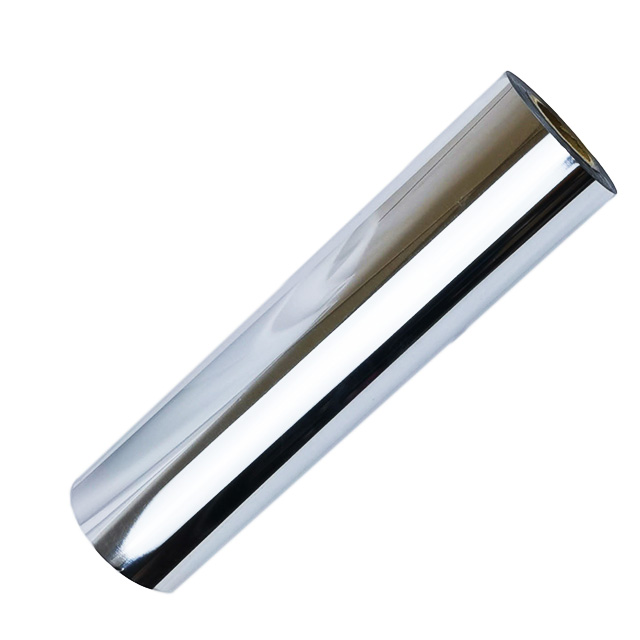
Selecting the right application method determines the success of your label. The choice depends entirely on your substrate material and your artwork intricacy. The printing industry relies primarily on two different application technologies.
Hot stamping remains the traditional method for premium labels. The mechanism uses intense heat and a custom-engraved metal die. The press applies pressure to bond the foil directly to the paper substrate.
Pros: This method delivers exceptional brilliance. It produces incredibly crisp edges. Holographic hot stamping foil proves highly compatible with heavily textured papers. It also works beautifully on uncoated stocks. Furthermore, it allows for simultaneous embossing, creating a tactile 3D effect.
Risks: You face higher initial tooling costs. Custom metal dies require specialized manufacturing. The process also dictates slower press speeds. The heat transfer requires precise dwell time to adhere properly.
Cold foil represents a more modern inline printing technique. The mechanism avoids heat entirely. Instead, the press prints a UV-curable adhesive onto the substrate. The foil web then rolls over this adhesive. A UV lamp cures the glue, and the foil adheres only to the sticky areas.
Pros: You do not need custom metal dies. This eliminates tooling costs. It provides a much faster turnaround time. Cold application proves ideal for heat-sensitive materials. You can easily decorate shrink sleeves or thin polymeric films safely.
Risks: This method requires highly smooth substrates. Non-porous materials like coated papers or BOPP plastics work best. If you use porous paper, the adhesive sinks in, causing poor foil transfer. Edges may not appear as razor-sharp as hot stamping results.
Always consult your printer early in the design phase. If your design features ultra-fine lines, cold foil might struggle to hold the detail. If you specify thick, textured wine paper, hot stamping becomes absolutely mandatory.
The base color of your foil interacts directly with your printed inks. It dramatically alters the final visual spectrum. Understanding these interactions prevents unexpected muddy colors or weak diffraction effects.
You have three primary options when choosing a base tint. Each serves a distinct design purpose.
Silver Holographic Foil: Silver serves as the undisputed industry standard. It provides maximum light diffraction. The neutral silver base reflects the widest spectrum of rainbow colors. It does not tint the translucent inks printed over it.
Gold Base: Using a gold silver holographic foil changes the aesthetic entirely. Gold adds a warmer, vintage feel. It conveys a hyper-premium status. However, the yellow base can mute subtle rainbow diffractions. You must accept a slightly reduced color shift.
Transparent Holographic Foil: Transparent options behave like a shifting topcoat. They allow your underlying CMYK artwork to show through entirely. As the consumer moves the label, a subtle holographic wash appears over the printed illustration. This proves ideal for complex artwork where opaque foil would hide too much detail.
The physical reality of your paper dictates your foil success. You must pair the right holographic label foil to the right stock.
Coated stocks provide a smooth, sealed surface. They accept both hot and cold applications beautifully. The smooth surface allows the diffraction grating to remain perfectly flat. This flatness maximizes light reflection.
Uncoated and textured stocks present major challenges. Heavily textured wine and spirits labels feature deep microscopic valleys in the paper. If you attempt cold application here, the adhesive pools in the valleys. The foil bridges across the peaks. This bridging causes the material to flake off easily during shipping. Therefore, textured labels almost exclusively require hot stamping. The intense pressure of the heated die forces the foil down into every crevice of the textured paper.
Translating a digital design into a physical holographic label requires strict pre-press discipline. Standard file preparation techniques often fail when dealing with specialized light-refracting materials.
You must use vector files to define your foil areas. Raster images like JPEGs or PNGs cannot generate the precise boundaries needed for platemaking. Designers must create dedicated spot color channels. Name this channel clearly, such as "Holo Foil."
You must manage how inks interact with the foil layer. Overprinting means printing translucent ink directly over the foil. This technique creates stunning metallic colors. Knocking out means leaving the foil completely bare. Bare foil provides the strongest uninterrupted rainbow effect. You need to specify exactly which elements overprint and which knock out.
A transparent assumption exists in modern design. People assume digital screens accurately represent final products. However, digital PDFs cannot simulate physical light diffraction. A computer monitor emits RGB light. A holographic foil physically bends external light sources.
You face a strict requirement here. Always request a physical "drawdown" or a press proof. You must accept that 2D digital renders remain mere approximations. Only a physical sample reveals how the pattern scales against your typography.
Not all print partners possess the expertise to handle complex diffractive materials. You must ask highly specific questions during your vendor selection process.
"What are your registration tolerances for custom holograms?" Look for tolerances tighter than 1/64 of an inch.
"Do you require minimum order quantities for non-stock patterns?" Custom security patterns often require large initial commitments.
"Can your press hold fine lines using cold application on my chosen substrate?"
Asking these questions early mitigates severe production risks later. It ensures your chosen partner aligns with your technical requirements.
Selecting a holographic pattern involves a careful balance. You must weigh your aesthetic intent against substrate physics and budget realities. Understanding these technical constraints allows you to design labels that actually work on the press.
Seamless silver patterns offer high visual impact for relatively low risk. They provide an excellent entry point for brand premiumization. Conversely, custom registered holograms provide ultimate security at a premium price point. You must match the technology to the business problem.
Your next steps require immediate action. First, audit your chosen label substrate to determine its smoothness and porosity. Second, clearly define your aesthetic versus security needs. Finally, request a physical swatch book from your shortlisted print providers. Reviewing actual material samples under retail lighting remains the only way to finalize your artwork confidently.
A: Yes. Printing translucent CMYK inks over a standard silver holographic foil creates metallic, color-shifting effects. This technique allows you to achieve multiple metallic colors on a single label without needing to buy multiple colored foils.
A: Metallic foil reflects light evenly to create a shiny, flat surface exactly like a mirror. Holographic foil contains microscopic embossed patterns. These patterns diffract light, actively splitting it into a multi-colored rainbow spectrum depending on the viewing angle.
A: Yes. Print facilities usually keep stock seamless patterns in their inventory for immediate use. However, custom registered holograms require origination. This involves creating a unique master plate. That specific manufacturing step can add several weeks to your production timeline.
A: It depends heavily on the specific application method. Cold foil and hot stamping transfer a microscopically thin layer of aluminum. This ultra-thin layer generally does not affect the recyclability of paper substrates. This differs from laminated holographic plastic films. Always verify details with your specific recycling compliance standards.


