
close
Choose Your Site
Global
Social Media

Views: 0 Author: Site Editor Publish Time: 2026-06-13 Origin: Site


A flawless foil finish instantly elevates perceived brand value. In contrast, inconsistent adhesion or flaking immediately compromises brand credibility. You face high stakes when producing short-run packaging. Transitioning from hobbyist crafting to commercial-grade production requires a strategic operational shift. You must move far beyond generic craft supplies. The complex interaction between toner, heat, pressure, and foil grade varies significantly across different production jobs. Standard craft materials rarely withstand commercial quality demands. To achieve repeatable, professional results, you need highly specialized materials. Buyers must evaluate products strictly based on substrate compatibility, release mechanics, and hardware constraints. We will break down the exact technical criteria in detail. This guide helps you properly select the perfect roll to guarantee flawless execution for your customized packaging runs.
Not all toner foil is formulated for high-density laser printing; evaluating the release layer is critical for commercial packaging substrates.
Your choice of foil must match your specific hardware parameters—specifically, the fuser temperature of your laser printer and the roller pressure of your laminator or foiling machine.
Testing sample rolls on actual packaging materials (like heavy cardstock or soft-touch laminates) is mandatory before scaling to bulk production.
Troubleshooting metrics (e.g., minimizing black spots, preventing foil bridging) should dictate your final vendor selection for short-run packaging.
Commercial packaging requires absolute consistency. You cannot rely on standard hobbyist supplies for client-facing projects. Standard options simply lack the specialized chemical release layers necessary for rigorous commercial environments.
You must understand the difference between basic craft foils and commercial-grade digital foil. Craft materials are designed for low-heat household laminators. They often feature highly sensitive adhesive layers. These layers melt unevenly under the intense pressure of commercial foiling machines. Commercial-grade foils are engineered for consistent heat and pressure environments. They deliver sharp edge definition. They prevent the metallic layer from spreading outside your printed design lines.
Using the wrong foil generates massive material and time waste. Poor edge definition ruins intricate logo designs. Incomplete coverage leaves ugly black toner spots visible on the final product. Rejected packaging runs severely damage your profit margins. You must also factor in the cost of wasted premium paper stocks. Reprints delay delivery schedules. Missed deadlines frustrate paying clients. Investing in the correct technical foil eliminates these costly production failures.
Selecting reliable materials unlocks massive ROI for low-to-medium volume runs. You avoid traditional hot-stamping die costs completely. Custom dies take days to manufacture and cost hundreds of dollars. Digital foiling bypasses this limitation entirely. You can offer premium packaging at competitive prices. You retain high profit margins. A reliable foil allows you to quickly scale bespoke prototype orders into recurring commercial production accounts.
Feature | Hobbyist Grade Foil | Commercial Grade Foil |
|---|---|---|
Heat Tolerance | Low (Prone to melting) | High (Stable up to 160°C+) |
Adhesion Precision | Poor (Prone to bridging) | Excellent (Sharp edges) |
Roll Width | Narrow (Often under 8 inches) | Wide (Customizable up to 12+ inches) |
Substrate Flexibility | Limited to basic copy paper | Versatile (Cardstock, soft-touch laminates) |
Every packaging job presents unique physical requirements. You cannot treat all reactive rolls equally. Evaluating the core chemical and physical properties guarantees better production outcomes.
Foil consists of a metallic pigment layer attached to a clear polyester carrier sheet. The "release" dictates how easily the pigment detaches from this carrier sheet during heating.
You must carefully assess these release mechanics. Hot peel foils detach immediately as they exit the heated rollers. They suit high-speed commercial production lines perfectly. Cold peel foils require a brief cooling period before you remove the carrier sheet. They often deliver superior results on highly textured substrates. You must evaluate which release type properly aligns with your current production speed and equipment setup.
Different materials react uniquely to standard packaging substrates. You will routinely encounter uncoated cardstock, coated papers, custom end papers, and soft-touch laminates. Surface tension directly impacts adhesion quality.
Smooth substrates generally yield higher adherence. They allow the toner to sit uniformly flat on the surface. Coated papers often require foils formulated specifically for low surface tension. Soft-touch laminates resist heat transfer. You must source aggressive adhesive formulations for these velvet-like finishes. Always verify compatibility before purchasing large volumes.
Opacity requirements vary drastically between designs. Light colors demand high pigment density. If you apply a delicate rose gold foil or silver over dark printed backgrounds, insufficient opacity allows the dark background to bleed through. This destroys the premium metallic effect.
You must also compare available finishes. Metallic gloss finishes reflect light aggressively. They provide a traditional luxury aesthetic. Matte finishes offer a subdued, modern elegance. Holographic options grab attention for retail environments. Client brand guidelines should dictate your specific finish choices.
Structural requirements dictate physical dimensions. Foils are measured in microns. Thinner foils (around 12 microns) capture incredibly fine typographic details. However, they risk tearing under high roller pressure. Thicker foils (16 microns or more) suit broader coverage areas perfectly. They resist tearing. They provide robust solid blocks of color. You must define the design elements of your packaging before determining the ideal micron thickness.
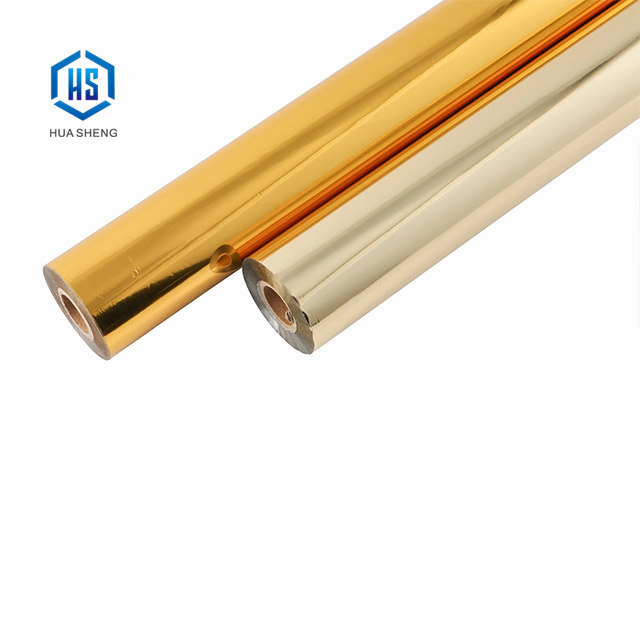
Your hardware controls the entire chemical bonding process. Toner reactive foil relies explicitly on the plastic polymers present in laser printer toner. Heat melts these polymers. Pressure fuses the metallic pigment to the melted plastic.
Toner formulation heavily impacts foil adhesion. Monochrome printers generally output higher carbon densities than color printers. OEM (Original Equipment Manufacturer) toners contain specific plastic polymer ratios. Aftermarket toners often use cheaper fillers. These fillers severely weaken the chemical bond.
You need a dense, carbon-rich black toner layer as your baseline requirement. Color toners contain waxes. These waxes act as a barrier and prevent proper foil adhesion. Using a dedicated monochrome laser printer guarantees a much stronger reactive base layer.
You must frame your selection process around your specific heating equipment. Every foiling machine possesses unique maximum temperature thresholds. High-end commercial fusers easily reach 160°C. Basic desktop units max out much lower.
If your machine maxes out at lower temperatures, you must source a low-temp reactive formulation. Using a high-temp foil in a low-temp machine results in severe flaking. The heat simply fails to activate the release layer properly. Always match the manufacturer's recommended activation temperature to your hardware capabilities.
Adjustable roller pressure remains crucial for flawless applications. Professional foiling units allow you to modify nip pressure precisely. Pressure essentially forces the pigment into the melted toner.
Over-adhesion causes "foil dust." This occurs when excessive pressure forces the metallic particles onto non-printed areas. Under-adhesion causes spotting. Insufficient pressure fails to bond the pigment securely. You need a foil specifically engineered to tolerate your machine's pressure dynamics without degrading.
Sourcing commercial materials requires stringent vetting. You cannot rely on basic vendor marketing claims. You need empirical data.
Advise your procurement team to look far past superficial marketing claims. You should immediately request exact technical data sheets from suppliers. These documents reveal exact operating temperature ranges.
Ask for detailed recommended substrate lists. Reliable B2B suppliers happily provide optimal speed settings and pressure recommendations. If a vendor refuses to supply technical data, find another supplier immediately. Transparency indicates a reliable, professional-grade toner foil product.
Never place a bulk order without rigorous testing. Implement a highly structured testing framework. You must run a comprehensive test matrix varying your basic parameters. Use a single sample roll to benchmark performance.
Print a Calibration File: Create a design containing hairline typography, medium geometric shapes, and heavy solid blocks.
Adjust Toner Density: Print the file at 80%, 90%, and 100% toner density settings.
Modify Heat Variables: Run the samples through your heating unit at three different temperature increments.
Alter Feed Speeds: Test fast, medium, and slow feed speeds.
Evaluate Adhesion: Perform a standard tape-peel test to check for flaking.
This structured approach reveals the exact operational window for the specific foil on your unique hardware.
You must continually assess vendor reliability. Packaging jobs often repeat over several months. Batch-to-batch color consistency remains a critical purchasing factor. You cannot allow a rose gold roll to subtly shift into copper during the next order cycle.
Inquire about their manufacturing tolerances. Ask how they control batch variations. Consistent supply chains protect your brand credibility. You protect your clients' brand identities by ensuring perfect color matching across every single production run.
Even the finest hardware setups occasionally encounter production errors. Anticipating these common quality control risks helps you select a more resilient product from the start.
Black spotting ruins the illusion of a solid metallic surface. Spotting occurs when the foil fails to bond, leaving the raw black toner exposed. You must quickly determine the root cause.
Cheap carrier films often cause this defect. They release unevenly. Insufficient toner density also causes spotting. If your printer applies a weak toner layer, the foil finds nothing to grip. Switch to a thicker, higher-quality laser printer foil. Ensure your printer settings force maximum toner saturation.
Bridging occurs when foil bleeds wildly outside the printed toner lines. The metallic layer bridges the tiny gaps between fine typographic letters. This completely destroys text legibility.
Over-foiling usually stems from overly sensitive reactive layers. The adhesive melts too quickly and spreads. It can also result from excessive roller pressure. When testing new rolls, closely inspect thin serif fonts. If the letters blur together into solid metallic blobs, you must reduce heat. If lowering heat fails, the foil formulation is too aggressive for intricate packaging designs.
Post-application durability separates professional packaging from amateur attempts. Packaging endures harsh conditions. It survives rough shipping environments. Consumers handle the boxes repeatedly.
You must assess scratch resistance meticulously. Gently drag a fingernail across the foiled surface. A robust foil resists light scratching. Weak foils flake off immediately. High-end packaging demands superior durability. Prioritize formulations utilizing hard protective topcoats. They protect the metallic aesthetic from transit friction and human handling.
Common Mistake: Ignoring paper moisture. High humidity warps paper and ruins foil adhesion.
Common Mistake: Using toner-saving modes. Always force the printer into maximum density mode.
Common Mistake: Reusing carrier sheets. Carrier sheets lose tension after one pass. Never reuse them.
Successful digital foiling relies entirely on an exact mathematical equation. You must perfectly balance toner density, paper surface tension, heat application, and specific chemical foil properties. Standard craft supplies fail under commercial packaging demands. Transitioning to professional-grade materials ensures crisp edges, solid coverage, and robust scratch resistance. Your hardware limitations ultimately dictate your ideal foil parameters.
Your immediate next step requires practical benchmarking. Create a standardized digital test file featuring both microscopic fine lines and large solid blocks. Order two to three sample rolls from reputable B2B suppliers. Test these samples vigorously on your actual packaging substrates. Record the optimal heat and pressure settings. This systematic approach guarantees stunning, repeatable results for every future production run.
A: No. The foil specifically reacts to the plastic polymers in laser printer toner when heated. Inkjet printers use liquid ink that absorbs into the paper, providing no plastic surface for the foil to bond with.
A: Usually caused by insufficient heat, low roller pressure, incompatible textured paper, or using a laser printer with an aggressive toner-saving mode. Ensure you print at maximum density and use smooth cardstock for optimal results.
A: It is ideal for short-run packaging and prototyping. For massive commercial runs, traditional hot foil stamping becomes more cost-effective due to superior production speed and significantly lower consumable unit costs.
A: Black toner is overwhelmingly recommended. It typically contains the highest density of reactive polymers. A dense black base provides the strongest adhesion, regardless of the final metallic foil color applied.


