
close
Choose Your Site
Global
Social Media

Views: 0 Author: Site Editor Publish Time: 2026-09-02 Origin: Site


Selecting markings for commercial fleets is no longer just a visual branding exercise. It has become a critical safety and compliance decision for fleet managers everywhere. Every year, inadequate vehicle conspicuity contributes to preventable accidents on dark highways. Substandard markings lead directly to premature peeling, severe UV degradation, and costly DOT compliance violations. These material failures force early re-applications. Repeated installations ultimately drive up maintenance budgets and waste hundreds of valuable labor hours. Poor adhesion and fading films drain your operational resources rapidly.
This article introduces a clear evaluation framework to help you source reliable truck reflective warning film. You will learn how to balance material durability, regulatory compliance, and installation efficiency effectively. We will explore the latest reflective technologies and outline practical steps for fleet-wide application. This ensures your vehicles remain highly visible, legally compliant, and professional on the road.
Highly visible markings actively reduce rear-end and side-impact collisions. Commercial vehicles operate in challenging conditions requiring constant visibility. When other drivers see a fleet vehicle earlier, they have more time to react safely. Better reaction times directly lower your liability risks. Fleet operators face significant legal exposure after nighttime accidents. Proper reflectivity proves you took necessary safety precautions. It demonstrates a commitment to public safety and limits costly court settlements.
Cheap materials carry hidden financial burdens. Budget-grade tapes degrade quickly under intense sunlight and harsh weather. You must calculate the labor required to remove cracked, failing tape. Scraping off old adhesive residue takes hours of manual labor per vehicle. Investing in high-grade film upfront eliminates these expensive replacement cycles. Quality films stay intact for years. This strategic purchasing decision protects your maintenance budget from unexpected drains.
Maintained fleet markings directly reflect corporate reputation. Faded or peeling tape makes a company look unprofessional and negligent. Clients notice the condition of delivery vehicles on the road. A "Compliant, Professional, Visible" paradigm builds immediate trust. Clean, bright markings signal operational excellence. They tell the public you care about quality at every level of your business operations.
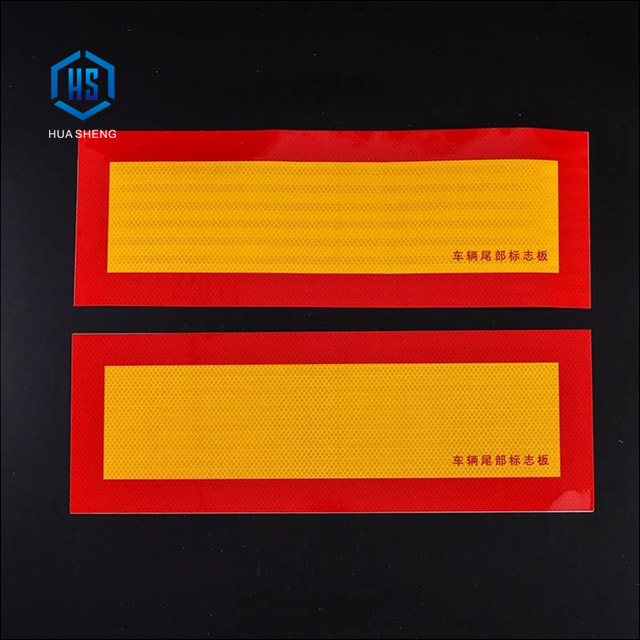
Glass bead technology served as the legacy standard for decades. Manufacturers embed microscopic glass spheres into a resin layer. These spheres bounce light back toward the source. This older method costs less to produce. However, it suffers from lower reflectivity limits and a significantly shorter lifespan. Glass bead films scatter a portion of the incoming light. They struggle to maintain brightness at longer distances.
Modern fleets now rely on micro-engineered optical prisms. These microscopic structures return light directly to the source much more efficiently. A high-quality prismatic reflective film delivers superior long-distance visibility. It also performs exceptionally well at extreme viewing angles. When a vehicle approaches an intersection, wide-angle reflectivity prevents side-impact crashes. Furthermore, prismatic construction sheds water easily. This ensures enhanced performance even during heavy rain or snow.
The outer face film material determines how the tape applies to vehicles. PET (polyethylene terephthalate) creates a stiff, high-gloss finish. It works well on flat, rigid trailer sides. However, PET struggles immensely on curved surfaces or over rivets. Flexible PVC vinyl marking offers superior conformability. It wraps seamlessly around complex curves, rivets, and corrugated truck panels without tenting. Choosing the right face material prevents immediate installation failures.
Reflective Material Technologies Comparison
| Feature | Glass Bead Technology | Micro-Prismatic Technology |
|---|---|---|
| Reflectivity Level | Moderate (Scatters some light) | Extremely High (Direct return) |
| Long-Distance Visibility | Fair | Excellent |
| Wet Weather Performance | Degrades easily when wet | Maintains brightness in rain |
| Cost Profile | Lower initial price | Higher initial price, better ROI |
You must evaluate pressure-sensitive adhesives (PSA) against your specific surface types. Fleets utilize painted steel, bare aluminum, and fiberglass panels. Standard adhesives may bond perfectly to painted steel but fail on bare aluminum. Fleet managers must verify chemical compatibility before purchasing large rolls of outdoor warning tape. Incorrect adhesives will peel within weeks of application.
Installers care deeply about initial tack versus ultimate adhesion. High initial tack grabs the surface instantly. This makes repositioning very difficult during installation. A balanced adhesive allows minor adjustments for a few minutes. Over the next 72 hours, it cures to reach ultimate adhesion. This balance ensures fast installation speeds and a permanent long-term hold.
Ultraviolet radiation destroys inferior plastics rapidly. Constant sun exposure causes severe yellowing, delamination, and cracking. Yellowed tape loses its retroreflective properties completely. The plasticizers migrate out of the film, leaving it brittle. You must look for materials engineered specifically with UV inhibitors. These chemical additives protect the micro-prisms from solar degradation.
Edge-sealing technology remains critical for outdoor survival. Unsealed edges allow water, dirt, and road salt to penetrate the layers. Capillary action pulls this moisture deep into the tape. Once moisture freezes in winter, it forces the layers apart. Factory-sealed edges block chemical ingress entirely. This simple feature extends the lifespan of the marking by several years.
Commercial vehicles endure brutal physical environments daily. They face automatic truck washes, flying road debris, and loading dock impacts. High-pressure wash systems easily strip away cheap markings. Stiff nylon brushes scratch unprotected surfaces, ruining the reflective optics.
Premium films incorporate a tough, abrasion-resistant topcoat. This clear layer absorbs minor impacts without transferring damage to the prisms below. It repels harsh industrial detergents used in fleet cleaning depots. Testing tape against physical abrasion ensures it survives real-world highway conditions.
The Federal Motor Carrier Safety Administration (FMCSA) and USDOT mandate strict rules for commercial vehicles. These regulations are non-negotiable for highway operation. Trailers exceeding certain weights and widths require DOT-C2 rated markings. This standard dictates alternating red and white patterns. It also specifies exact minimum widths and placement lengths along the vehicle sides and rear. Ensuring maximum truck visibility keeps your operation legally compliant and penalty-free.
Multinational fleets often face overlapping regional standards. Europe uses the UN ECE R104 regulation for heavy goods vehicles. Canada enforces similar but distinct Transport Canada guidelines. Purchasing tape meeting multiple global standards provides a strong trust signal. It simplifies procurement for mixed-region fleets. Compliance across borders proves the manufacturer maintains rigorous quality control procedures.
Counterfeit films flood the market frequently. These fake products fail compliance audits. Buyers must know how to verify authenticity quickly. Use this numbered checklist to spot compliant materials:
Improper surface preparation causes roughly 90% of all film failures. Installers often rush the cleaning phase. Grease, road dirt, and old adhesive residue destroy new bonds instantly. A quick wash is never sufficient. The surface requires specialized degreasers and a final isopropyl alcohol wipe-down. The panel must be completely dry before applying any pressure-sensitive adhesive.
Ambient temperatures severely impact adhesive curing. Rollouts scheduled during winter months face high failure rates. Adhesives require minimum temperatures to flow properly into surface microscopic pores. We recommend reviewing these critical installation constraints:
Maintenance and end-of-life removal require careful planning. Operators must clean the film regularly without degrading its reflectivity. Avoid highly acidic or highly alkaline wheel cleaners. When the film finally expires, removal labor becomes a major factor. Cheap tapes become brittle and shatter into thousands of tiny flakes. High-quality vinyl maintains its structural integrity. It peels off in large, manageable strips when heated properly.
Always request physical samples and technical data sheets (TDS) before ordering. The TDS reveals the true engineering behind the product. Look closely at the guaranteed retroreflectivity values. Check the stated tensile strength and adhesive peel adhesion metrics. Compare these numbers against your fleet's specific operational requirements. Data sheets separate marketing claims from verifiable material science.
Pilot testing protects your procurement budget. Never outfit a thousand vehicles with an untested product. Apply the sample tape to a small subset of trucks first. Run this pilot test through one entire winter or heavy rain season. Monitor the edges for delamination. Check how the tape handles routine chemical washes. Real-world testing exposes weaknesses no laboratory data sheet will show.
Finally, read the warranty terms meticulously. Manufacturers frequently confuse buyers using terms like "expected lifespan." An expected lifespan is just an estimate. It offers no financial protection. Demand a backed, written manufacturer warranty for outdoor durability. A true warranty covers pro-rated material replacement if the tape fails prematurely due to UV degradation or adhesive breakdown.
Selecting the right commercial truck markings requires balancing strict regulatory compliance, advanced prismatic technology, and substrate-appropriate adhesives. You cannot afford to treat this as a simple administrative purchase. High-quality materials prevent early peeling, maintain intense brightness, and protect your company against liability.
We advise buyers to prioritize certified, edge-sealed, micro-prismatic films. This specific combination ensures maximum highway safety and demands minimal replacement labor over the vehicle's lifespan. Do not let cheap materials compromise your fleet's integrity.
Take action today by auditing your current fleet visibility. Consult with a dedicated fleet safety specialist to review your DOT compliance. Request a material sample pack from a reputable manufacturer to test adhesion on your specific vehicle surfaces.
A: High-quality reflective films typically last between 5 and 10 years outdoors. This lifespan depends heavily on the material grade, daily UV exposure, and routine maintenance. Premium acrylic or vinyl films with UV inhibitors and sealed edges easily reach the 10-year mark in moderate climates.
A: DOT-C2 is a specific federal certification requiring alternating red and white patterns with strict retroreflectivity minimums. Standard tapes lack these guaranteed optical metrics and specific color ratios. Using standard tape on regulated commercial trailers will likely fail compliance audits and violate legal highway requirements.
A: Yes, you can. However, it requires flexible vehicle-grade vinyl. Installers must use a heat gun and a specialized rivet brush to stretch the material properly. This ensures complete conformability around the hardware. Rigid PET films will tent over rivets, trap air, and ultimately fail.
A: Peeling edges usually stem from three main causes. The tape may lack proper factory edge sealing. Installers might have performed improper surface preparation, failing to remove existing wax or grease. Finally, applying the tape in temperatures below 50°F prevents the adhesive from bonding securely.


