
close
Choose Your Site
Global
Social Media

Views: 0 Author: Site Editor Publish Time: 2026-08-31 Origin: Site


Choosing the incorrect film substrate in commercial print and packaging carries massive financial stakes. You risk severe job spoilage, frustrating edge curling, and steep margin loss. Rejected client deliverables can permanently damage your industry reputation. Substrates vary widely in their mechanical behaviors, and treating them equally guarantees failure.
Commercial dry lamination grows more complex every single year. Defaulting to standard supplier specifications often creates suboptimal project outcomes. Operators blindly trust stock recommendations instead of analyzing the physical demands of the print run. You need precise materials matched to specific environmental and mechanical stresses.
This guide provides an objective, data-backed framework for operators and procurement teams. We evaluate both primary film categories based on physical properties, runability, and unit economics. You will learn exactly how to choose the correct substrate for your machinery. We eliminate the guesswork to help you protect your production margins.
Many operators still believe these films are completely interchangeable. We constantly address this common industry myth. Blindly swapping one for the other causes frequent production failures. Both films utilize an EVA (Ethylene Vinyl Acetate) adhesive layer for thermal bonding. The heated nip roller melts this adhesive to secure the bond to the paper fibers. However, the base polymers above the adhesive dictate entirely different physical behaviors.
BOPP stands for Biaxially Oriented Polypropylene. Manufacturers stretch this polymer film in two specific directions during production. They stretch it in the machine direction and the transverse direction. This biaxial orientation aligns the molecular structure perfectly. It creates exceptional flexibility and superior moisture resistance. You will find BOPP highly cost-effective for large commercial runs. It conforms easily to paper fibers. The material handles aggressive folding and creasing without stress cracking.
PET stands for Polyethylene Terephthalate. It operates under a completely different mechanical reality. It offers massive tensile strength and rigid dimensional stability. It boasts excellent chemical resistance against oils and solvents. You will pay a higher price point for PET. It feels significantly stiffer in hand. Operators use it when durability outweighs budget concerns. It behaves more like a rigid plastic shield than a flexible membrane.
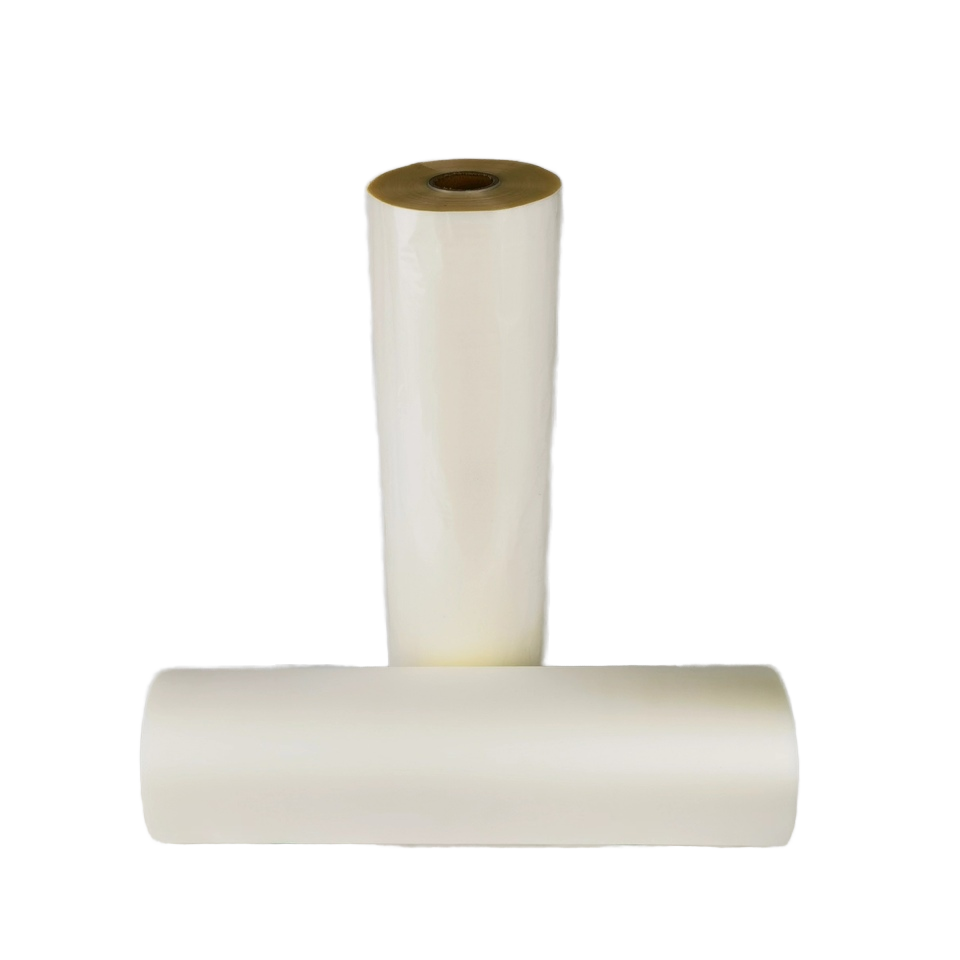
When evaluating BOPP vs PET thermal lamination film, you must look far beyond basic aesthetics. The true differences emerge on the production floor and in the hands of the end-user. We evaluate them across three critical mechanical dimensions.
BOPP feels much softer to the human touch. It remains prone to slight stretching under extreme web tension. However, this flexibility provides a major production advantage. It becomes incredibly easy to fold and crease the finished piece. You can process folding cartons without cracking the laminate surface. The film bends naturally alongside the paper fibers.
PET behaves like a protective suit of armor. It is highly rigid and exceptionally scuff-resistant. It aggressively resists tearing during heavy handling. You cannot easily fold a PET-laminated sheet. It requires specialized scoring tools to weaken the fold line. Otherwise, you risk snapping the laminate along the crease. We rarely recommend it for intricate packaging structures.
You must compare the refractive index of both materials. PET naturally offers slightly higher clarity and light transmission. However, modern manufacturing techniques bridge this gap effectively. Today, a premium BOPP glossy lamination film achieves near-identical commercial results. Most clients cannot spot the difference visually under normal lighting.
Both materials accept beautiful specialty coatings. You can easily source scuff-free matte thermal film for high-end luxury packaging. They also support holographic or soft-touch tactile finishes. BOPP remains the dominant choice for tactile finishes in consumer packaging. Its natural flexibility pairs perfectly with the velvety feel of modern soft-touch coatings.
Thermal limits dictate your downstream finishing options. PET delivers superior heat resistance. This trait proves absolutely vital if your product undergoes secondary high-heat processes. Hot foil stamping requires massive temperatures to transfer the foil. PET withstands this heat without distorting or shrinking.
BOPP offers significantly lower thermal limits. It melts or shrinks at lower heat thresholds. If you run a hot foil stamp over standard BOPP, you risk warping the entire substrate. Operators must carefully calibrate their equipment. You must maintain strict temperature controls when running subsequent finishing steps over polypropylene.
Proper film material selection determines the long-term success of your print run. You must match the substrate's physical properties to the environmental demands of the final product.
We see BOPP universally applied across softcover books, folding cartons, cosmetic boxes, and brochure covers. These items demand flexibility.
The decision logic relies heavily on volume. BOPP dominates high-volume runs where cost-per-unit is critical. When you need single-sided lamination, minimizing substrate curl is your top priority. BOPP exerts far less surface tension on the paper web as it cools. This lower memory keeps thin paper stocks laying perfectly flat after lamination.
We see PET utilized for restaurant menus, loyalty cards, maps, and heavy-duty industrial tags. These items endure daily physical abuse.
The decision logic centers on double-sided "encapsulation" lamination. These products require a stiff "plastic card" feel to convey quality. They demand extreme longevity against daily handling. PET repels moisture effectively. It survives repeated wiping, bending, and dropping in harsh environments like commercial kitchens.
Thermal Lamination Applications Guide
| Property Evaluated | BOPP Profile | PET Profile | Primary Target Markets |
|---|---|---|---|
| Flexibility | High stretch, folds easily | Highly rigid, snaps if folded | BOPP: Cartons / PET: Menus |
| Thermal Limits | Low (Prone to heat shrinkage) | High (Excellent for foil stamping) | BOPP: Basic Print / PET: Embellished Print |
| Unit Cost | Highly cost-effective | Premium pricing tier | BOPP: Mass Packaging / PET: ID Cards |
| Curl Tendency | Low memory (lays flat) | High memory (pulls paper) | BOPP: Single-sided / PET: Encapsulation |
Transitioning from theory to the production floor exposes several mechanical risks. You must anticipate these challenges to prevent wasted material.
Running PET on a single side of lightweight paper creates immediate problems. It almost guarantees severe curling. PET holds strong structural memory. It possesses high shrink properties as it cools rapidly from the heated nip roller. This shrinking pulls the paper web inward. It turns perfectly flat sheets into unusable tubes. You must reserve PET for double-sided encapsulation or extremely heavy board stocks. You must carefully adjust the decurling bar on your machine to counter this aggressive pull.
Finishing departments face specific mechanical challenges depending on the polymer.
BOPP cuts like butter in comparison. It extends blade life drastically. It allows for much faster machine speeds during the complex die-cutting phase.
The EVA adhesive layer acts similarly on both substrates. However, the required operating temperatures on the nip roller differ. You must calibrate heat settings precisely to the specific base film. BOPP requires lower temperatures to activate the EVA. Applying too much heat causes the film to shrink and wrinkle on the web. PET requires higher temperatures for optimal bonding. Failing to reach this thermal threshold prevents the EVA from flowing deeply into the paper fibers. This mistake inevitably leads to premature delamination.
Operators often find themselves staring at unmarked rolls in the warehouse. You need immediate, actionable value to differentiate these materials quickly. We rely on two simple, objective floor tests to identify films before running them.
This is the fastest method to check an unmarked roll.
BOPP tears relatively easily once a notch is started. The material yields along its orientation lines. PET behaves entirely differently. It is nearly impossible to tear by hand, even with a starter notch. It stretches slightly and completely stops your progress.
These are objective, safe methods for rigorous quality assurance.
Neither film is universally better than the other. The right choice is always dictated by your specific mechanical and economic demands. You must balance the need for foldability against the need for extreme durability. Budget constraints often point you toward BOPP, while finishing processes like hot foil stamping pull you toward PET. You must align the polymer's physics with your client's expectations.
Do not rely entirely on standard spec sheets. We strongly encourage procurement teams and floor managers to request sample rolls. Run tension and die-cutting tests on your specific equipment. Verify adhesive bonding on your actual printed substrates before committing to bulk orders. Physical testing remains the only guaranteed way to protect your margins.
A: It is generally not recommended for paper stocks under 250gsm due to severe curling. PET holds strong structural memory. It pulls the paper aggressively as it cools. BOPP remains the undisputed industry standard for single-sided jobs. It exerts much lower tension on the printed web, ensuring flat deliverables.
A: BOPP is significantly more cost-effective. It features a lower density than PET. This provides more surface area yield per pound of purchased material. The raw polypropylene polymer also costs less to manufacture. These factors make BOPP ideal for high-volume consumer packaging where unit economics matter most.
A: Yes, provided you properly treat the surface tension. The film typically requires a dyne level of 38 or higher to accept UV spot coatings successfully. However, commercial operators more commonly prime BOPP for this process. It dominates the folding carton and packaging sectors where spot UV is highly requested.
A: Standard matte finishes show scuffs more easily than high-gloss finishes. This applies regardless of whether the base polymer is BOPP or PET. The micro-textured matte surface physically traps hand oils and friction marks. For high-handling items, you must specify "anti-scuff" or "scratch-resistant" matte films to protect the finish.


