
close
Choose Your Site
Global
Social Media

Views: 0 Author: Site Editor Publish Time: 2026-08-05 Origin: Site


Fading foil creates a massive headache in apparel decoration. Designers create beautiful, shining garments only to see them degrade after a single wash. Standard metallic finishes quickly flake off, leaving clients disappointed and ruining brand reputations. This frustrating friction stems from a basic misunderstanding. Many decorators use incorrect films for the garment's specific adhesive. The solution lies in choosing purpose-built materials engineered specifically for commercial laundering. We will explore the critical relationship between specialized foil films and fabric adhesives. You will discover a clear, vendor-neutral framework to evaluate, test, and select the right materials for your shop. Whether you manage large commercial runs or high-end custom orders, understanding these dynamics ensures lasting brilliance. Let us dive into the core mechanisms behind durable, stunning fabric decoration.
We must first examine the fundamental chemistry of adhesion to understand why standard craft materials fail on apparel. Standard foils look gorgeous on paper or rigid packaging. However, apply them to a t-shirt, and they degrade rapidly. The release layer and color layer in standard films break down almost immediately under harsh conditions. Laundry detergents act as aggressive chemical strippers. Furthermore, the mechanical agitation inside a washing machine easily cracks a brittle film. Garments twist, stretch, and pull during a standard cycle. You need a material much tougher than traditional crafting supplies for commercial apparel.
This brings us to defining a true washable textile foil. Manufacturers engineer these films using highly specialized top-coats. These protective layers resist mild household detergents and fabric softeners. More importantly, engineers design them for optimal cross-linking. The foil must bond chemically with textile-specific adhesives. When you cure the glue properly under a heat press, the foil essentially becomes part of the fabric matrix. It flexes and moves alongside the woven threads instead of sitting rigidly on top of them.
However, decorators must manage customer expectations carefully. "Washable" does not mean permanently invincible. It means commercially acceptable longevity. In the textile industry, we typically define this as 30 to 50 washes under specific care conditions. All garments will eventually show wear over time. But a properly applied washable film outlasts the basic aesthetic lifespan of the shirt itself. You provide a premium product when you pair the right film chemistry with realistic care instructions.
Your current application machinery directly dictates your material choices. You cannot force a film designed for a high-speed roller onto a manual heat press and expect flawless results.
First, let us look at screen printing foil applications. This application remains the absolute best choice for high-volume apparel runs. Operators apply a foil adhesive paste directly through a silk screen. They flash cure the glue before pressing the foil onto the shirt. You must evaluate these films based on their compatibility with plastisol or water-based pastes. Some films stick aggressively to water-based glues. Others require the heavier tackiness of plastisol. Knowing your preferred ink system narrows your choice immediately.
Next, consider heat transfer textile foil. This format works perfectly for print-on-demand operations. Decorators use it frequently in custom vinyl cuts and DTF (Direct-to-Film) hybrid applications. When selecting these materials, you must pay close attention to peeling requirements. You need to know whether the film requires a hot-peel or a cold-peel before you press. Pressure settings also matter heavily. We measure this in PSI (pounds per square inch). If your heat press cannot deliver consistent, heavy pressure, certain thick films will fail to transfer cleanly.
Finally, we have fabric stamping foil. Commercial fabric manufacturers use this in massive roll-to-roll machinery. They decorate entire yardages of fabric before cutting it into individual garments. If you operate this method, your evaluation focus shifts dramatically. You need exceptional high-speed release properties. The carrier film must peel away cleanly at rapid operational speeds. Continuous heat consistency is another major factor. The foil must react identically from the first yard to the ten-thousandth yard without ghosting or spotting.
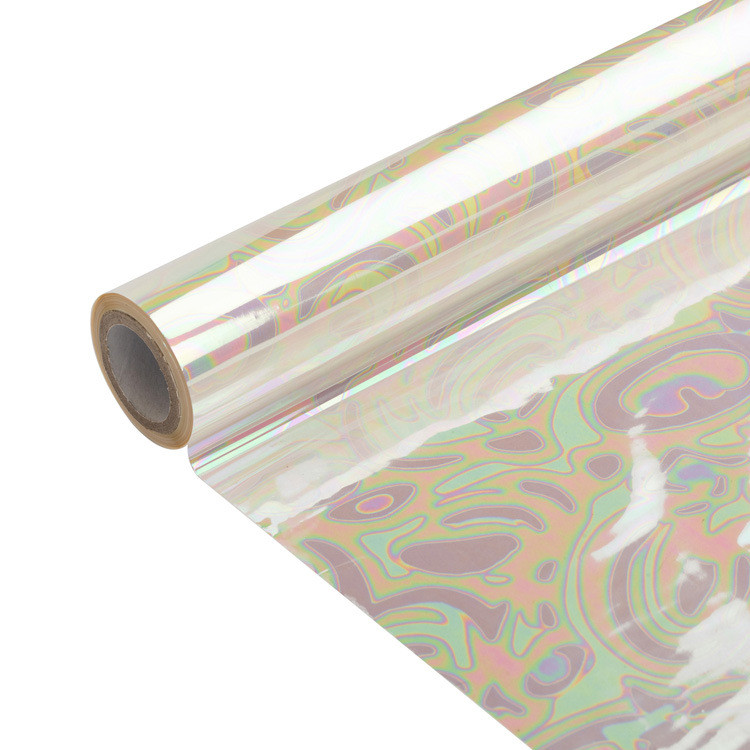
Visual appeal drives the fashion industry. Consumers buy shiny garments because they look spectacular. Yet, different finishes bring different performance trade-offs. You must balance the desired look against the physical limits of the material.
Standard metallics offer the most reliable washability profile. We are talking about classic gold, silver, and copper finishes. Manufacturers have perfected these chemical formulations over decades of trial and error. They are the easiest materials to source. They are also the simplest to test. If you are new to foil decoration, always start your production here. They tolerate minor temperature fluctuations better than any other style.
If you want premium visual appeal, you might choose iridescent textile foil or holographic designs. These specialty finishes catch the light beautifully, creating a rainbow effect. However, they feature a complex multi-layer construction. This makes them highly sensitive to both heat and pressure. You need stricter temperature control during application. If you press them too hot, you risk "clouding" the finish. The iridescent effect can dull significantly, leaving a milky residue behind. We recommend running extensive heat tests before executing a full production run on holographics.
Matte and pigment foils serve as excellent alternatives to high-gloss finishes. Designers often use them to create faux-leather textures or vintage distressed looks on denim and cotton. They generally perform incredibly well in the wash. However, their matte top-coats can sometimes attract lint in the dryer. You should always advise your customers on proper garment care to keep these finishes looking sharp and clean over time.
You need a reliable system to assess material quality. Never guess. Always use a structured evaluation matrix before committing to a large material purchase. Industry professionals rely on standardized metrics to avoid catastrophic production failures.
First, ensure strict substrate compatibility. The foil must be rated specifically for your target material. A film designed for rigid 100% cotton canvas might fail completely on soft poly-blends. Furthermore, high-stretch fabrics like Spandex or Lycra require films carrying specific elasticity ratings. If the film lacks stretch, it will crack instantly when the wearer moves.
Second, check the release characteristics carefully. Does the foil weed and peel cleanly? Edge artifacts ruin a design. A high-quality film releases smoothly from its carrier sheet without tearing or leaving jagged metallic flakes around the design edges.
| Evaluation Category | Primary Testing Method | Key Success Metric |
|---|---|---|
| Substrate Stretch Compatibility | Manual pull test post-application | No visible micro-cracking upon 30% fabric stretch |
| Edge Release Quality | Visual inspection after peeling | Sharp, clean lines with zero artifacting or ghosting |
| Wash Cycle Endurance | Standardized 5-wash protocol | Retention of original brilliance; zero flaking |
| Adhesive Bonding | Tape-pull test over the design | Foil remains fully anchored to the adhesive base |
Next, follow a strict wash-test protocol. This is where most amateur decorators fail. You must standardize your testing to generate reliable data.
Your success criteria should be unforgiving. You want to see no visible flaking. The shine must remain entirely intact. Finally, check for adhesive seepage around the design edges. If the glue bled past the foil, you applied too much pressure.
Lastly, verify compliance and safety standards. This step is absolutely critical if you produce baby and youth apparel. Check your supplier for OEKO-TEX certification. If you sell garments in the United States, ensure CPSIA compliance. Toxic heavy metals or phthalates have no place in wearable garments.
Even the best materials fail if you mishandle the application process. Implementing strict quality control prevents costly reprints.
The primary culprit behind failure is often the adhesive bottleneck. A premium foil cannot compensate for bad glue. If the underlying adhesive is under-cured, it simply washes away during the first laundry cycle, taking the foil alongside it. If you apply the adhesive too thinly, the foil has nothing to grip. Always ensure an even, fully cured adhesive base before pressing.
Temperature and pressure inconsistencies create massive operational risks. Cold spots on a heat press are the leading cause of patchy foil transfer. You must calibrate your equipment regularly. Use a digital pyrometer to check your platen temperatures manually. Do not rely solely on the machine's internal digital readout, as thermal sensors degrade over time. We also recommend mapping your heat press visually using thermal strips.
Curing and resting times often get ignored in rushed production environments. You must implement a 24- to 48-hour cure time post-pressing. Never conduct your first wash test immediately after pressing a shirt. The adhesive needs physical time to cross-link fully with the fabric fibers. Rushing this step guarantees a failed wash test and gives you skewed, inaccurate data. Implement the following best practices to safeguard your production:
Choosing the right material requires a highly balanced approach. You must weigh your desired visual aesthetic against your specific application method. Above all, rigorous wash-testing remains your best defense against catastrophic failure. Do not skip the testing phase simply to speed up a delivery schedule. The long-term damage to your brand from peeling garments heavily outweighs a few days of testing.
Take proactive action before you start your next major production run. We recommend requesting sample rolls from your trusted supplier. Conduct in-house wash tests on your exact production blanks. Verify your adhesive compatibility early in the design phase.
Take control of your quality standards today. Reach out to a materials specialist, download technical spec sheets for your chosen films, and request a comprehensive sample kit to elevate your fabric decoration process.
A: Yes, provided it is washed inside out on a gentle, cold-water cycle. You should avoid heavy-duty detergents and fabric softeners. For drying, always line dry the garment or tumble dry it on the lowest possible heat setting to prevent the adhesive from reactivating.
A: Fabric-specific foils are manufactured with durable resins designed to bond chemically with textile adhesives. They withstand mechanical washing and stretching. Conversely, standard craft foils lack this protective chemistry. They will crack, flake, and wash away immediately if applied to apparel.
A: This dulling effect is typically caused by excess heat or too much pressure. It can also happen if you peel the carrier sheet at the wrong temperature. For example, hot peeling a film explicitly designed as a cold-peel will ruin the delicate holographic layers.
A: Yes, you must use a dedicated foil adhesive or printable glue. This specialized paste remains highly tacky after flashing. It is chemically formulated to grab and hold the foil securely during the final heat press stage, ensuring a permanent bond with the fabric.


