
Views: 0 Author: Site Editor Publish Time: 2026-10-15 Origin: Site


Premium packaging captures attention, but the wrong finish can increase costs and delay production. How can you choose the right technique without sacrificing quality or profit?
This guide explains foil printing, comparing hot, cold, and digital methods. You'll learn how substrate compatibility, production volume, and tooling costs affect finishing decisions and packaging results.
Method dictates margin: Hot foil stamping requires expensive custom dies but offers unmatched tactile quality; cold foiling is highly cost-effective for large-volume, inline web printing; digital foiling eliminates tooling costs for short, variable-data runs.
Substrate constraints are absolute: Cold and digital foiling require exceptionally smooth or coated surfaces to prevent micro-flaking, whereas traditional hot foiling can bridge the gaps in heavily textured, uncoated stocks.
Pre-press precision prevents failure: Successful foil application requires strict adherence to minimum line weights (typically 0.5pt to 1pt), proper vector separation, and exact registration tolerances to avoid trapping and bleed issues.
Sustainability is achievable: Contrary to common assumptions, most paper products finished with standard metallic foils remain fully repulpable and recyclable within standard municipal waste streams.
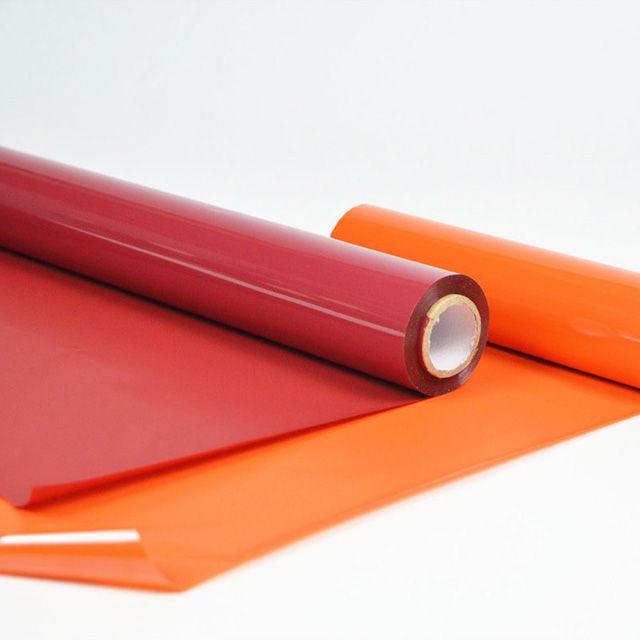
The core process involves transferring a microscopically thin layer of material onto a substrate. This material feeds through the press from a master roll. The transfer requires three distinct components working together under precise web tension. First, the carrier film acts as the foundation. It is usually made of polyester (PET) and must withstand the pulling forces of the press rewind station. Second, a release layer sits between the film and the metallic coating. This wax or resin layer melts instantly upon contact with heat or UV light, allowing the metal to separate from the PET. Third, an adhesive or sizing layer binds the metallic material directly to the paper or plastic substrate. Once the adhesive cures or sets, the carrier film peels away at the nip point. The metallic design remains permanently affixed to the sheet.
Manufacturers produce several distinct categories of transfer materials. Each serves a specific visual or functional purpose on the packaging line.
Metallic Foils: These provide the standard high-shine finishes. Gold, silver, and copper dominate this category. They utilize a microscopic layer of vacuum-metallized aluminum to achieve their brilliance. The aluminum is dyed during manufacturing to create specific metallic shades.
Pigment and Pearl Foils: These offer matte or gloss non-metallic colors. They provide high-contrast, opaque branding. Designers use them heavily on dark substrates where standard printing inks would appear washed out or require too many passes of opaque white under-printing.
Holographic and Security Foils: These feature micro-embossed patterns stamped directly into the metalized layer. They reflect light in a prismatic spectrum. Brands use them for premium visual impact. They also serve as highly effective anti-counterfeiting measures for pharmaceuticals and event ticketing, often utilizing custom-registered holograms that are impossible to duplicate on standard equipment.
Metallic finishes directly impact shelf presence. Consumer psychology responds strongly to reflective surfaces. Shoppers perceive foil-stamped items as higher quality. They spend more time physically handling these products. This tactile engagement justifies a higher permissible retail price point. You must analyze the trade-off carefully. The increased per-unit packaging cost must align with your target margin. When executed correctly, the premium finish pays for itself through increased sales velocity and stronger brand positioning in crowded retail environments.
Hot stamping utilizes heat and high pressure to transfer the design. Operators mount custom-engraved metal dies onto the heated honeycomb chase of a platen press. These dies consist of magnesium, copper, or brass. The heated die presses the foil web against the substrate. The heat activates the release layer, while the massive pressure forces the adhesive into the paper fibers.
This method creates a distinct, tactile deboss effect. You can feel the impression on the paper. It delivers the highest opacity and brilliance available. Operators can also perform combination stamping. This technique applies the foil and creates a multi-level 3D emboss in a single press pass using a specialized brass die and a counter-force matrix. However, implementation carries risks. Upfront tooling costs are high. Press setup times are significantly slower, often requiring hours of manual patching with tissue paper to balance the pressure across the cylinder. Heat distortion can also ruin certain synthetic substrates if the dwell time is too long.
Cold foiling operates entirely differently. It applies a UV-curable adhesive to the substrate using a standard lithographic printing plate or flexographic anilox roller. The press nips the foil web onto the wet adhesive. A high-intensity UV lamp cures the adhesive directly through the clear carrier film. The press then strips away the excess material at the rewind station. This leaves the foil only where the adhesive was printed.
This method runs inline with CMYK offset presses at very high speeds, often exceeding 10,000 sheets per hour. It allows for immediate overprinting. You can print CMYK inks directly on top of the silver foil in the subsequent press units. This creates infinite metallic hues in a single pass. Effective foil printing at scale often relies on this inline efficiency to keep unit costs down. The main drawback is the lack of a tactile deboss. It also performs poorly on porous or textured uncoated papers. The liquid adhesive absorbs into the paper fibers before the foil can stick, resulting in a mottled, broken appearance.
Digital methods eliminate physical dies and plates completely. The foil adheres specifically to digital electroink, toner, or a digitally jetted UV polymer. The sheet passes through a heated fuser roller. The foil sticks only to the printed polymer or toner areas, leaving the unprinted paper bare.
This approach is ideal for variable data printing. You can personalize every single sheet with different metallic names or serial numbers. It works perfectly for ultra-short runs because it carries zero tooling costs. High-build polymer jetting can even simulate the tactile feel of an emboss without bruising the back of the sheet. However, per-sheet output is much slower compared to offset methods. You are limited to specific digital press ecosystems. Edge-chipping can occur on heavy ink-coverage areas if the toner adhesion fails.
Substrate selection dictates your finishing method. Gloss and matte coated papers offer excellent ink holdout. The surface remains sealed by clay coatings applied at the paper mill. This makes them optimal for cold and digital applications. The adhesive stays on the surface, ensuring a clean, sharp foil break. Uncoated papers, especially textured or cotton stocks, behave like sponges. They absorb liquids rapidly. Cold foil adhesive sinks into the fibers, causing incomplete transfer. These porous materials strictly require hot stamping. The heat and pressure force the foil to bridge the textured gaps effectively, driving the sizing layer deep into the sheet for a permanent bond.
Non-porous materials present unique adhesion challenges. BOPP, PET, and rigid plastics require specific surface tension levels. Operators measure this in dyne levels using specialized dyne pens on the press console. The substrate's surface energy must exceed the surface tension of the foil adhesive. Typically, a dyne level of 38 to 42 is necessary for proper adhesion. If you draw a line with a 40-dyne pen and the liquid beads up in under two seconds, the surface energy is too low. The foil will flake off immediately. Many synthetic films require inline corona treatment—an electrical discharge that oxidizes the surface—to raise their surface energy right before the adhesive station.
Foil interacts unpredictably with secondary surface treatments. Soft-touch laminations, which are typically polyurethane-based, have very low surface energy. Standard foils struggle to adhere to them, often scratching off with a simple fingernail test. You must specify foils formulated specifically for soft-touch surfaces. Scuff-resistant matte laminations present similar challenges. Furthermore, certain aqueous coatings or UV varnishes contain silicones or waxes to prevent scuffing. These additives repel foil completely. You must leave the application area unvarnished. This prepress technique is known as spot knocking out the coating.
You must map the cost-curve intersection to make profitable decisions. Hot stamping requires a higher initial capital investment. You must purchase the metal die and pay for extensive press make-ready time. A complex hot foil make-ready can take two to four hours of press time before a single good sheet is produced. However, the per-unit expense drops significantly on long runs. Digital methods flip this equation. You pay zero setup costs. Yet, the per-unit expense remains static and relatively high due to the cost of digital polymers and slower running speeds. You must calculate exactly where these two curves intersect for your specific project.
Run length provides a reliable decision framework. Use these general thresholds to guide your initial production planning.
1 to 500 units: Digital application wins. The lack of tooling makes short runs highly economical. You can run a prototype batch without committing to die costs.
500 to 10,000 units: Hot stamping becomes viable. The die cost amortizes across the run, while the speed of the offline cylinder press keeps labor costs manageable.
10,000+ units: Cold application dominates. Running inline with the printing press eliminates a secondary offline process. This yields massive efficiency at scale, especially for folding cartons and labels.
Speed-to-market factors vary wildly between methods. Digital application offers true on-demand turnaround. You can print and finish a project in the same afternoon. Traditional hot stamping requires significant lead time. Procuring custom dies takes three to seven days depending on the engraver's backlog. You must also account for specialized offline press scheduling. Inline cold application requires standard prepress plating, adding minimal time to a standard offset print schedule.
Die material dictates tooling lifespan and detail retention. You must factor die storage and re-run potential into your initial tooling investment.
Die Material | Manufacturing Method | Lifespan (Impressions) | Best Application |
|---|---|---|---|
Magnesium | Chemical Etching | Up to 50,000 | Short runs, simple flat stamping, budget projects. |
Copper | Photo-Engraving | Up to 500,000 | Long runs, fine details, tight typography. |
Brass | CNC Routing | 1,000,000+ | Combination stamping, multi-level 3D embossing. |
Silicone | Molded Rubber | Variable | Stamping on rigid plastics or textured rigid boxes. |
Proofing metallic finishes presents a major challenge. Standard inkjet proofs cannot replicate the reflective shine or tactile deboss. Generating a true hot foil proof requires a "die strike." You must purchase the actual production die and pay for press setup just to see a single sample. This is highly inefficient and expensive. Digital methods allow for easy, one-off physical proofs. For cold and hot applications, establish best practices using digital 3D rendering tools like Esko Studio. You can also use physical foil draw-downs in the ink lab to test adhesion and color matching before committing to full production.
Registration refers to the alignment between the printed ink and the applied foil. Acceptable tolerances are extremely tight. Movement of even 1/64th of an inch can ruin a design. Multi-pass press runs carry the highest risk of shifting. Paper stretches and shrinks as it absorbs moisture and passes through heavy press rollers. To mitigate this, design files must incorporate proper trapping.
Identify where the foil meets the printed ink.
Apply a slight spread to the lighter color, extending it under the darker color.
Ensure the foil overlaps the adjacent ink by at least 0.25pt.
This trap hides any minor registration shifts, preventing the raw white paper from showing through.
Poor adhesion ruins packaging fast. Flaking occurs when the foil breaks away from the substrate. Root causes include inadequate press pressure, incorrect adhesive sizing, or a fundamental substrate mismatch. Operators perform a standard 3M 610 tape test to verify adhesion quality. They apply the tape to the foil and rip it off rapidly; if the foil transfers to the tape, the run is halted. Oxidation presents another risk. Certain metallic materials, particularly real copper alloys, tarnish over time when exposed to air or moisture. High-friction environments accelerate this wear. You must apply protective UV topcoats over the foil to seal it and prevent degradation.
Sustainability concerns often surround metallic packaging. Contrary to common assumptions, foil-stamped paper remains fully repulpable. The metallic layer is microscopically thin—often measured in nanometers. It breaks down easily during the standard paper recycling process, floating away with the ink sludge. The finished product goes into standard municipal waste streams. The primary environmental impact comes from the spent PET carrier film at the printing facility. Responsible print vendors utilize zero-waste-to-landfill initiatives. They partner with specialized recyclers to process the spent carrier rolls into secondary plastic products, such as composite lumber or industrial strapping.
Pre-press execution determines production success. You must build your files correctly to generate accurate plates or dies. Raster graphics cannot be used for traditional or cold masks. The edges will pixelate, resulting in jagged, unusable tooling. Always use clean, closed vector paths.
Create a new top-level layer in Adobe Illustrator or InDesign named "Foil_Separation".
Define a new spot color swatch with a highly visible proxy color (e.g., 100% Magenta). Name it clearly, such as "Foil_Gold".
Apply this spot color to all intended foil vectors.
Open the Attributes panel and check "Overprint Fill" or "Overprint Stroke". This prevents the software from knocking out the background artwork.
Export a composite PDF and a separated PDF to verify the mask aligns perfectly with the CMYK layers.
Metallic transfer has strict physical limits. You must establish technical baselines in your design files. Avoid using delicate serif fonts like Bodoni or Didot below 8pt. The fine hairlines will not transfer cleanly, resulting in broken text. Maintain a minimum line thickness of 0.5pt for hot stamping. Cold application can sometimes hold a 0.25pt line, depending on the smoothness of the substrate. You must carefully evaluate tight counter spaces. The inside of an 'a', 'e', or 'o' can easily "fill in." The material spreads slightly under heat and pressure, plugging small negative spaces and rendering the text illegible.
Foil printing delivers premium packaging through precise alignment between design, materials, and production methods. Choosing the right technique requires evaluating substrate compatibility, run volume, turnaround time, and desired tactile effects.
Before production, verify surface properties, calculate tooling costs, review physical proofs, and confirm vector files, overprint settings, line weights, and registration tolerances. These steps help prevent defects and control costs.
Huasheng delivers value through quality products and manufacturing solutions that support distinctive designs, refined finishes, and reliable product presentation.
A: Hot stamping uses heated metal dies and pressure to press the material into the paper, creating a tactile deboss. Cold foiling uses a printing plate to apply a UV adhesive, pressing the material onto the wet glue inline on the press. Cold has no deboss but runs much faster.
A: Yes, but you must use traditional hot stamping. Uncoated paper is porous and absorbs liquids quickly. Cold and digital adhesives sink into the fibers, causing the material to flake. Hot stamping uses heat and pressure to bridge the textured gaps effectively.
A: Yes. The metallic layer applied to the paper is microscopically thin. It does not interfere with the repulping process. Finished paper products with metallic stamping can be placed in standard municipal recycling bins alongside normal paper waste.
A: Flaking usually results from poor adhesion. This happens if the substrate has a low dyne level, if the press pressure was inadequate, or if the material was applied over an incompatible surface coating like a silicone-based UV varnish.
A: Combination stamping is a specialized hot foil technique. It uses a custom-machined brass die to apply the metallic material and create a multi-level 3D emboss in a single press pass. It requires heavy pressure and precise registration.
A: You should avoid serif fonts smaller than 8pt. For line weights, maintain a minimum thickness of 0.5pt for hot stamping and 0.25pt for cold applications. Smaller text risks filling in, where the negative spaces plug up during transfer.


