
close
Choose Your Site
Global
Social Media

Views: 0 Author: Site Editor Publish Time: 2026-11-10 Origin: Site


Hot stamping foil can work on both matte and gloss laminated paper when the foil is compatible with the film surface. However, standard paper foils may not always provide reliable adhesion.
This guide explains material compatibility, common stamping problems, and testing methods for laminated printed sheets.
Table of Contents
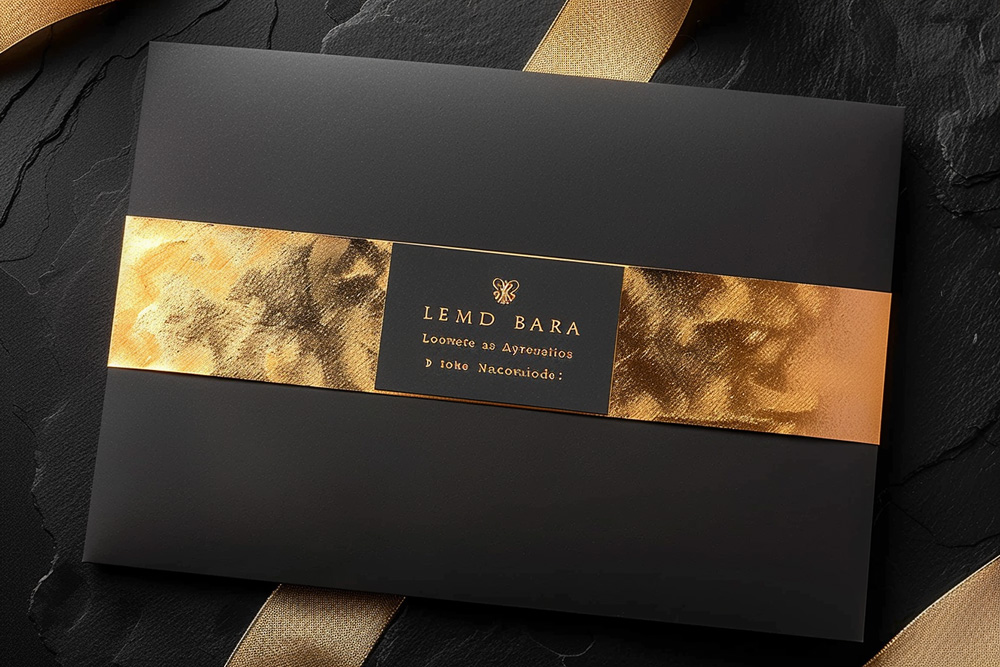
Yes. Hot stamping is widely used to decorate laminated paper products, including gift boxes, printed covers, labels, and promotional materials.
The key requirement is selecting a foil that bonds to the outer lamination film.
Hot stamping transfers a decorative layer from a carrier film onto the target surface.
Heat activates the adhesive layer. Pressure and contact time help create the bond.
When stamping laminated paper, the foil contacts the lamination film instead of the underlying paper fibers.
This distinction affects adhesion and processing requirements.
Lamination films create a smooth protective surface over printed materials.
However, the surface chemistry may differ from ordinary paper or coated board.
Some films offer limited adhesion for conventional hot stamping foils.
The result may be incomplete transfer, poor bonding, or peeling after production.
A foil intended for compatible laminated surfaces can improve the chance of successful stamping.
Matte and gloss laminates can produce different decorative results.
Both surfaces require attention to material characteristics and process settings.
Matte lamination creates a low-gloss appearance that contrasts strongly with metallic decoration.
Gold or silver stamping can make logos and lettering stand out.
However, some matte films have textured or specially treated surfaces.
These differences may affect foil contact and adhesion.
When testing matte laminated paper, inspect both fine details and large stamped areas.
Soft-touch and anti-scratch matte films should be evaluated separately from conventional matte BOPP films.
Gloss lamination provides a bright and reflective base surface.
Metallic stamping can create a polished finish on boxes, covers, and promotional products.
However, achieving reliable adhesion may still require a suitable foil grade.
Excessive stamping heat or pressure can also affect sensitive film surfaces.
Factor | Matte Laminated Paper | Gloss Laminated Paper |
|---|---|---|
Surface appearance | Low-gloss or textured | Smooth and reflective |
Metallic contrast | Often strong visual contrast | Bright, polished appearance |
Adhesion considerations | Film coating and surface texture | Film chemistry and surface treatment |
Common applications | Luxury boxes, book covers, invitations | Retail packaging, labels, promotional prints |
Main testing focus | Adhesion, detail clarity, surface marking | Adhesion, gloss consistency, film distortion |
Neither surface should be considered universally easier to stamp.
Actual performance depends on the film grade, foil formulation, and production conditions.
Many printing companies want one foil grade that works across several paper and laminated materials.
This can simplify purchasing and production planning.
However, a general-purpose formulation may not work equally well on every film.
General-purpose hot stamping foil may be suitable when:
The supplier confirms compatibility with the target film.
The laminate has a suitable surface treatment.
The stamping design matches the foil's release characteristics.
Adhesion and appearance tests meet production requirements.
For standard BOPP laminated sheets, it is worth testing a foil grade already recommended for laminated paper.
Specialized grades may be required for difficult surfaces.
Examples include soft-touch film, certain anti-scratch coatings, low-surface-energy laminates, and unusual decorative finishes.
A specialized foil may offer different adhesion or release behavior.
The correct grade should be selected according to the actual surface rather than the product's general description.
OPP refers to oriented polypropylene film, while BOPP specifically describes biaxially oriented polypropylene film.
BOPP is widely used for print lamination.
However, BOPP films may have different surface treatments and coatings.
Therefore, compatibility with one BOPP laminate does not prove compatibility with every BOPP film.
Hot foil stamping can be performed on different machine configurations.
The foil must suit both the equipment and the substrate.
Platen machines apply heat and pressure through a stamping die.
They are commonly used for sheet-fed printing and finishing work.
Foil release, die design, pressure uniformity, and dwell time all affect the final result.
Printing and finishing companies may use Heidelberg platen presses or similar equipment for foil stamping.
The exact machine configuration determines the available operating conditions.
Before selecting a foil, confirm the machine model, foil feeding system, usable width, and core requirements.
Other sheet-fed foil stamping machines may also process laminated printed sheets.
Compatibility should be confirmed using the actual equipment and production materials.
Suppliers should not assume that a foil works on every machine because it is described as general-purpose.
Laminated surfaces can create several production challenges.
Identifying the actual cause helps reduce material waste.
The foil transfers initially but may peel during handling.
Possible causes include an incompatible adhesive layer, unsuitable surface treatment, or insufficient bonding conditions.
Small text or solid areas may show missing sections.
Possible causes include insufficient heat, uneven pressure, or unsuitable foil release.
Fine letters may lose definition when excessive heat or pressure causes unwanted transfer.
The stamping conditions should be adjusted within the foil's recommended process range.
Excessive heat or pressure may damage sensitive lamination films.
Reducing process intensity or testing a different foil formulation may help.
Problem | Possible Cause | Recommended Action |
|---|---|---|
Foil peeling | Poor adhesion to laminate | Test a laminated-surface foil |
Missing transfer | Insufficient heat or pressure | Adjust one setting at a time |
Blurred lettering | Excessive heat or pressure | Reduce process intensity |
Uneven metallic finish | Film texture or uneven contact | Check surface and die contact |
Lamination damage | Excessive thermal exposure | Review temperature and dwell time |
For a more detailed testing procedure, see How to Test Hot Stamping Foil Adhesion Before Production.
Testing should use the exact printed and laminated sheets planned for production.
Confirm whether the material uses matte BOPP, gloss BOPP, PET, soft-touch film, or another finish.
Ask the film supplier about surface treatment when necessary.
Use finished printed sheets rather than uncoated paper.
Include small text, fine lines, logos, and larger solid stamping areas.
These designs can reveal different transfer problems.
Start with the foil supplier's recommended processing window.
For reference, HUASHENG lists approximately 95–130°C for its AEP hot stamping foil, but this is product guidance rather than a universal operating range.
Actual results depend on die temperature, dwell time, machine setup, and film sensitivity.
Inspect the stamped areas after cooling.
Check transfer completeness, edge clarity, rubbing performance, and resistance to handling.
Folding tests may also be relevant for cartons and other converted packaging.
The Iggesund Paperboard hot foil stamping guide explains the importance of surface properties, foil type, pressure, temperature, and contact time.
After successful sample testing, run a representative production trial.
Check whether the foil performs consistently over the planned run length.
Record the approved process settings for future production.
Printing companies often require specific roll dimensions for existing equipment.
A technically suitable foil must also fit the machine's feeding system.

HUASHENG's AEP hot stamping foil lists a standard roll size of 640 mm × 120 m.
The product page also indicates that custom sizes are accepted.
Customers requiring other dimensions, such as 660 mm × 122 m, should confirm manufacturing availability before ordering.
Buyers should provide the intended material, machine information, and roll requirements when requesting samples.
Suitable sample formats and quantities must be confirmed with the supplier.
Testing on the actual laminate helps determine whether the product meets production needs.
Pricing and MOQ may depend on:
Foil grade and color.
Roll width and length.
Paper core diameter.
Order quantity.
Custom processing requirements.
Providing complete specifications can make quotation and sample evaluation more efficient.
HUASHENG offers hot stamping foils for printed paper, paperboard, and laminated surfaces.
Its AEP series is listed for applications involving matte and gloss laminated paper, greeting cards, invitations, labels, and other printed products.
The series includes metallic colors and supports custom sizing inquiries.
For general packaging applications, buyers can also explore the HUASHENG Hot Stamping Foil Collection.
Product suitability should be confirmed through sample testing, especially when working with special films or demanding production processes.
Yes. Use a compatible foil and verify adhesion, detail clarity, and surface appearance.
Possibly. Some grades support both surfaces, but each laminate should be tested.
Some formulations are. Compatibility depends on the specific film and surface treatment.
HUASHENG accepts custom-size inquiries. Available dimensions, samples, and MOQ require confirmation.
Hot stamping foil for laminated paper must match the film surface and production process. Both matte and gloss lamination can deliver attractive metallic finishes when adhesion and transfer conditions are properly tested.
HUASHENG offers AEP hot stamping foil for compatible laminated printing applications and accepts custom roll inquiries. Share your materials and equipment details to discuss suitable options.
Need Hot Stamping Foil for Matte or Gloss Laminated Sheets?
Contact HUASHENG with your laminate type, machine model, foil color, required roll dimensions, and estimated quantity. Ask about suitable grades, sample availability, pricing, and MOQ.
